
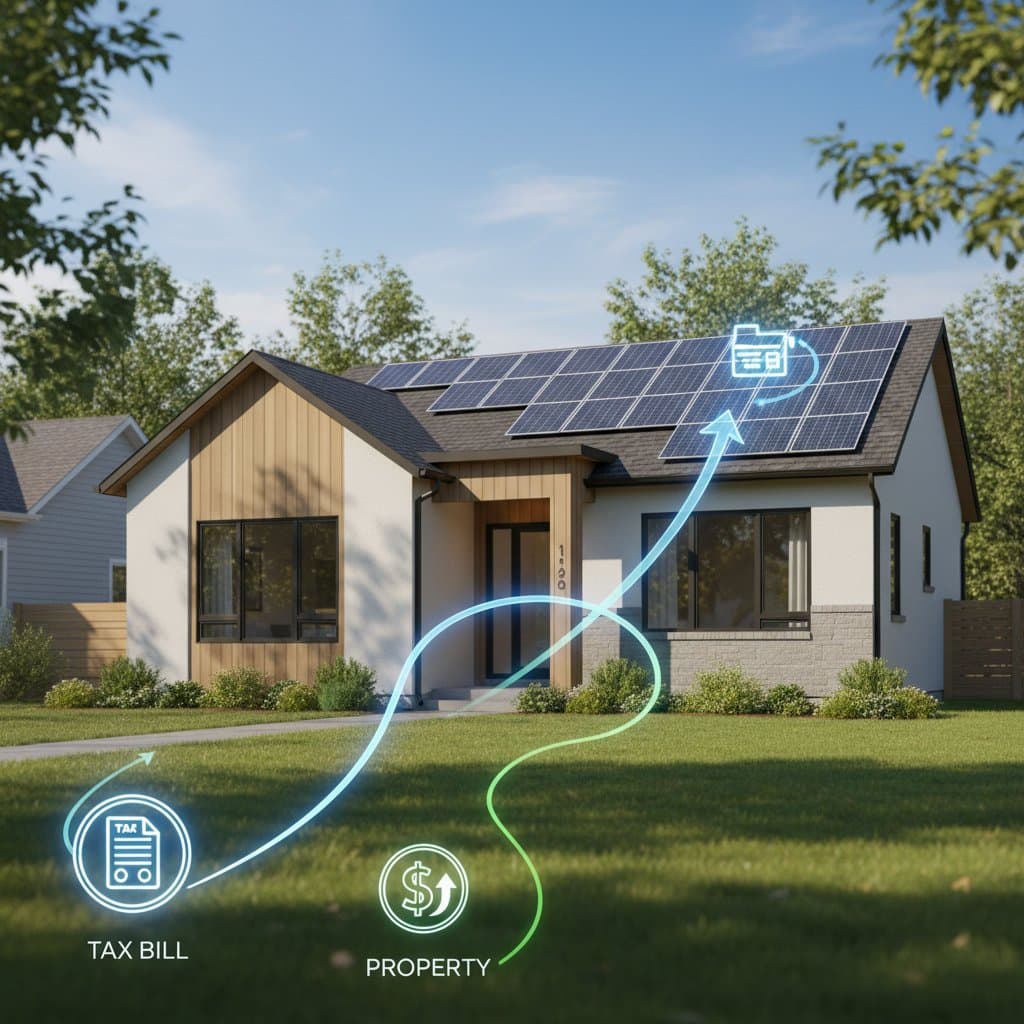
Understanding PACE Financing for Solar Installations
Homeowners often face barriers to adopting solar energy due to high initial costs. Property Assessed Clean Energy (PACE) financing solves this by allowing solar system installations without any upfront payment. Repayments appear as modest increases on property tax bills over a long period, with the obligation secured to the property rather than the individual owner.
This approach speeds up solar adoption for both homes and businesses. It combines clean energy upgrades with property assessments to create dependable repayment paths for lenders. Unlike traditional loans that rely on personal credit scores, PACE uses local tax systems for secure collections.
Mechanics of Solar Financing Through Property Taxes
Property owners start by working with approved contractors to design and install solar systems. Once the project scope and costs receive approval, financing comes from a qualified PACE provider. The owner signs an agreement that adds the financing as a special assessment to the property, appearing as an extra line item on future tax bills.
Repayment terms typically last 10 to 25 years, matching the productive life of the solar panels. Owners begin saving on utility bills right after installation, while spreading costs over time. This structure removes the hurdle of large initial expenses, making solar accessible without draining savings or requiring conventional loans.
Local tax offices handle collections, which adds to the program's reliability. The obligation stays with the property, so owners face no personal financial risk.
Primary Benefits for Property Owners
PACE financing offers clear advantages for various property types, from single-family homes to commercial buildings.
Immediate Access Without Initial Outlay: Install solar systems right away without needing to save up or qualify for credit-based loans, opening the door to more participants.
Extended and Stable Repayment Schedule: Spread payments over 10 years or longer with fixed amounts that fit into monthly budgets without surprises.
Seamless Transfer Upon Sale: The assessment follows the property, so new buyers take over payments and continue enjoying the energy savings.
Offsetting Utility Expenses: Solar power generation often cuts electricity bills by an amount that covers or exceeds the added tax payment.
Enhanced Property Appeal: Homes and buildings with solar features draw buyers who value lower ongoing energy costs in uncertain markets.
Distinctions from Conventional Financing Options
PACE stands apart from home equity loans or personal loans by focusing on the property's value instead of the owner's finances. Approval depends on the property's worth, current mortgage details, and local rules, with protection coming from the tax authority's lien priority.
Payments flow through standard tax billing instead of separate lender notices, simplifying the process. When selling, traditional loans usually require payoff or buyer assumption negotiations, but PACE lets the obligation continue uninterrupted.
This setup encourages long-term energy projects and gives lenders confidence through tax-backed recovery.
Availability and Regulatory Framework
States and local governments approve PACE programs, partnering public agencies with private investors. Rules vary by area, covering who qualifies, which contractors participate, and how assessments work, with officials managing the tax integrations.
Programs apply to residential, commercial, or multifamily properties, always using tax bills for repayments. Solar projects must meet energy efficiency standards and quality benchmarks, confirmed by trained experts.
Owners check with local authorities to confirm program availability in their area.
Standard Qualification Requirements
Most programs follow these core standards, adjusted for local needs:
-
Property located in a participating district.
-
History of on-time tax and mortgage payments.
-
Sufficient property equity to support the assessment amount.
-
Project meets required energy efficiency levels.
-
Financing limited to a set percentage of the property's appraised value.
These criteria ensure projects succeed and protect all involved parties.
Local Government Involvement
Cities and counties launch and oversee PACE programs, directing tax collections to the financing providers. Their backing builds confidence in the program's security and repayment process.
These efforts create local installation jobs, lower overall energy use, and support environmental goals. Leaders view PACE as a way to drive economic and green progress using private investment without straining public budgets.
The system benefits from existing tax collection processes for smooth administration.
Implications for Solar Providers
PACE expands opportunities for installers by enabling projects delayed by budget constraints. It speeds up approvals and improves success rates during customer discussions.
Demand becomes more consistent for projects of all sizes, from residential roofs to large commercial setups, keeping the industry steady. Lower perceived risks lead to faster decisions, even during economic shifts.
Potential Drawbacks and Key Evaluations
The assessment creates a senior lien on the property, which may affect mortgage refinances or future loans. Owners review how this influences their long-term plans before proceeding.
Interest builds over the full term, so compare it against projected energy savings. Recent improvements include better disclosures, thorough contractor checks, and resources to educate users.
Examine contracts closely, check for incentives, and calculate the overall financial picture.
Expansion Trends and Prospects
New laws support PACE expansion to meet renewable energy goals. Growing awareness among homeowners, lenders, and officials improves access and adds protections.
PACE emerges as a key tool for sustainable energy strategies, directing funds to lasting infrastructure improvements.
Steps for Effective Solar Pursuit
Start by reviewing your energy usage, property value, and potential savings estimates. Consult approved contractors and local program offices to verify project suitability and expected performance.
Consider how long you plan to stay in the property; share details about the assessment openly during sales to set clear expectations for buyers inheriting the benefits.