
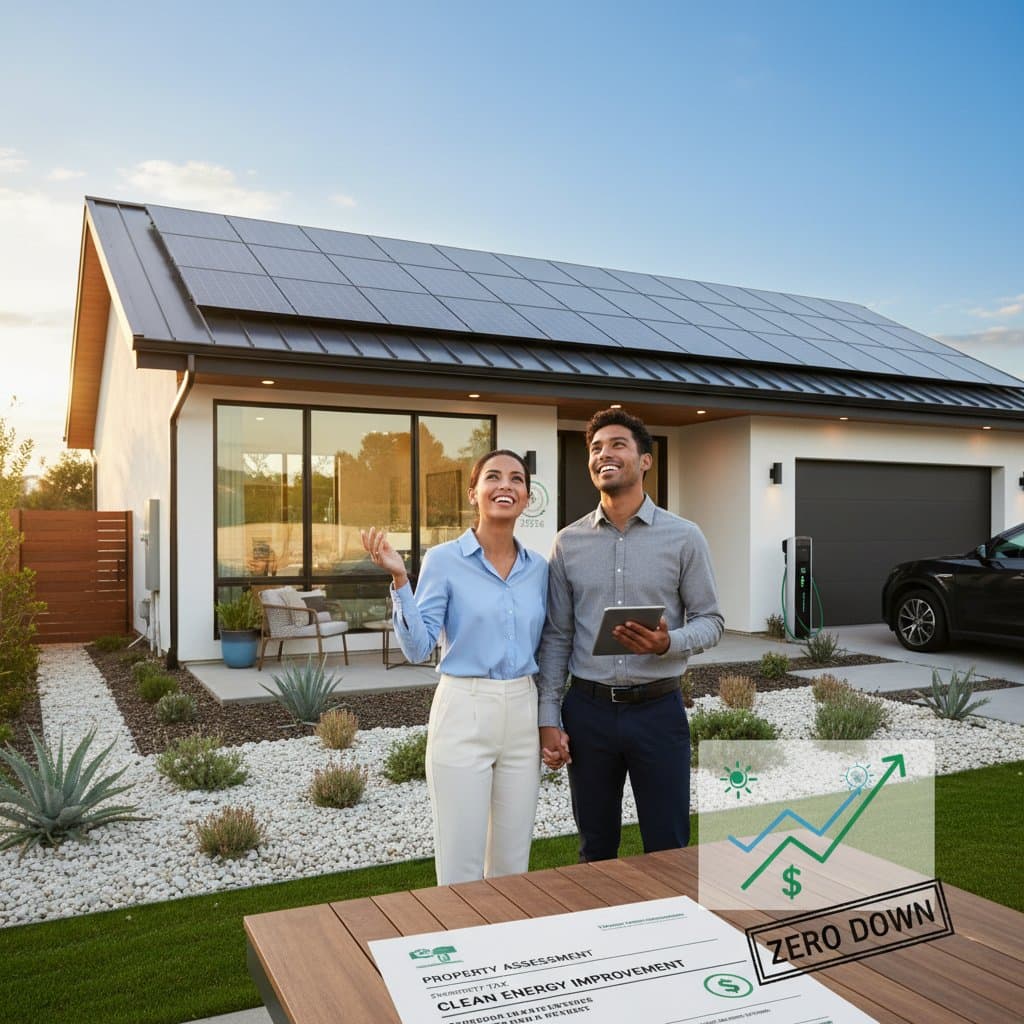
Unlock Solar Power with Zero Upfront Costs Through PACE Loans
Solar energy adoption among U.S. homeowners grows steadily, thanks to innovative financing options that eliminate major initial expenses. Property Assessed Clean Energy (PACE) loans stand out as a key tool, enabling property owners to add rooftop solar systems without down payments. Repayments occur via property tax bills, transforming clean energy investments for both residential and commercial properties.
The U.S. Department of Energy notes that PACE programs have supported thousands of solar projects nationwide. This approach links financing to the property itself, not the owner, which reassures those planning to sell or refinance homes. The solar installation stays with the property, minimizing risks for all parties involved.
Understanding the Mechanics of PACE Financing
Local or state programs administer PACE financing, collaborating with private investors to provide funds. Property owners opt into an assessment added to their tax bill, avoiding standard loans or equity lines. Terms typically span 10 to 20 years, aligned with program rules and energy savings projections.
This setup broadens access to clean energy upgrades for diverse homeowners and business operators. Secured by the property's value, approval hinges on equity rather than personal credit history. Such flexibility attracts individuals overlooked by traditional lenders.
"PACE financing has transformed the way we think about distributed energy deployment," said Julia Emerson, vice president of market strategy at SunPoint Solar, a California-based installer specializing in residential systems. "It removes the biggest barrier for many homeowners, which is the initial cost of installation."
Key Advantages for Property Owners
Zero-down payments free up personal funds for solar panels, efficient HVAC units, or battery storage additions. Costs spread across years, frequently matched or surpassed by utility bill reductions from generated energy.
Businesses benefit similarly, using PACE for expansive rooftop arrays or parking canopy systems. The option to pass assessments to future buyers appeals to investors aiming to enhance asset value without immediate cash outlays.
"Property Assessed Clean Energy financing supports both sustainability and profitability," said Michael Torres, director of energy finance at GreenCity Capital, a major PACE funding provider. "By tying repayment to the property, it encourages long-term energy planning rather than short-term cost avoidance."
Growth Trends and Regulatory Landscape
State laws govern PACE programs, leading to variations in operations. California, Florida, and Missouri feature robust systems with strong municipal and lender involvement. Emerging states refine policies, balancing protections for consumers with streamlined administration.
Federal support includes guidelines and resource sharing, but execution stays local. Wood Mackenzie analysts project that expanded PACE use could enable gigawatts of new solar capacity, driven by escalating electricity rates, steady real estate values, and comfort with tax-integrated payments.
Regulators address concerns over transparency and lien positions by mandating detailed disclosures. Administrators now prioritize explaining terms, including how assessments transfer during sales or refinances, to build trust.
Practical Considerations for Installations
PACE funding streamlines contractor workflows, shifting emphasis from credit checks to optimal system configurations. Both ground-mounted and roof-mounted solar setups qualify under typical programs, as long as they comply with local codes and grid connection protocols.
Shorter approval timelines compared to conventional loans speed up project timelines. Installers advise starting with a property assessment to confirm eligibility and estimate energy output against repayment schedules.
Securing Long-Term Energy Independence
With more states launching PACE initiatives for homes and businesses, this financing model fuels solar expansion. It pairs upfront affordability with extended repayment options, aligning environmental objectives with sound financial strategies.
Ongoing partnerships among local governments, financiers, and solar experts will enhance program accessibility. Property owners ready to pursue solar without initial investments find PACE a dependable route to enduring savings and eco-friendly upgrades.