
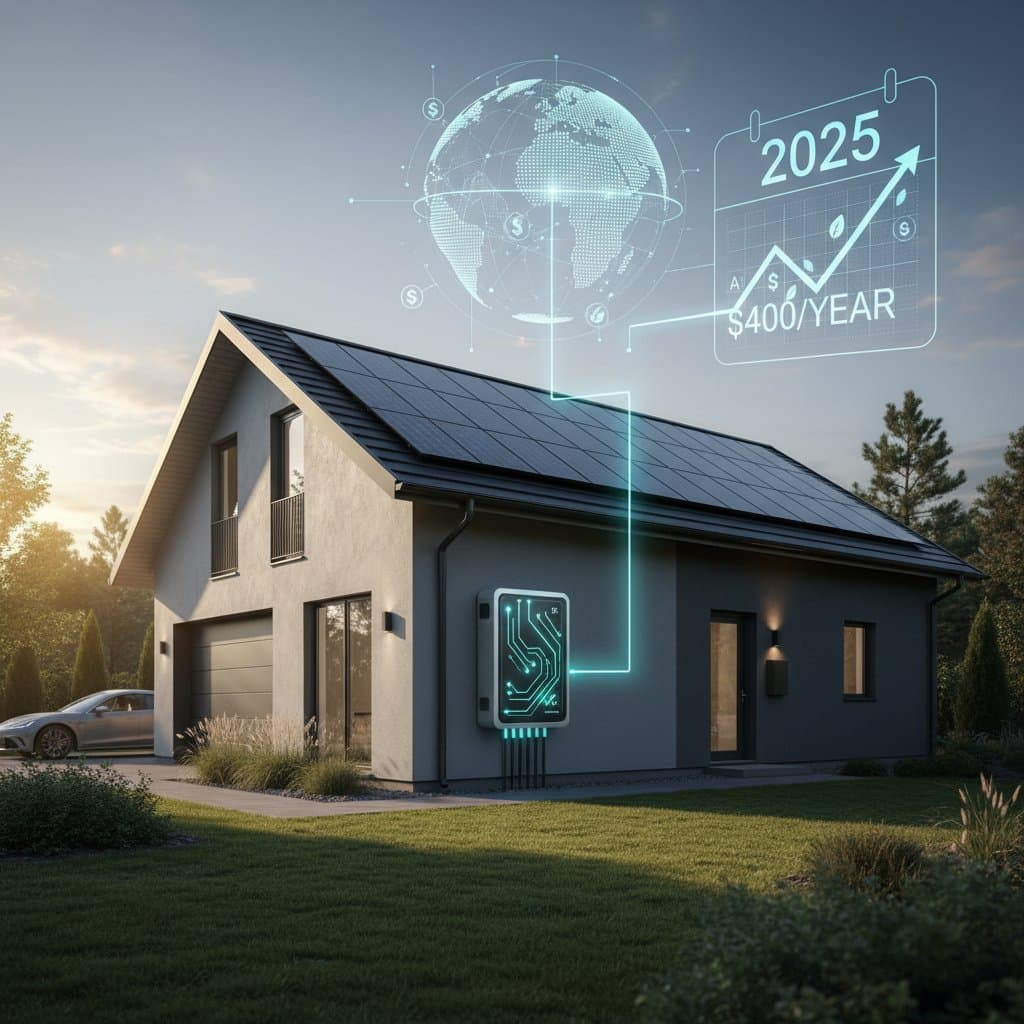
Earn $400 Yearly from Virtual Power Plants in 2025
Virtual power plants represent a significant shift in how homeowners and small businesses generate income from solar and battery installations. Utilities and aggregators continue to broaden programs across the United States, enabling participants to earn approximately $400 per year by supplying stored energy from home batteries to the grid. This approach delivers financial returns while enhancing grid reliability, fostering advantages for both individuals and energy suppliers.
Understanding Virtual Power Plants
A virtual power plant aggregates distributed energy resources, including residential solar panels, battery storage units, and intelligent appliances. Software coordinates these elements, determining optimal times to release energy to the grid. Utilities leverage this network to address supply and demand fluctuations more effectively than traditional large-scale power facilities.
During periods of peak demand, the virtual power plant operator activates contributions from numerous participants, each providing modest amounts of stored power. Compensation reflects the volume and frequency of these contributions. Estimates indicate that typical participants realize about $400 annually through controlled energy releases from their batteries, with variations based on location and program specifics.
Eligibility for Virtual Power Plant Programs
Participation generally requires ownership of solar panels paired with a compatible battery system. Eligible batteries include models from manufacturers such as Tesla, Enphase, LG Energy Solution, and SolarEdge. Utilities or third-party aggregators handle enrollment, verifying secure communication between devices and grid systems.
Individuals without solar installations may still qualify in select regions through battery-only participation, particularly where grid pressures occur often. These contributors supply stored energy and earn payments accordingly.
Enrollment involves signing an agreement, linking the system via a dedicated application, and authorizing remote control during designated events. Operators alert participants to activations, and earnings accumulate based on energy dispatched, measured in kilowatt-hours and duration.
Calculating Earnings and Compensation Structures
The $400 annual projection derives from data across various U.S. markets and pilot initiatives abroad. Factors influencing payouts include regional utility demands, battery size, and event occurrences. Programs may offer fixed availability incentives or per-kilowatt-hour reimbursements.
A 10-kilowatt-hour battery yields higher returns in high-demand areas compared to stable regions. Additional perks, such as enrollment bonuses or discounted electricity rates, further enhance value, helping to recover solar and storage investment costs.
Providers like Sunrun, Tesla, and Generac operate extensive virtual power plant initiatives in several states. Although payment mechanisms differ, all emphasize compensating users for bolstering grid support through distributed energy.
Advantages Extending Past Financial Gains
Participation extends beyond earnings by diminishing dependence on fossil fuel-based peaker plants during surges. This shift promotes reduced emissions and aligns with sustainability objectives. Virtual power plants enable utilities to enhance flexibility, postponing expensive grid expansions.
Homeowners optimize battery performance by monetizing surplus capacity when the grid requires it, transforming storage from a static reserve into a revenue source. This integration cultivates a responsive energy landscape.
Programs often incorporate safeguards, maintaining adequate battery reserves for personal use during outages. Such features underscore the value of virtual power plants in promoting both economic and operational resilience for residential and commercial users.
Growth Trends and Future Prospects
Regulators increasingly endorse aggregated distributed resources through supportive policies that standardize payments and streamline access. As utilities integrate advanced management technologies, virtual power plants transition from experimental stages to widespread implementation.
Aggregators collaborate with equipment producers to achieve broad compatibility, allowing seamless integration without hardware upgrades. Projections indicate substantial growth in participation as public awareness increases and utilities introduce competitive incentives.
In regions with elevated electricity costs, virtual power plants appeal to those maximizing solar returns. The $400 estimate serves as a baseline; certain areas already document superior earnings amid frequent demand responses.
Steps to Participate and Maximize Returns
Homeowners eager to monetize stored energy should first consult local utilities or approved aggregators to confirm program availability. Verify system compatibility to avoid unnecessary modifications; most initiatives demand at least a specified battery capacity, stable internet, and approval for automated operations.
Upon joining, utilize dashboard applications to monitor earnings, event notifications, and usage analytics. These interfaces offer insights into sharing frequency and optimization strategies, ensuring informed participation.
Stay engaged with program communications for updates on rates and conditions. Virtual power plants empower distributed resources to actively support the grid, generating income while advancing reliability and sustainability. This model positions homeowners at the forefront of an evolving energy paradigm, yielding tangible financial and ecological rewards.