
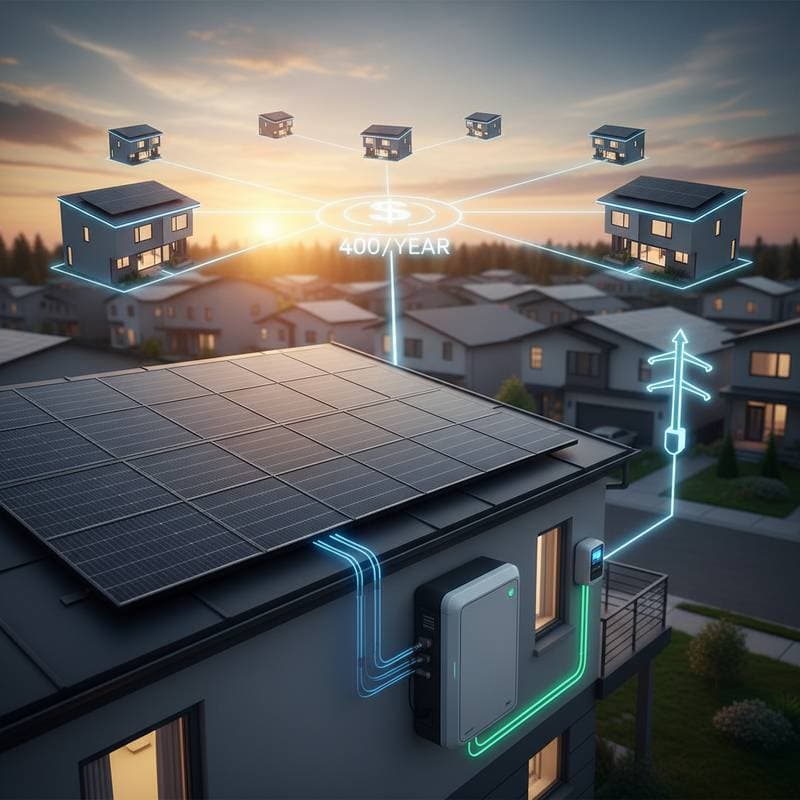
Earn $400 Yearly Selling Solar Back to the Grid
Homeowners equipped with rooftop solar panels now access fresh revenue streams through virtual power plant programs. These initiatives aggregate distributed energy resources into unified networks that support the grid. Participants across multiple U.S. regions earn approximately $400 annually by exporting surplus solar generation or stored energy during peak demand periods. Utilities and aggregators view these programs as vital tools for grid balance, while they provide direct financial incentives to contributors.
Understanding Virtual Power Plants
A virtual power plant unites numerous distributed solar and storage installations into a single, responsive entity that functions like a conventional large-scale generator. Smart inverters and energy management software connect customer systems, enabling aggregators to coordinate power dispatch for demand peaks or supply gaps.
This approach differs from standard net metering, which offers straightforward credits for exported energy. Virtual power plant involvement includes planned dispatches and capacity-based compensation. Participants receive payments for both exported kilowatt-hours and reliable capacity availability during critical events.
Pilot program data indicates that residential contributors typically provide 3 kW to 10 kW of capacity. Compensation levels fluctuate based on location, utility policies, and incentives. In regions facing significant grid strain, yearly earnings often surpass $400, especially with integrated battery storage.
Growth in U.S. Markets
Utilities in states such as California, Massachusetts, Vermont, and Arizona actively broaden virtual power plant participation to enhance grid resilience. In California, major investor-owned utilities partner with aggregators like Sunrun and Tesla to leverage solar-plus-storage resources amid intense heat waves. Northeastern providers, including Green Mountain Power and National Grid, incorporate thousands of residential setups via demand response systems.
The U.S. Department of Energy endorses virtual power plant expansion, emphasizing the role of adaptable distributed resources. Wood Mackenzie projections suggest nationwide virtual power plant capacity could reach 30 GW over the next decade, assuming sustained momentum. This growth signals a transition from centralized power production to distributed systems that incentivize community involvement.
Key Installation and Technical Factors
Installers encounter expanded technical and commercial prospects with virtual power plant integration. Required equipment includes smart inverters that support remote oversight and control. Aggregators typically mandate adherence to IEEE 2030.5 standards for seamless communication between customer devices and grid operators.
Battery storage proves crucial, as it enables energy capture from solar panels for later controlled release. Popular lithium-ion options from Enphase, SolarEdge, and Tesla feature prominently in these programs. Before activation, installers confirm that firmware updates and communication gateways align with program requirements.
Optimal system design enhances effectiveness. Panels positioned for maximum sunlight exposure through precise tilt and orientation boost output. Installers also prioritize robust electrical connections and rapid-shutdown features to uphold safety protocols. With rising grid engagement, professionals note increased needs for expertise in data setup, inverter configuration, and aggregator collaboration.
Calculating Revenue and Economic Benefits
Virtual power plant earnings hinge on energy pricing, agreement details, and dispatch occurrences. A homeowner with a 7 kW solar array paired with a 10 kWh battery might secure $30 to $40 monthly in capacity and performance incentives during operational periods. Annually, this amounts to about $400, which can reduce utility costs or fund system enhancements.
Many programs allow retention of net metering advantages, positioning virtual power plant payments as additional income. Utilities may offer shared savings models or fixed capacity rates. Aggregators manage reporting and billing with utilities, streamlining the process for participants.
John Fernandez, Director of Distributed Energy Programs at SunConnect Energy in California, describes the approach as transforming passive solar users into engaged grid supporters. He notes that virtual power plants add a revenue dimension to distributed assets while bolstering overall system reliability.
Impacts on the Solar Sector
Virtual power plant adoption bolsters installers' offerings by enhancing customer propositions and fostering ongoing income sources. Aggregators reward installation firms for participant onboarding and system validation. Developers incorporating virtual power plant-compatible features may access utility collaborations that include assured payments or enrollment incentives.
Equipment providers adapt by advancing communication features and security protocols to satisfy aggregator criteria. Interoperability emerges as a pivotal differentiator, with utilities requiring fluid integration across diverse brands.
Regulators assess virtual power plant roles in established energy markets. Certain states explore compensation akin to large-scale capacity auctions. Uniform guidelines promise to hasten uptake by simplifying agreements and promoting clear remuneration.
Preparing for Distributed Energy Integration
Virtual power plants mark a pivotal advancement in leveraging solar and storage for tangible benefits. Homeowners secure monetary gains, utilities obtain dependable resources, and installers unlock service expansions. While the $400 annual estimate varies by circumstance, the trend underscores distributed energy's active grid role.
Solar experts should emphasize connectivity, controllability, and standards compliance in preparations. As utilities proliferate aggregation efforts, those versed in technical and policy elements stand ready to guide this transformation.