
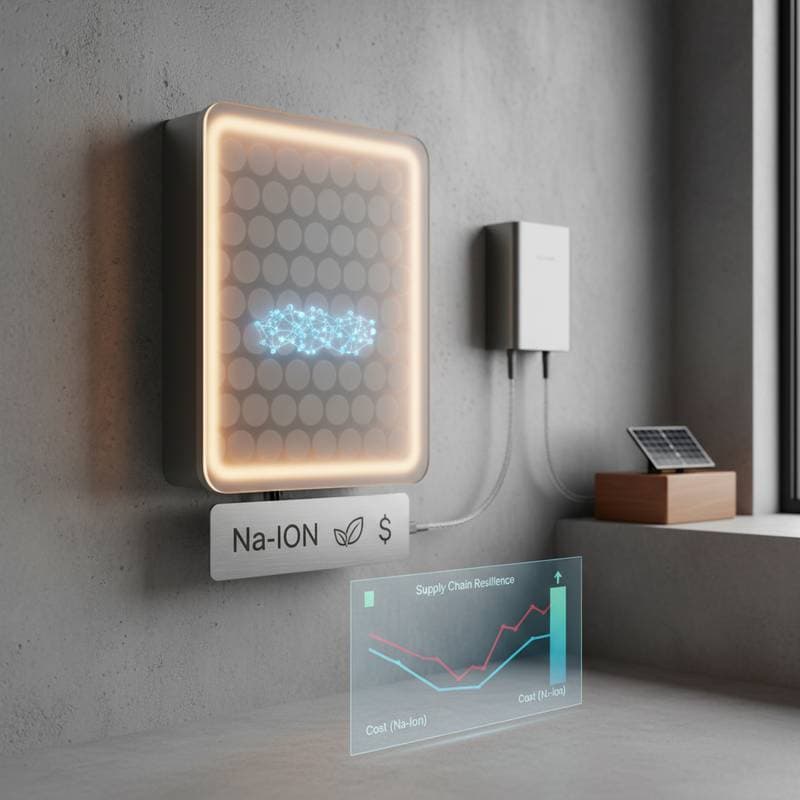
Sodium-Ion Batteries: A Cost-Effective Alternative to Powerwall Systems
Homeowners often associate solar energy storage with lithium-ion batteries. These batteries have powered rooftop solar integrations for years, providing reliable performance. However, supply chain vulnerabilities, elevated costs, and safety risks hinder widespread adoption. Sodium-ion batteries introduce a transformative approach, reshaping the economics of residential energy storage and offering a viable alternative to traditional Powerwall designs.
The Advantages of Sodium Abundance
Sodium ranks among the most plentiful elements on Earth. This abundance ensures low costs, straightforward sourcing, and minimal geopolitical dependencies. In contrast, lithium extraction concentrates in select regions and demands intricate refining processes, leading to price fluctuations that complicate solar-plus-storage projects.
Sodium-ion batteries incorporate sodium into the cathode and electrolyte components. Engineers have addressed challenges in matching lithium's energy density and cycle durability. Recent developments narrow this divide. Chinese manufacturers produce sodium-ion cells at commercial scale, while Western startups initiate pilots achieving energy densities near those of basic lithium-iron-phosphate cells.
Analyzing Cost and Performance Metrics
Sodium-ion cells deliver 120 to 160 watt-hours per kilogram, trailing premium lithium-iron-phosphate cells that exceed 200 watt-hours per kilogram. Production costs for sodium-ion batteries fall by up to 40 percent, thanks to basic materials and relaxed purity standards. This reduction could lower home storage system prices by thousands of dollars as production expands.
Cycle life represents a critical measure. Advanced lithium-iron-phosphate systems surpass 6,000 cycles, whereas sodium-ion variants offer 3,000 to 4,000 cycles in initial models. Daily use yields about ten years of operation before significant capacity loss. The reduced initial investment makes total ownership costs competitive. Sodium-ion batteries also perform well in cooler environments, functioning effectively in unheated spaces or outdoor settings where lithium systems falter.
Enhancements in Safety and Supply Security
Sodium-ion chemistry excels in safety, remaining non-flammable and resistant to thermal runaway during stress. Residential installers benefit from lower insurance premiums and streamlined permitting processes. Utilities deploying community storage favor sodium to bypass elaborate fire mitigation for lithium arrays.
Supply chain stability further strengthens sodium-ion appeal. Production relies on accessible salts and aluminum collectors, avoiding copper dependencies. This approach excludes cobalt, which raises environmental and ethical issues. Installers appreciate sodium's alignment with sustainable practices, eliminating the need to address sourcing concerns with clients.
Addressing Key Technical Challenges
Energy density limits sodium-ion applications in compact setups. A sodium-based storage unit matching lithium capacity requires more space. Compatibility with current inverters demands updated management software to handle distinct voltage and charging traits. Leading inverter producers conduct ongoing compatibility tests.
Deep discharge cycles accelerate degradation in sodium-ion systems compared to lithium-iron-phosphate. Partial cycles maintain performance effectively, suiting most grid-connected homes with infrequent full drains. Off-grid applications require careful sizing to preserve longevity.
Gaining Traction in the Market
The progression mirrors lithium-iron-phosphate's rise, initially overlooked for lower performance against nickel-manganese-cobalt variants. Scaled manufacturing and refined designs shifted perceptions rapidly. Sodium-ion follows suit, with major suppliers integrating it into stationary products and pilots validating real-world reliability.
European and Asian markets introduce sodium-ion systems as economical solar partners. These target users seeking dependable backup and load management without lithium's expense. Benefits include affordable sourcing, secure operations, and simplified end-of-life recycling.
Implementing Sodium-Ion Storage in Residences
Homeowners eyeing Powerwall alternatives find sodium-ion options approaching availability. Select certified units compatible with hybrid inverters and backed by robust warranties. Anticipate larger enclosures and modest capacity per module, offset by substantial cost reductions.
Installers prepare by studying sodium-ion parameters. Emerging training covers voltage dynamics and charge protocols. Solar professionals gain a competitive edge by presenting innovative, cost-efficient solutions distinct from lithium standards.
Sodium-ion batteries drive energy storage accessibility by dismantling cost obstacles. They suit homeowners prioritizing reliable solar integration at attainable prices, fostering broader renewable adoption.