
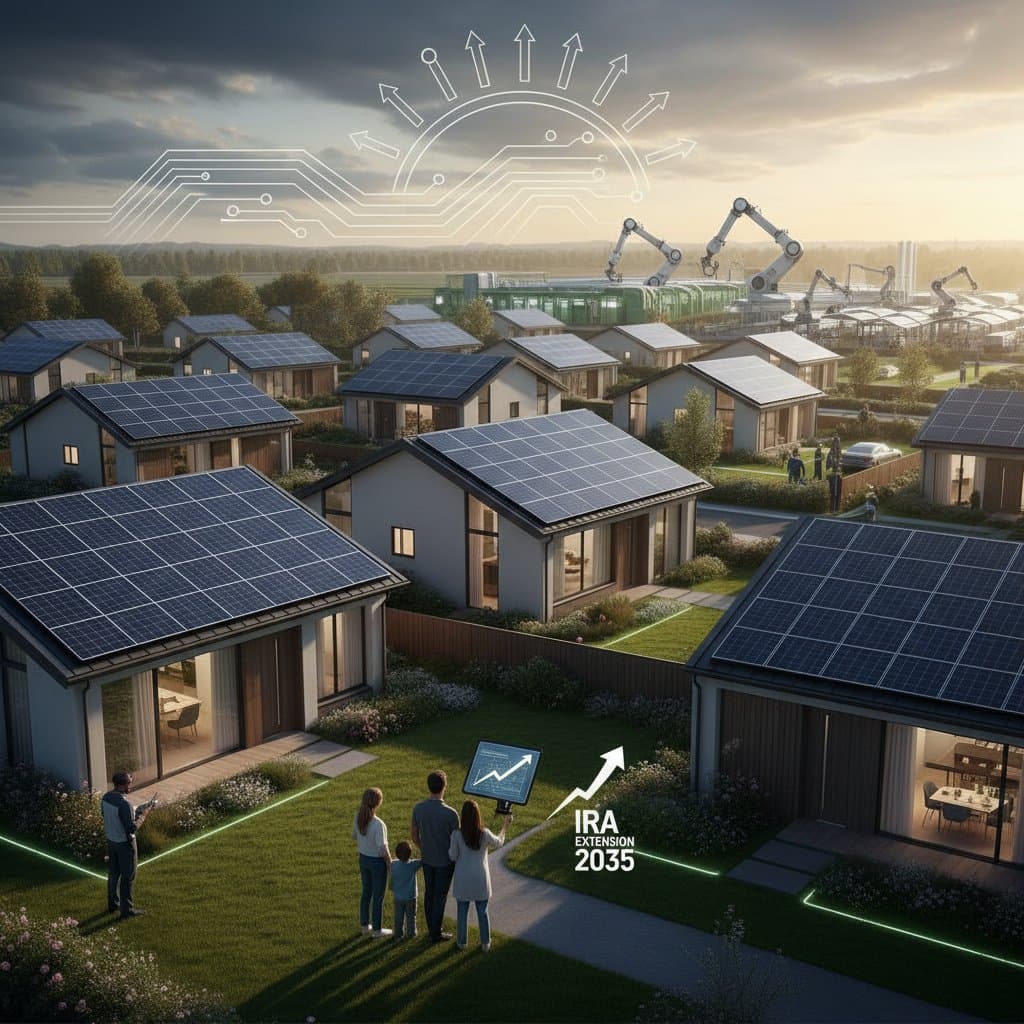
Solar Incentives Secured: IRA Extension to 2035
The Inflation Reduction Act marked a pivotal moment for renewable energy when introduced. Its recent extension of solar rebates and tax credits through 2035 elevates the policy to a foundational element of the solar market. This change holds significant consequences for homeowners, installers, manufacturers, financiers, and utilities operating in a dynamic incentive environment.
With over a decade of experience covering federal solar incentives, the author recognizes this extension as a rare source of enduring stability. The solar industry gains a complete investment cycle free from the disruptions of past credit expirations. Businesses can now strategize, construct, and scale operations based on reliable financial projections.
Stability for Solar Investments
Solar market growth has traditionally surged around federal incentive deadlines. Installers rushed completions to capture credits before reductions, followed by lulls after deadlines passed. The 2035 extension removes this unpredictability, providing a consistent framework for residential and commercial projects.
The extended credits follow the original IRA design. Homeowners qualify for a federal tax credit covering a portion of installation costs. Businesses access the Investment Tax Credit for systems and the Production Tax Credit for electricity generation. Rather than phasing out, these incentives hold steady, allowing market maturation and cost reductions via scale.
This adjustment influences capital deployment. Investors shift from viewing solar as risky to treating it as essential infrastructure. Lenders forecast returns across ten years, and utilities schedule expansions without policy interruptions.
Benefits for Homeowners
Homeowners gain assurance that solar investments align with personal timelines, not political schedules. Families install rooftop systems knowing tax credits remain available. Local installers maintain steady staffing and training, avoiding boom-and-bust cycles.
Rebates include bonuses for domestic content and low-income projects. These features localize supply chains and broaden solar access. Community solar initiatives reserving capacity for income-qualified participants qualify for boosted incentives, ensuring clean energy benefits extend to diverse groups through the next decade.
Boost to Domestic Manufacturing
For manufacturers, the 2035 horizon represents the strongest federal commitment to solar supply chains. Initial IRA provisions triggered U.S. factory expansions, but demand uncertainty tempered enthusiasm. The extension clarifies profitability paths for these ventures.
Producers of modules, cells, wafers, and polysilicon expand with assured downstream demand. Past reporting highlights how incentive lapses led to factory closures amid import competition. This timeline breaks that pattern, fostering resilience.
The policy also appeals to global partners, encouraging collaborations, technology sharing, and investments that fortify U.S. capabilities.
How the Extension Operates
This development emerged from extended discussions within IRA energy guidelines. Officials aimed to preserve the investment momentumprovisions.
The Treasury Department and Internal Revenue Service oversee credit administration. Existing guidance covers energy storage pairings, interconnection expenses, and domestic content rules. Agencies will enhance monitoring to curb misuse, including advanced reporting.
Key features like direct pay and transferability persist. Direct pay delivers cash equivalents to tax-exempt entities such as schools and nonprofits. Transferability enables credit sales to third parties, enhancing liquidity for smaller developers. These tools democratize financing and remain vital under the extension.
Economic and Employment Impacts
The extension influences the wider economy through sustained solar demand. Construction, electrical, and trade professions experience consistent work. Unions expand apprenticeships, anticipating long-term job availability.
Solar employment ranks among the swiftest-growing in energy. A decade of secured incentives promises extensive job creation, with effects extending to logistics, materials, and project software.
States attract clean energy projects more effectively, while cities plan electrified infrastructure with dependable cost models.
Utility-Scale Projects and Financing
Utility developers benefit from reliable pipelines for multi-year endeavors. Long-term power agreements proceed without mid-project economic shifts.
Tax equity markets stabilize, avoiding pre-expiration crunches. Institutions allocate funds steadily, easing capital access.
Transferability draws insurers, pension funds, and corporations into credit markets, increasing competition and broadening financing options for all project scales.
Environmental and Grid Advantages
Environmentally, the extension aids phased solar integration with transmission and storage improvements. This method enhances grid reliability and minimizes energy waste.
Sustained deployment advances decarbonization without fresh laws. Predictable solar growth supports emission targets.
Distributed generation, including rooftop solar with storage, eases peak loads. Expanded eligibility drives steady growth, supporting large-scale efforts.
Insights from Prior Cycles
Observations from earlier credit expirations reveal uncertainty's toll. Activity plummeted pre-deadline, prompting layoffs and production cuts.
The IRA avoids this by drawing on successes like the Section 1603 grant program, which sustained momentum via direct payments. The extension refines such approaches with domestic and labor emphases, blending deployment with industrial goals.
Sector Responses and Projections
Stakeholders welcome the news. Installers plan expansions, manufacturers affirm investments, and utilities mitigate risks.
Forecasts indicate consistent capacity increases in distributed and utility segments, influenced by prices and timelines. States can align policies like storage incentives without federal mismatches.
The shift fosters confidence, enabling innovation and strategic growth over anxiety.
Steps for Homeowners and Businesses
Homeowners should obtain quotes promptly to capture current pricing and terms, despite the secure timeline. Businesses assess project viability with extended incentives in mind, prioritizing domestic components for bonuses.
Installers and manufacturers review supply strategies to leverage stability. Utilities model integrations for optimal grid benefits.
Forging a Durable Solar Framework
This extension positions solar as a stable economic driver. It nurtures manufacturing resurgence, job expansion, and environmental progress, laying groundwork for a resilient clean energy landscape through 2035 and beyond.