
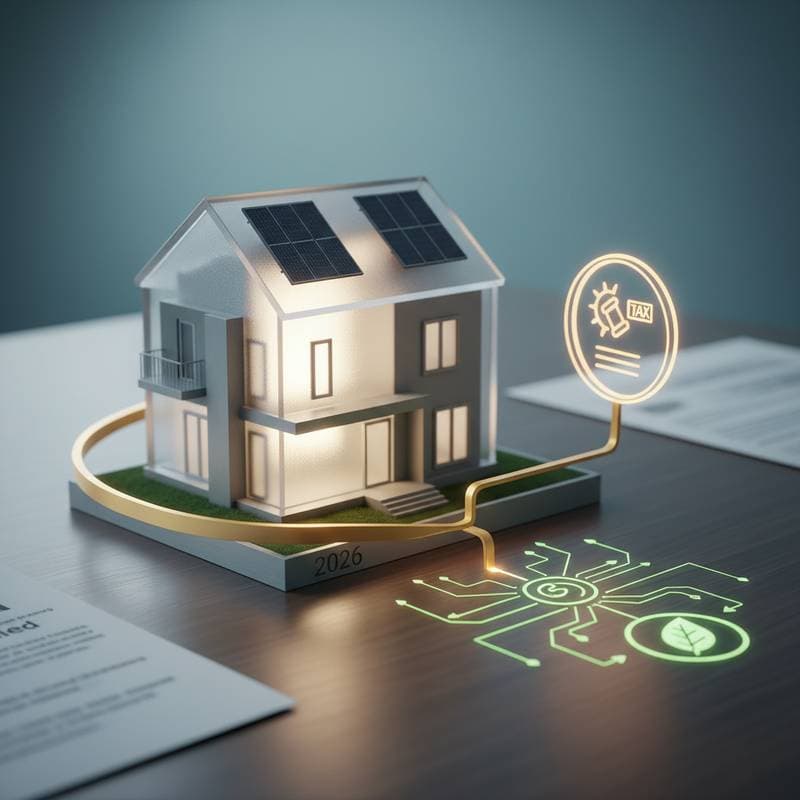
Leverage PACE to Finance Solar via Property Taxes
Property Assessed Clean Energy, commonly referred to as PACE financing, has transformed the approach to funding solar energy systems for homeowners and businesses. This mechanism addresses the divide between interest in clean energy and the challenges of upfront costs. In reporting on various solar financing options, including power purchase agreements and green banks, PACE distinguishes itself through its unique structure that connects costs directly to property taxes, facilitating repayment aligned with the property rather than the individual owner.
Property owners seeking solar installations without relying on conventional loans or credit find PACE an attractive option. However, as with any government-linked financial tool, certain details demand thorough review.
Understanding the Mechanics of PACE Financing
PACE operates as a public-private partnership. Governments at the local or state level establish the program, while private lenders provide the funds for energy-efficient improvements. Repayment integrates into the property tax bill as an assessment, converting a typical personal obligation into one tied to the asset itself.
This design carries key consequences. The primary advantage lies in the obligation remaining with the property upon sale, allowing the subsequent owner to assume the balance via taxes. Such a feature appeals to those uncertain about long-term residency yet eager to adopt solar technology.
PACE applies to diverse upgrades, including solar arrays, battery storage, heating and cooling systems, roofing, and water conservation measures. This versatility positions clean energy enhancements as essential infrastructure, comparable to public utilities like pathways or drainage systems.
Advantages of PACE for Solar Installations
Solar initiatives align seamlessly with the PACE framework. The extended durability of solar components corresponds to repayment periods that often extend beyond twenty years. This synchronization permits owners to distribute expenses over time while benefiting from prompt reductions in utility expenditures.
From a business standpoint, PACE aids solar providers in securing more projects. Approval hinges mainly on property value rather than individual credit history, broadening eligibility. Observations from contractor trends indicate that numerous mid-sized firms incorporate PACE into routine financing packages, particularly in regions with robust program administration and safeguards.
Commercial entities experience amplified gains. Organizations can deploy expansive solar setups and storage solutions without diverting funds from primary activities. As the assessment attaches to property taxes, these investments qualify as operational expenses rather than standard debt, enhancing financial reporting and liquidity.
Policy Foundations Supporting PACE
PACE emerged from municipal initiatives aimed at promoting clean energy without relying on outright subsidies. Local authorities identified that many owners desired solar systems but faced barriers from initial investments. By embedding repayment within established tax frameworks, governments created a reliable collection process that drew private funding.
Analysis of state policy evolution reveals that effective PACE programs rely on precise legislation and open administration. Jurisdictions that specify assessment attachment and transfer protocols during property sales achieve greater engagement and minimal conflicts.
Protections for participants have evolved significantly. Initial programs encountered backlash over high-pressure marketing and limited transparency. Presently, many areas mandate licensing and specialized training for contractors, alongside comprehensive disclosures covering terms, schedules, and tax implications.
Addressing Frequent Misconceptions About PACE
PACE often faces misinterpretations despite its strengths. A prevalent error views it as a grant or subsidy from the government. In truth, it constitutes a loan recovered through tax assessments, where nonpayment invites fines or encumbrances.
Confusion also arises regarding property transactions. Certain agents erroneously advise that assessments require full settlement prior to closing. Typically, the obligation transfers to the buyer, though outcomes vary by local regulations and lender stipulations. Some mortgage providers insist on clearance due to the priority status of tax liens.
Interest rates present another area of misunderstanding. PACE rates compete with those of traditional loans but fluctuate based on location and program operators. The core value resides in ease of access and structural design, rather than guaranteed lower costs. For individuals ineligible for standard financing, PACE provides an essential alternative for solar adoption.
Assessing Financial Impacts of PACE
Prospective users must scrutinize cash flow before entering a PACE arrangement. Compare the added tax assessment against projected utility reductions. In typical solar setups, savings cover much of the payment, though results hinge on installation scale, regional energy prices, and output efficiency.
- Calculate anticipated monthly utility savings using local rate data and system performance estimates.
- Project the assessment amount based on project costs and program terms.
- Determine net financial benefit over the repayment period, factoring in potential property value increases.
Viewed as an investment, PACE-backed solar boosts asset appeal. Prospective buyers regard installed systems as valuable features amid fluctuating energy markets. The fixed, disclosed nature of tax-based repayment simplifies transaction disclosures compared to personal financing.
For commercial holdings, align PACE terms with leasing agreements. Occupants enjoy reduced energy bills, while proprietors recoup via rental modifications. This synergy explains PACE's rising popularity in commercial real estate, distributing economic and ecological advantages.
PACE in the Evolving Solar Landscape
As solar adoption advances, novel financing strategies propel growth. PACE complements options such as community projects, leasing arrangements, and utility billing integrations, each targeting distinct audiences. Its distinction emerges from utilizing the universal property tax as a dependable repayment avenue.
Coverage of governmental clean energy involvement highlights PACE's economic contributions. Programs foster employment among local installers, yield tax income, and promote self-reliance in energy. Funds remain within communities, avoiding reliance on remote banking entities.
Certain states have broadened PACE to encompass resilience features, such as weather-resistant modifications or earthquake reinforcements. This expansion reinforces program viability by extending applications beyond solar, while energy production stays prominent.
Steps to Implement PACE for Your Solar Project
Property owners and enterprises eyeing solar should consider PACE for its compatibility with technology longevity. Mastery of advantages and responsibilities proves essential. Examine total expenses, timelines, and transfer provisions prior to agreement.
Years of observing solar financing developments position PACE as an exemplary fusion of policy and private ingenuity. It connects renewable objectives with practical economics.
Advancement of PACE hinges on ongoing regulation, clear dialogue, and market growth. From homes to industrial sites, financing solar through property taxes illustrates innovative paths to renewable integration.