
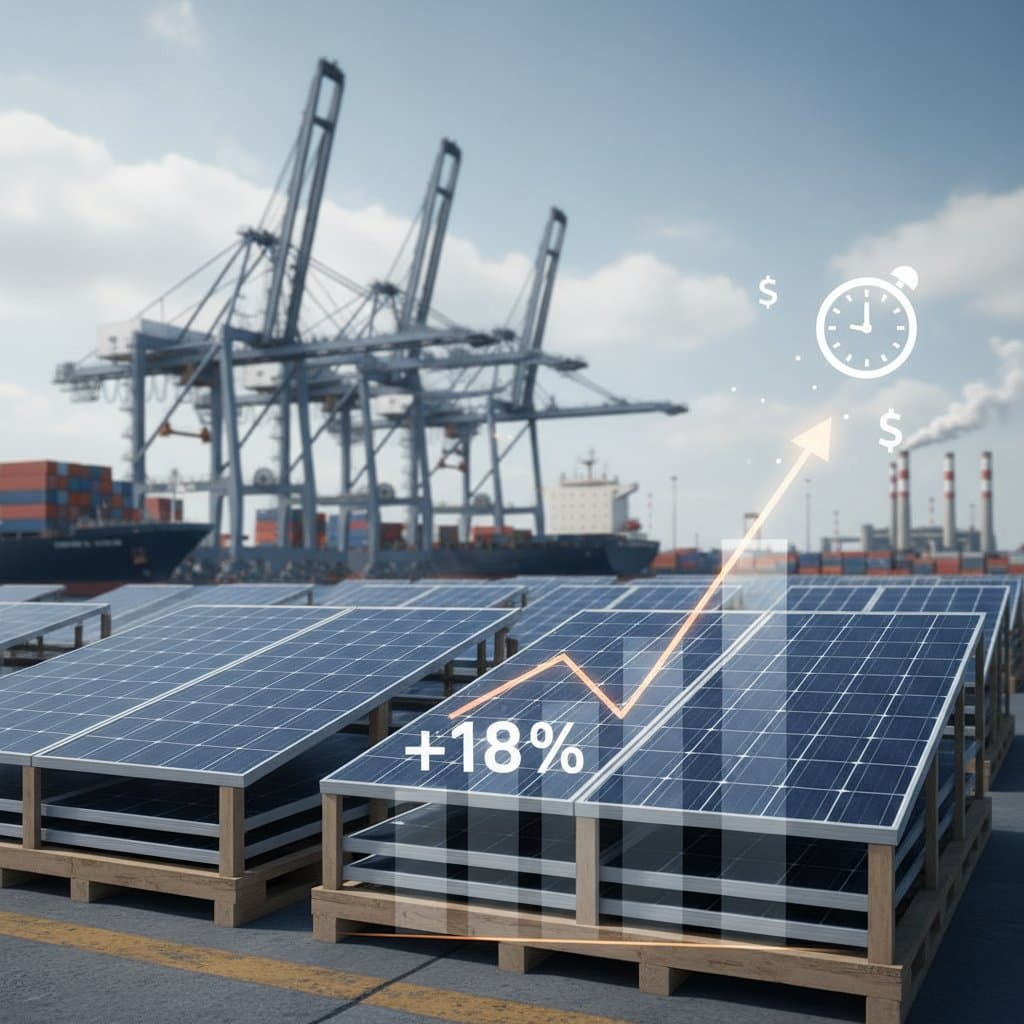
Upcoming 18% Tariff on Solar Imports: What to Expect
A tariff adjustment raises prices on imported solar panels by 18 percent starting next month. This policy targets crystalline silicon modules from key Asian suppliers that dominate the U.S. market. Developers, installers, and distributors must adapt procurement approaches to address rising costs and shifting supply dynamics.
Industry experts predict disruptions in project schedules, contract terms, and sourcing choices. Buyers face decisions on stockpiling inventory or negotiating new deals. The adjustment aims to bolster U.S. production, yet its immediate effects ripple through the entire supply chain.
Short-Term Market Disruptions
The new tariff applies to modules from major Asian production centers. These sources provide most U.S. solar stock, prompting distributors to accelerate shipments ahead of the deadline. Suppliers report heightened demand as buyers aim to secure pre-tariff rates.
Procurement leaders note varied responses: some order surplus panels to hedge against hikes, while others pause until pricing stabilizes. This hesitation fuels temporary instability in distribution channels. Even U.S. assembly operations, reliant on imported cells, may pass on elevated costs to buyers.
Regional differences emerge, with import-heavy areas facing sharper price jumps. Buyers in these zones should prioritize early commitments to mitigate risks.
Perspectives from Manufacturers and Developers
Domestic producers welcome the change as a chance to capture more market share. Several firms plan output expansions and workforce additions to fulfill rising needs for U.S.-made modules. Higher import prices enhance their competitive edge in bids and contracts.
In contrast, developers and installers worry about near-term viability. Existing power purchase agreements and construction deals assumed lower component costs, potentially squeezing profits or necessitating revisions. Projects nearing startup might stall during financial reassessments.
Trade organizations call for policy refinements to avoid deployment slowdowns. They stress the need for predictable pricing to support planning and employment stability. Stakeholders should engage with these groups for advocacy and guidance.
Adapting Supply Chains
Distributors seek alternative sources to cushion the tariff blow. Options include suppliers from unaffected nations or deeper domestic sourcing. Logistics experts optimize routes and customs processes to expedite pre-tariff deliveries.
Engineering and construction teams build budget contingencies for volatility. They incorporate clauses in contracts to handle policy-driven cost shifts. Financial consultants advise updating capital plans and supplier agreements with tariff safeguards.
Supply tightness will differ by location. Regions with strong local capacity may adjust smoothly if production scales fast. Others should explore hybrid sourcing to balance costs and availability.
Broader Policy and Trade Landscape
This tariff fits into efforts to fortify U.S. clean energy independence. Officials highlight reducing foreign dependencies, especially from low-cost production areas. The measure promotes a secure domestic chain for solar components.
Short-term challenges test industry resilience, particularly for financing reliant on steady costs. Lenders demand reliable projections, and sudden changes complicate approvals. Developers must document tariff effects to sustain investor confidence.
Trade specialists anticipate exemption requests for unique products. Importers of advanced or scarce panels can seek relief, though approvals take time. Firms should prepare applications early to clarify final expenses.
Projections for Market Evolution
Research indicates the 18 percent rise may curb short-term capacity growth. Utility-scale initiatives, with high material needs and narrow margins, face the greatest risks. Commercial and residential sectors might fare better by passing costs to clients or switching suppliers.
The policy could spur U.S. factory investments, amplified by clean energy incentives. Successful buildouts might balance supply in coming quarters, easing price pressures. Watch for drops in polysilicon or aluminum costs to offset some increases.
Longer-term, diversified chains promise stability. Industry leaders forecast gradual normalization as domestic output rises.
Actionable Steps for Professionals
Installers update procurement schedules to lock in stock promptly. They verify supplier timelines and inventory with direct outreach. Distributors extend pre-tariff offers for firm orders, aiding utility-scale planning with revised cost analyses.
Developers align with lenders on budget adjustments for funding releases. Clear tariff documentation prevents financing hurdles. Include escalation provisions in offtaker contracts to share risks.
Workforce strategies evolve with production shifts. Recruit for assembly, logistics, and quality roles, and invest in training to build capacity. These moves create jobs while supporting operational needs.
Building Resilience in a Changing Market
The tariff ushers in a phase demanding astute cost controls and flexible sourcing. It advances a U.S.-centered solar ecosystem, though initial uncertainties challenge developers and installers. Success hinges on supplier diversification, policy vigilance, and stakeholder dialogue.
Procurement teams assess stock levels and weigh bulk buys. Developers confirm contract flexibility for adjustments. Manufacturers cultivate ties with buyers favoring local options. Proactive adaptation ensures sustained progress amid trade evolutions.