
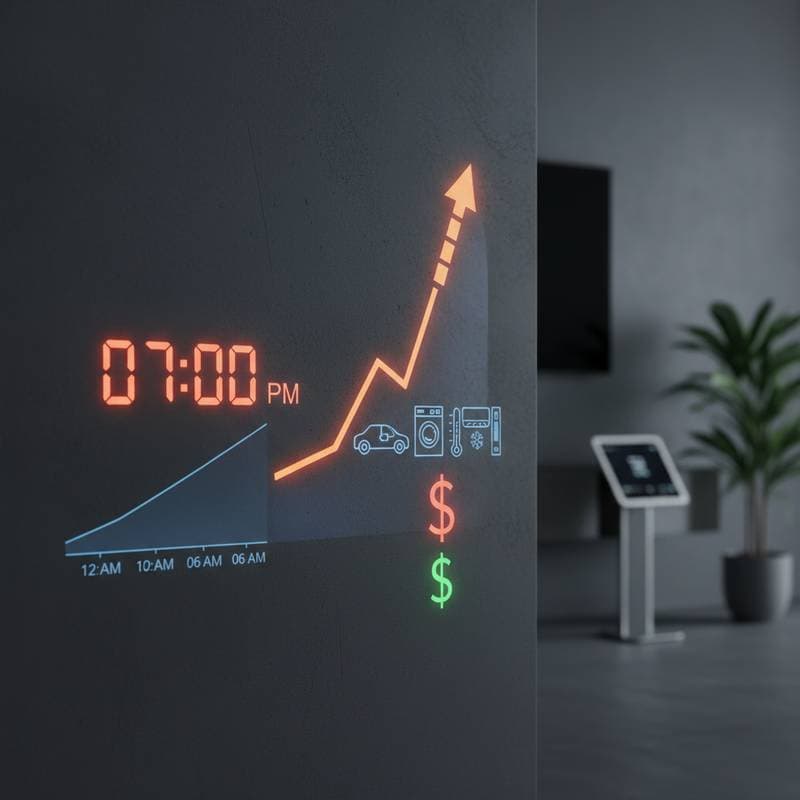
Why Time-of-Use Rates Tripled Your Electricity Bill Overnight
Homeowners and business owners across regions have faced unexpected surges in electricity costs after utilities implemented time-of-use (TOU) rate structures. These changes transform predictable bills into variable expenses, often tripling charges despite unchanged consumption patterns. To address this, examine utility pricing mechanics, peak demand influences, and targeted customer responses that restore financial stability.
Understanding Time-of-Use Pricing Basics
Time-of-use pricing assigns varying rates to electricity based on consumption timing rather than a uniform kilowatt-hour fee. Utilities segment the day into off-peak, mid-peak, and on-peak intervals, with on-peak periods carrying the highest charges due to elevated demand. This system aims to distribute grid load evenly by incentivizing usage shifts away from strain-heavy hours.
The core principle involves aligning customer behavior with grid efficiency. Fewer simultaneous users during peaks reduce the reliance on costly backup generation. However, abrupt transitions to TOU catch many unprepared, amplifying bill shocks.
Mechanics of TOU Rate Calculations
Utilities derive TOU rates from wholesale energy expenses and infrastructure limitations. Demand surges trigger activation of peaker plants, typically fueled by natural gas, which incur steep operational costs. These expenses pass directly to consumers through elevated on-peak tariffs, often doubling or tripling off-peak levels.
Retail pricing mirrors these fluctuations to ensure cost recovery. Evening and late-afternoon usage, common for household activities, now incurs premium fees. Persistent patterns in these windows explain rapid bill escalations without overall consumption growth.
Triggers for Overnight Bill Increases
Utilities frequently migrate customers to TOU plans via standard rate updates, applying changes without individual opt-in. Former flat-rate users discover their routines align with peak blocks, inflating costs. For instance, operating air conditioners or ovens from 4 p.m. to 8 p.m. shifts expenses upward under the new framework.
Total kilowatt-hour usage remains constant, yet timing alone drives the disparity. Households maintaining pre-transition habits absorb the full impact. Reviewing billing details reveals how specific hours contribute disproportionately to totals.
Defining Peak Hours and Grid Pressures
Peak hours typically span late afternoons through early evenings, when commuters activate appliances, lighting, and climate controls. This synchrony overloads transmission lines and generation assets. Utilities invest in excess capacity for these brief intervals, embedding those outlays in peak pricing.
TOU reallocates these burdens to peak-time users, promoting broader load balancing. Evening reductions ease infrastructure wear and defer expensive expansions. Seasonal variations, such as summer cooling demands, further sharpen these time-based differentials.
Solar Energy's Influence on Demand Patterns
Solar generation peaks midday, suppressing wholesale prices during sunlight hours. As dusk arrives, output plummets while evening demand rises, forming the duck curve phenomenon in net load profiles. TOU structures target this ramp-up with maximum rates, post-sunset.
Solar panel owners generate ample daytime power but often rely on grid imports after dark without storage solutions. This mismatch exposes them to high tariffs. Integrating batteries captures excess solar for evening discharge, mitigating the curve's financial bite.
Factors Driving Ongoing TOU Rate Hikes
Evolving grid dynamics, rising fuel prices, and renewable integration investments propel TOU adjustments. Regulators endorse designs emphasizing demand response to foster efficiency. Peak multipliers amplify as base rates climb, compounding effects on unadjusted consumers.
Utilities position these evolutions as pathways to sustainable operations. Customers overlooking plan reviews or habit tweaks experience amplified impacts. Proactive monitoring of regulatory filings anticipates further refinements.
Enabling TOU Through Smart Meter Technology
Smart meters track usage in 15-minute increments, facilitating granular TOU application. This precision profiles consumption peaks, enabling accurate charges. Utilities leverage the data for tailored rate innovations and load-shifting outreach.
Customer-facing tools, including apps and portals, display real-time patterns. These resources highlight peak exposures, guiding routine modifications. While empowering, they underscore the effort required to evade high-cost windows.
Clearing Up TOU Billing Misconceptions
Reducing total kilowatt-hours does not guarantee lower bills under TOU; timing overrides volume. Evening-focused usage, even at lower quantities, exceeds costs of dispersed off-peak consumption. Evaluate patterns holistically for true savings.
TOU extends beyond residences to commercial sectors, where peak operations inflate machinery and lighting expenses. Demand management tools, like schedulers, prove essential for businesses. Misjudging these nuances perpetuates avoidable overpayments.
Pinpointing Your Peak Rate Exposure
Utility websites detail seasonal TOU schedules, delineating peak windows by hour and day. Cross-reference these against your billing summary to quantify impacts. Summer peaks might run 4 p.m. to 9 p.m. weekdays, contrasting milder winter slots.
Deploy monitoring devices or smart plugs to log appliance-specific timing. Identify culprits like pool pumps or home offices. Baseline audits inform targeted adjustments, such as delaying laundry cycles past midnight.
Proven Strategies to Lower TOU Expenses
Adopt these methods to counteract peak pricing:
- Relocate high-load tasks to off-peak slots, scheduling EV charging or dishwashing for overnight hours when rates drop 50 percent or more.
- Deploy home batteries to capture low-cost or solar-generated power, releasing it during peaks to avoid grid purchases entirely.
- Program thermostats for pre-cooling homes before peak onset, maintaining comfort with minimal evening draw.
- Replace outdated equipment with Energy Star-rated models, trimming baseline usage by 10 to 20 percent across all periods.
- Enroll in utility demand response initiatives, earning credits for allowing remote curtailments during system alerts.
Combine approaches for compounded results. Track monthly progress via utility dashboards to refine tactics.
Aligning Rates with Renewable Integration
TOU supports dynamic pricing that mirrors variable renewable supplies, unlike static flat structures. Solar and wind variability demands consumption alignment with generation peaks. Midday usage maximizes clean energy utilization, curbing fossil fuel needs.
This evolution challenges fixed-routine users but rewards adaptability. Grid operators benefit from smoothed curves, enhancing reliability. Transition support, like education campaigns, accelerates widespread adoption.
Utility and Regulatory Support Measures
Clear communication gaps hinder TOU acceptance; many learn of shifts post-implementation. Regulators mandate opt-out options and bill impact simulations in select areas. Utilities develop tutorials and comparison calculators to demystify choices.
Bill protection pilots cap first-year TOU charges at flat-rate equivalents, refunding excesses. These buffers allow habit formation without penalty. Expanded access to such programs smooths broader rollouts.
Prospects for Rate Structure Evolution
Flat rates fade as grids incorporate intermittents and smart controls. Advanced TOU variants, including real-time adjustments, gain traction for cost reflectivity. Users contributing least to peaks access discounted tiers, fostering equity.
Utilities advocate these as true-cost proxies, minimizing subsidies from off-peak consumers. Adaptation equips participants for future innovations like vehicle-to-grid exchanges.
Implementing Changes for Immediate Savings
Audit your usage via meter data or apps to isolate peak contributors. Experiment with one shift weekly, such as evening cooking to lunch prep, measuring bill deltas. Solar owners prioritize battery sizing for 5 to 10 kilowatt-hour evening needs.
Sustained tweaks yield 20 to 40 percent reductions, offsetting rate pressures. Engage utility advisors for plan optimizations. Proactive management converts TOU challenges into efficiency gains, securing resilient energy finances.
Time-of-use pricing signals a valuation pivot toward temporal efficiency in electricity systems.