
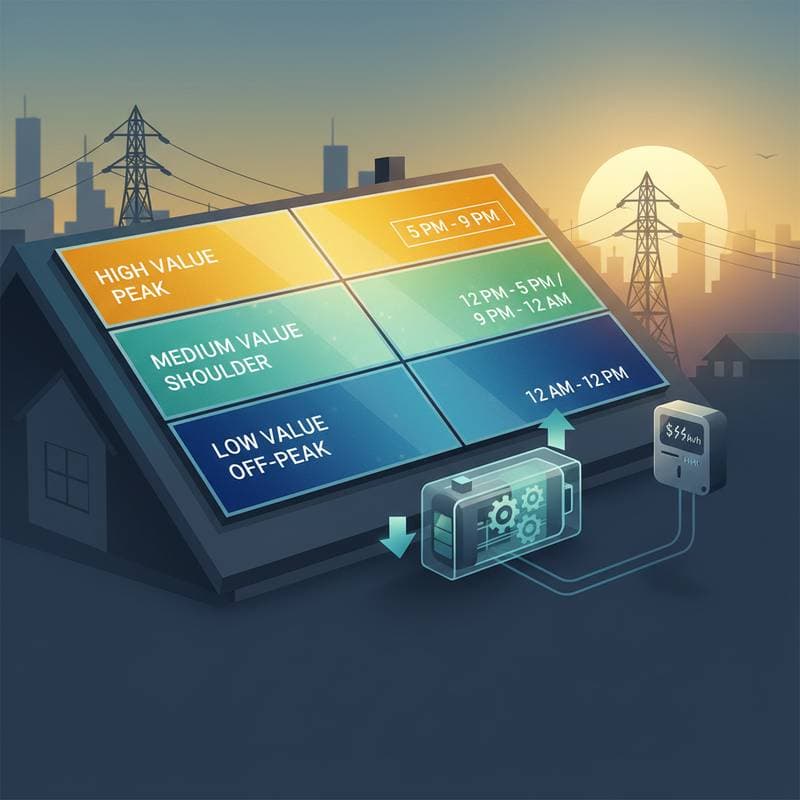
Utilities That Shape Solar Savings
Residential solar owners frequently encounter an unexpected outcome with their initial utility bill after installation. The inverter reports substantial energy production, but the bill often shows limited savings. This gap stems from the utility's rate structure, which either amplifies or reduces the worth of generated solar energy.
Analysis over the past decade reveals a key insight: time-of-use frameworks from utilities exert greater influence on solar savings than incentives or equipment expenses. While incentives and costs vary, hourly pricing ultimately decides whether solar serves as a robust financial tool or simply covers basic usage.
Understanding Time-of-Use Rates and Solar Production
Time-of-use rates divide the day into segments according to grid demand. Prices peak in the late afternoon and early evening, coinciding with heightened use of air conditioning, appliances, and lighting. Rates drop at night when demand decreases.
Solar panels produce energy mainly during midday hours, a time when rates often remain moderate. If peak periods extend into evenings, exported solar energy diminishes in value unless storage shifts it to those hours. Utilities vary in their approach: some offer consistent credits for exports that match consumption rates, while others apply time-of-use credits that lessen the advantage of midday generation.
Effective planning requires matching solar output to high-value periods. Review your utility's schedule to assess how production aligns with pricing tiers. This evaluation helps determine if additional components, like batteries, prove necessary for optimal returns.
Leveraging Arbitrage for Greater Returns
Time-of-use arbitrage capitalizes on price variations by strategically timing energy consumption and storage. Solar owners with batteries store excess midday production at low rates and release it during evening peaks, sidestepping expensive grid purchases.
The financial benefit derives from the difference between low solar generation costs and high peak retail rates. Early adopters of batteries faced hurdles, including restrictions on discharge cycles or intricate utility contracts. Optimal configurations involve utilities that allow seamless battery operation and offer dynamic pricing responsive to solar input.
To execute arbitrage effectively, consult your utility's rate calendar and select interoperable battery systems. Configure automation features to discharge energy precisely during peak windows. Where peak export credits apply, this method enhances overall system efficiency and savings.
Utilities with Supportive Rate Designs
Select utilities craft rate structures to promote energy efficiency and solar adoption. They create wide gaps between peak and off-peak prices and publish schedules well in advance. This predictability enables customers to modify behaviors, program storage devices, and project savings with precision.
Such utilities view solar-plus-storage systems as valuable distributed resources that bolster grid reliability. They periodically adjust peak times to account for rising solar adoption, informing customers of updates and detailing effects on usage patterns and system performance.
For instance, some implement gradual shifts in peak hours that preserve incentives for midday production. Transparent communication fosters trust and accelerates the integration of solar technologies across communities. Research local options to identify providers with these progressive designs.
Utilities That Challenge Solar Viability
In contrast, certain utilities implement rate structures that complicate solar economics, even amid stated commitments to renewable energy. They lower export credits, impose higher fixed charges, and set peak periods outside solar generation times, such as after sunset. These adjustments significantly reduce anticipated savings and introduce uncertainty.
Many homeowners express frustration when solar panels achieve expected output, yet bills remain elevated due to post-installation policy changes. Concealed fees or abrupt rate modifications undermine confidence and discourage further clean energy pursuits.
To counter these challenges, scrutinize tariff documents prior to system installation. Engage with local regulatory bodies or community groups to push for clearer, more equitable policies. Persistent advocacy can influence long-term improvements in rate fairness.
Steps for Solar Owners to Optimize Savings
Solar customers possess significant control over their financial results. Begin by obtaining and studying your utility's rate tariff to pinpoint peak and off-peak intervals. Deploy home energy monitoring devices to record hourly consumption and identify synergies with solar generation.
Integrate intelligent appliances to automate energy management. Relocate energy-intensive activities, like charging electric vehicles or running laundry cycles, to midday slots. Under time-of-use plans, these shifts deliver prompt reductions in monthly bills.
If evening peaks dominate, assess the addition of battery storage. Compare battery sizes against household demands and rate spreads to calculate potential gains. Regular evaluation ensures the system evolves with changing needs.
- Obtain and review your utility's latest rate schedule.
- Set up a home energy monitor to track usage patterns.
- Reschedule non-essential appliances to midday operation.
- Add battery storage if rate structures support peak shifting.
- Examine bills each month to gauge progress and adjust tactics.
Securing Lasting Returns from Solar Integration
Solar viability hinges on timing, consumption habits, and adaptable systems. Transparent rate designs encourage customer involvement in grid balancing, which advantages the entire network. As energy infrastructures evolve, utilities bear responsibility for creating frameworks that genuinely reward solar participation.
Choose locations with favorable policies or champion policy reforms to lock in enduring benefits. This strategy not only trims expenses but also strengthens community-wide energy resilience.