
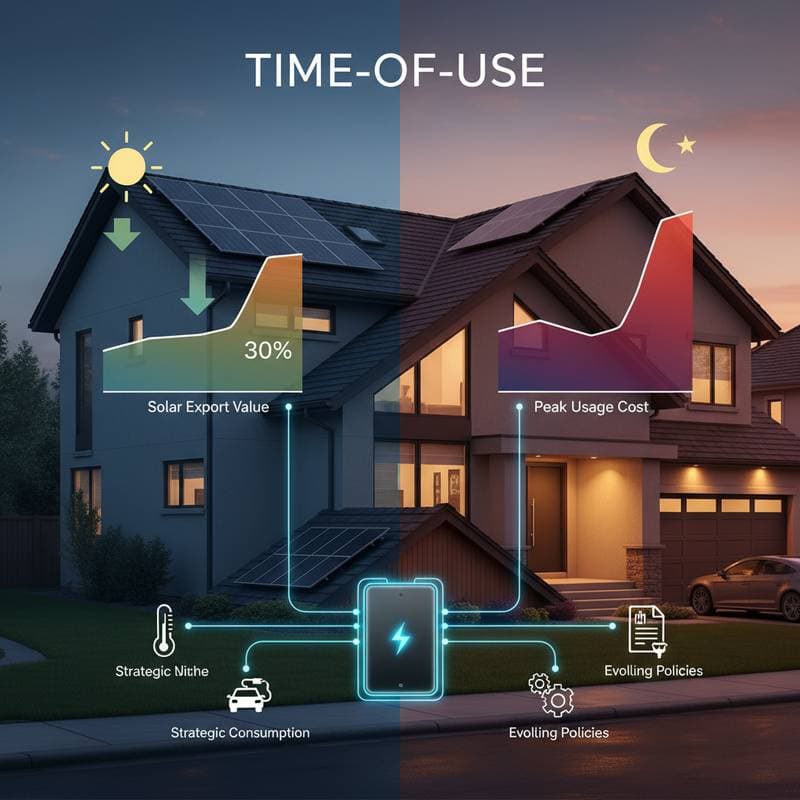
How Time-of-Use Rates Reduce Solar Savings by Up to 30 Percent
Solar homeowners often encounter unexpectedly high utility bills despite rooftop installations. Time-of-use (TOU) rates frequently explain this discrepancy. These utility-designed structures align electricity prices with demand patterns, altering solar savings calculations. Solar customers experience variable credits that can decrease overall savings by as much as 30 percent, replacing consistent daytime earnings with fluctuating values.
Understanding Time-of-Use Pricing
TOU pricing adjusts electricity costs based on usage timing. High-demand periods, typically late afternoon through early evening, carry premium rates. Off-peak times, such as mornings and overnight, offer lower costs. Utilities implement these schedules to manage grid load and promote consumption during less strained hours.
Solar systems complicate this model. Panels generate peak output midday, when export rates hit lows. Evening household needs coincide with declining production and elevated import costs. This timing mismatch erodes savings once secured under uniform flat-rate systems.
The Transition from Flat Rates to TOU
Flat-rate net metering previously provided straightforward benefits for solar users. Each exported kilowatt-hour matched the value of imported grid energy. Payback calculations proved reliable and simple.
TOU adoption eliminates that simplicity. Midday exports now yield reduced credits, often at one-third the evening import rate. Homeowners purchase power at peak prices post-sunset, even with consistent production levels. Financial returns diminish accordingly, with many reporting savings drops of approximately 30 percent against initial projections.
Reasons Behind Utility Changes
Utilities justify TOU rates as a reflection of true operational expenses. Grid stress peaks in late afternoons as solar output wanes while demand surges from homes and businesses. Higher pricing during these windows incentivizes load shifting, potentially averting costly peaker plant reliance and infrastructure expansions.
Solar adopters perceive this as an economic setback. Favorable conditions under prior models now hinge on usage patterns and storage integration. Absent adaptations in energy management, households forfeit significant portions of anticipated bill reductions.
Integrating Batteries to Mitigate Impacts
Batteries emerge as a vital solution for TOU-challenged solar setups. These systems capture surplus midday generation for later deployment during high-rate evenings. Homeowners thereby minimize grid draws when costs peak and elevate the effective value of produced energy.
A well-dimensioned battery can counteract much of the 30 percent savings erosion. For example, storing enough capacity to cover two to four evening peak hours allows strategic discharge, optimizing arbitrage between low export and high import rates. Even modest installations yield improvements in investment returns by balancing daily energy flows.
Refining Daily Consumption Patterns
Battery installation may not suit every budget or timeline, yet behavioral tweaks offer accessible alternatives. Align high-energy tasks with solar production windows: operate dishwashers, laundry cycles, and irrigation pumps between 10 a.m. and 3 p.m. to maximize self-consumption and sidestep peak pricing.
Automation enhances these efforts. Programmable thermostats, smart plugs, and energy management apps schedule operations during off-peak slots. Utilities often provide usage analytics dashboards; analyze them to pinpoint peak-hour consumption spikes. Redirecting just 20 percent of evening loads to midday can recover 10 to 15 percent of lost savings.
Navigating Policy and Market Developments
Regulatory bodies actively assess TOU effects on solar growth. Proponents of renewables warn that poorly calibrated rates hinder installations by undermining economic incentives. Utilities maintain that accurate cost signaling fosters grid resilience and equitable burden-sharing.
Emerging hybrid frameworks blend TOU with enhanced renewable export compensations. Certain regions test value-of-solar tariffs that credit midday production at rates closer to avoided grid costs. Policy directions fluctuate with local regulations and market dynamics, underscoring the need for ongoing monitoring.
Optimizing Solar Performance in a TOU Landscape
Homeowners can secure robust returns amid TOU shifts through deliberate strategies. Prioritize battery additions for high-impact gains, complement with usage realignments, and track rate evolutions via utility notifications. Deploy solar analytics tools to monitor output alignment with pricing tiers, identifying tweaks like panel cleaning or inverter adjustments for peak efficiency.
TOU structures mark an evolution in solar viability, demanding active engagement over passive reliance. Those who master rate intricacies and implement flexible management not only recoup diminished savings but also position their systems for superior long-term performance. Treat solar as an adaptable asset, responsive to grid realities and personal needs.