
Which Utilities Boost or Hurt Solar Savings?
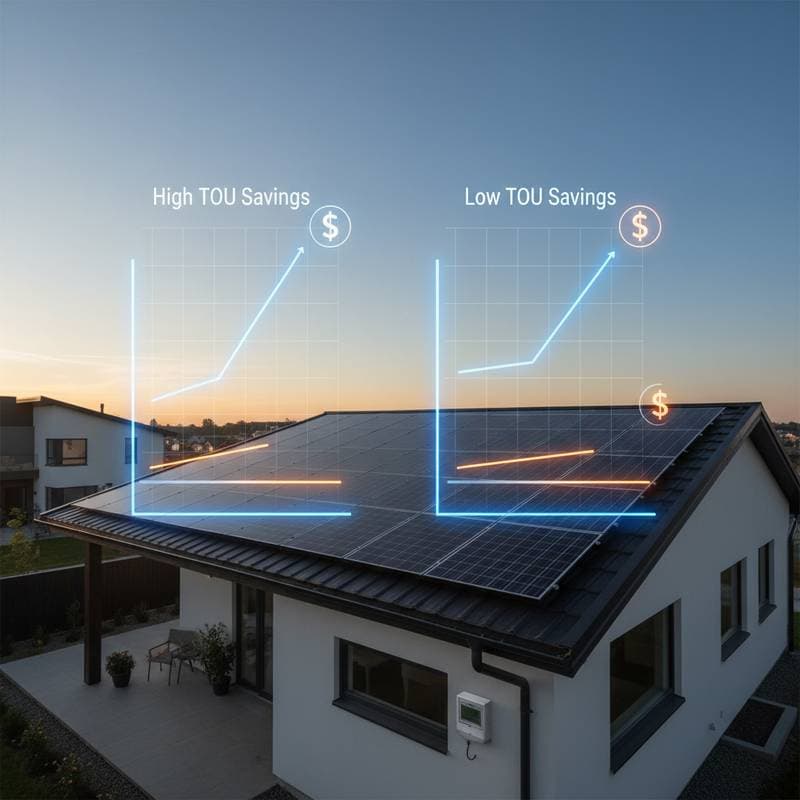
Time-of-use rates represent a key yet often overlooked element in the financial equation for residential and commercial solar installations. These pricing models vary electricity costs by time of day to mirror grid demand fluctuations. For solar owners, the alignment between peak pricing and sunlight hours determines whether systems deliver robust savings or underwhelming returns.
This analysis explores utility-specific time-of-use structures nationwide. It highlights designs that amplify solar benefits and those that diminish them, equipping readers with insights to optimize their investments.
Understanding How TOU Rates Affect Solar Value
Time-of-use rates price electricity higher during peak demand periods, typically late afternoon or evening, and lower during off-peak times. Solar panels peak in output around midday, creating opportunities for self-consumption that offsets costly grid power. However, mismatches between generation and peak hours can limit savings unless supplemented by storage.
Utilities that schedule peaks near solar production enable direct offsets of premium rates. In contrast, evening-focused peaks force reliance on batteries to shift stored solar energy, adding costs but preserving value. Grasping these dynamics helps solar adopters select systems and behaviors that align with local rates.
Utilities That Strengthen Solar Savings
Certain utilities craft time-of-use plans that harmonize with solar generation, fostering higher returns through strategic peak timing and export credits.
Pacific Gas and Electric (PG&E)
PG&E structures residential plans with mid-afternoon peaks that overlap substantially with prime solar hours. This setup allows customers to displace a large portion of expensive electricity using onsite production. Even as peaks trend later, combining solar with basic battery systems restores full offset potential.
The utility's net energy metering credits exports at rates close to retail during aligned periods, accelerating payback. Homeowners who time high-load activities like air conditioning to midday maximize these advantages, often seeing bill reductions exceed 50 percent.
Salt River Project (SRP)
SRP integrates solar-friendly elements into its plans, with on-peak windows partially coinciding with daylight generation. Customers offset costly power directly, while utility programs incentivize storage to extend benefits into evenings. This approach rewards precise energy use, such as running appliances during solar peaks.
Export credits remain competitive, supporting systems without batteries. SRP's focus on efficiency tools, like smart thermostats, further boosts savings for proactive users.
Austin Energy
Austin Energy's Value of Solar tariff stands out for its clarity, crediting exports based on comprehensive grid benefits including fuel savings and infrastructure relief. This replaces net metering with a stable, value-driven rate that ensures predictable returns regardless of time-of-use fluctuations.
On the time-of-use plan, customers align consumption with solar output to sustain offsets. The model's emphasis on total system value makes it ideal for scaling solar adoption in municipal territories.
Sacramento Municipal Utility District (SMUD)
SMUD balances peak timing with partial overlap to solar hours, crediting exports at strong rates. Community solar initiatives and storage rebates enhance residential setups, promoting even load distribution.
This environment supports solar without mandating advanced tech, though pairing with demand-response programs yields optimal results. Customers report consistent savings through simple shifts in usage patterns.
Tucson Electric Power (TEP)
TEP's residential time-of-use plan features mid-afternoon peaks that facilitate self-consumption during high generation. Fair export compensation bolsters returns for surplus power, while educational resources guide effective management.
Flexible options allow customization, making solar viable for diverse households. TEP's grid integration strategies ensure solar contributes to stability without penalizing owners.
Utilities That Reduce Solar Savings
Other utilities position peaks post-solar production, coupled with lower exports or added fees, which challenge solar viability without adaptations.
Southern California Edison (SCE)
SCE has moved peaks to late afternoon and evening, post-peak solar output, curtailing direct offsets for non-storage systems. Net metering persists, but timing reduces its impact, extending payback periods.
Battery adoption mitigates this by enabling evening discharge, yet increases initial costs. Savvy users monitor bills to adjust habits, focusing loads on cheaper off-peak slots.
San Diego Gas & Electric (SDG&E)
SDG&E concentrates peaks in evenings, minimizing solar's offset role. Elevated fixed charges and kWh rates compound challenges, demanding storage for viable economics.
Incentives for batteries help, but solar-alone setups face prolonged returns. Customers benefit from auditing usage to minimize peak draws, though structural hurdles remain.
Florida Power & Light (FPL)
FPL's subtle peak-off-peak spreads offer limited solar leverage, with sub-retail export credits further tempering gains. Interconnection support exists, but returns hinge on behavioral adjustments rather than rate design.
Targeting off-peak for non-essential loads preserves some value. This setup suits conservative solar strategies over aggressive savings pursuits.
Arizona Public Service (APS)
APS's evening-heavy peaks and demand charges on select plans sideline solar's direct benefits. Storage becomes essential for shifting energy, complicating simple installations.
Multiple time-of-use variants allow tailoring, but overall, the structure prioritizes grid needs over solar incentives. Users with flexible schedules fare better through targeted consumption.
NV Energy
NV Energy's late peaks and waning export rates hinder solar compatibility. Battery rebates aid adaptation, yet extend timelines for storage-free systems.
Focusing on midday use maximizes limited offsets. The utility's evolution underscores the need for holistic energy planning.
How Rate Design Shapes Solar Behavior
Time-of-use designs aim to flatten grid peaks, influencing solar users to synchronize production and consumption. Midday-aligned rates reward direct use, while evening shifts necessitate storage for value capture.
This evolution drives adoption of batteries and smart systems, easing grid evening loads. Utilities fostering such integrations report improved reliability and user satisfaction.
Evaluating TOU Plans Before Installing Solar
Prospective solar owners must scrutinize utility rates to forecast returns accurately. Follow these steps for informed decisions:
- Examine peak hour schedules. Midday alignment boosts offsets; post-sunset peaks require storage.
- Assess export credits. Near-retail rates enhance value; lower ones diminish it.
- Scrutinize fixed fees. High bases can negate generation gains.
- Analyze personal usage. Match solar output to high-consumption times.
- Weigh storage options. It revives savings in mismatched structures.
These evaluations yield tailored payback projections, avoiding post-install surprises.
Policy and Regulatory Influence
State regulators shape time-of-use impacts through mandates on cost reflection and renewable support. Policies preserving export value sustain solar momentum; others prioritize grid costs, altering economics by region.
Areas with renewable goals often retain encouraging structures. Debates center on equitable transitions, with storage and management emerging as bridges to balanced outcomes.
Strategies for Resilient Solar Returns
Adaptability defines future solar success amid evolving rates. Integrate storage and automation to navigate peaks, ensuring sustained savings.
Utilities promoting clear, synergistic plans build trust and efficiency. Equipped users turn challenges into opportunities, securing long-term energy independence.