
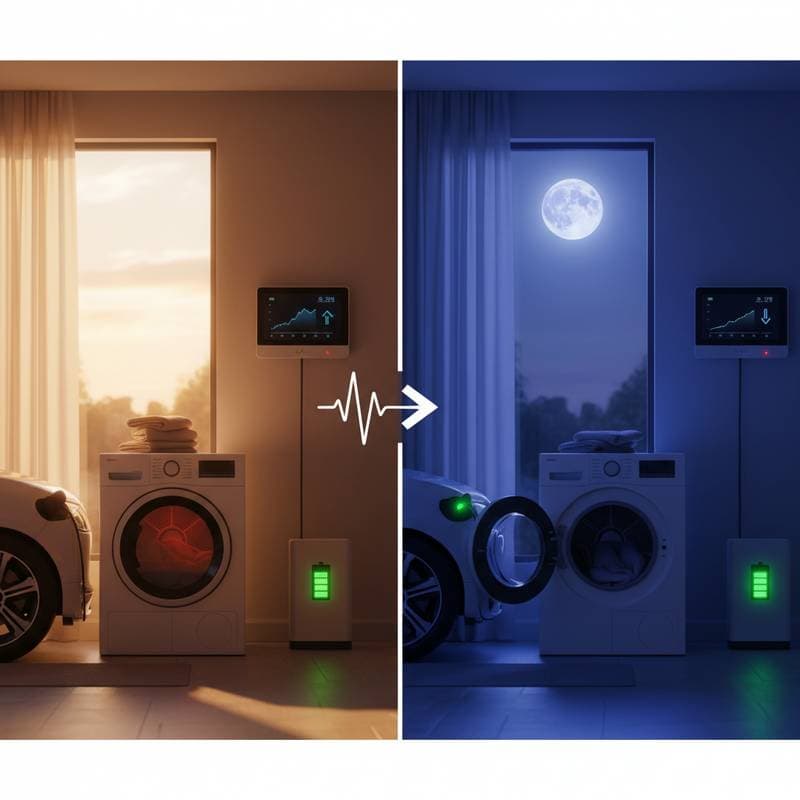
Unlock Savings by Timing Your Appliance Use
Electricity prices shift based on the time of day, and aligning household or commercial appliance operation with these variations can yield substantial financial benefits. Utilities in the United States implement time-of-use (TOU) rate structures to mirror actual grid demand levels. Prices peak during high-demand periods and dip during low-demand times, enabling users to cut expenses while preserving comfort and operational efficiency.
Understanding Time-of-Use Rate Structures
TOU pricing segments the day into distinct periods: peak, partial-peak, and off-peak. Peak intervals generally occur in the late afternoon and early evening, when air conditioning, lighting, and other devices draw heavily on the grid. Off-peak times typically span overnight or early morning hours, characterized by reduced overall demand.
Utilities adopt this model to promote even distribution of electricity usage and alleviate grid stress. For instance, rates during peak hours might double the cost per kilowatt-hour compared to off-peak periods. The U.S. Energy Information Administration reports that effective adaptation to TOU schedules can decrease household electricity expenses by up to 15 percent.
Optimal Times for Operating Key Appliances
Appliances vary in power consumption and runtime, so timing their use proves as crucial as selecting energy-efficient models. Focus on scheduling during off-peak windows to maximize cost reductions.
Laundry Equipment
Washing machines and dryers consume significant energy, particularly dryers with their heating elements. Operate them late at night or in the early morning to capitalize on lower rates. Contemporary models feature delay-start options, allowing users to set cycles in advance for automatic execution during favorable periods.
Dishwashers
These units rely on electricity for operation and hot water generation. Run them after peak evening hours, such as late in the evening, to minimize both power and heating expenses. Programmable timers on many dishwashers facilitate this adjustment without manual intervention.
Electric Vehicle Chargers
Charging an EV represents a major electricity draw in homes. Perform charging overnight during off-peak hours to secure lower costs and contribute to grid balance. Numerous utilities provide dedicated EV TOU plans with substantial overnight discounts, sometimes as low as a fraction of peak rates.
Water Heaters
Electric models can accumulate heat during off-peak times for later use. Participate in utility programs that employ smart controls to automate shifts to low-rate periods, stabilizing monthly bills. This method ensures hot water availability without incurring peak surcharges.
HVAC Systems
Heating, ventilation, and air conditioning account for the largest share of energy use in buildings. Cool or heat spaces ahead of peak onset to limit high-rate consumption. Smart thermostats integrate with TOU calendars, automatically modulating temperatures for optimal efficiency.
Integrating Solar Systems for Enhanced Benefits
Solar-equipped homes and businesses encounter unique dynamics with TOU rates. Panels produce peak output midday, aligning with partial-peak or peak slots, which can offset costly grid imports through direct use or net metering credits.
Adding battery storage introduces greater control. Charge batteries using midday solar surplus and deploy stored energy during evening peaks to bypass expensive purchases. State pilot programs demonstrate that this combination can reduce overall energy costs by as much as 25 percent, influenced by installation scale and local rates.
Leveraging Technology for Effortless Optimization
Smart devices and energy platforms streamline TOU compliance. Interconnected appliances activate solely during off-peak slots via automated schedules. Monitoring tools track usage in real time, revealing high-cost patterns and guiding targeted adjustments.
Commercial operations benefit from sophisticated demand management tools linked to building systems. These coordinate lighting, HVAC, and machinery to align with low-rate windows. Predictive features analyze grid signals and weather data to anticipate peaks, enabling proactive load reductions.
Navigating Regional Differences in TOU Implementation
TOU programs differ by location. California, Arizona, and Texas lead in residential rollout, whereas other states experiment through pilots. Price gaps range from slight variations of cents per kilowatt-hour to doublings between peak and off-peak.
Commercial and industrial sectors often face steeper differentials, prompting factories to time production runs and data centers to redistribute workloads accordingly. Review your utility's specific schedule to tailor strategies effectively.
Building a Resilient Energy Strategy
Embracing TOU rates advances both economic and ecological goals. Off-peak shifting eases grid demands and favors renewable integration. Combining these practices with solar and storage fosters durability and affordability in energy management.
Simple routines or advanced automation transform timing into a strategic advantage. Households, small enterprises, and large operations all gain from precise energy orchestration, securing savings and efficiency amid changing market conditions.