
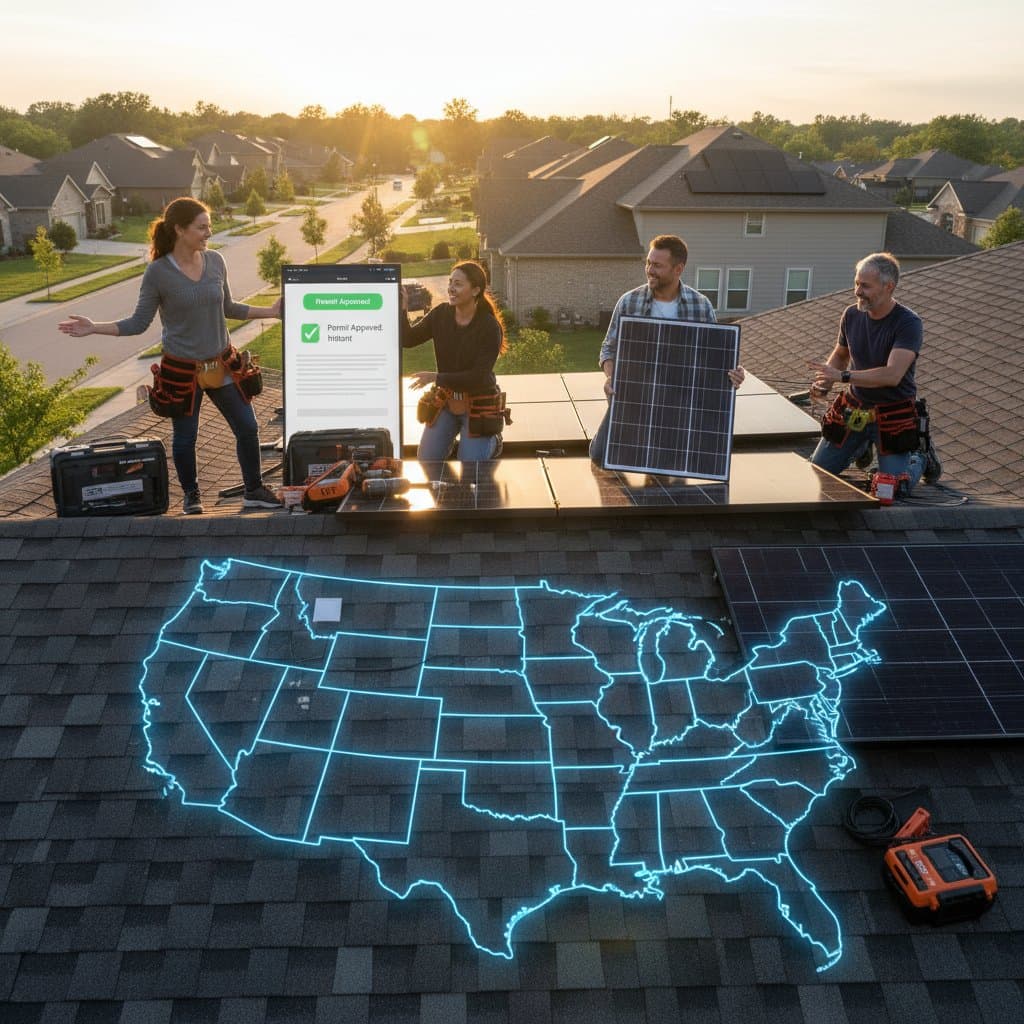
Permit-Free Solar Installations Advance in 12 States
Twelve states have introduced reforms that eliminate or streamline permitting for residential solar systems. These changes target small-scale rooftop installations, typically limited to a few kilowatts, and aim to reduce administrative hurdles. Homeowners benefit from faster timelines and lower costs, while safety standards and utility connections remain intact.
State officials confirm that these policies enable code-compliant, grid-tied systems without traditional building or electrical permits. Variations exist across jurisdictions, yet the core objective persists: accelerate access to solar energy for individuals through simplified processes.
Key States Embracing Simplified Solar Rules
Arizona, Florida, Nevada, and Texas lead with exemptions for residential rooftop systems that adhere to safety and interconnection protocols. Vermont, Maine, and Colorado extend prior fast-track options into complete permit waivers for modest home setups.
Exemptions generally cover systems up to 10 kW. Compliance with national electrical codes and utility interconnection rules is mandatory, though full building permits are no longer required. Homeowners or licensed electricians handle installation, followed by direct notification to the local utility, which skips municipal reviews.
Solar Industry Welcomes Regulatory Updates
Contractors and suppliers praise the reforms as a boost to solar accessibility. Permitting previously extended project durations by weeks, even after physical installation concluded.
A Texas solar company representative noted, "Permitting costs used to consume as much as ten percent of our project budgets." These updates enable quicker delivery and reduced expenses, enhancing solar's market position.
The residential sector stands to gain, especially for self-installers. DIY kits gain appeal with fewer regulatory barriers. Retailers now highlight these freedoms in promotions for pre-configured systems.
Safety and Utility Protections Persist
Administrative simplifications do not compromise standards. Installations must align with national electrical codes, and utilities evaluate grid connections for compatibility.
Local departments may inspect structural elements in areas prone to snow or wind. Exemptions exclude utility net-metering policies or interconnection agreements.
Regulators view this as modernization, not deregulation. Legacy permit rules predated today's certified solar components. Updates balance safety with accelerated adoption.
Economic and Market Benefits
Permit reductions cut soft costs significantly. Analysts project savings of hundreds of dollars per project through eliminated fees and inspections. Homeowners see improved investment returns, and contractors handle higher volumes.
Rural areas with limited staff benefit most. Extended reviews once deterred solar participation. Self-certification or notification systems now allow prompt project completion.
Utilities express grid management worries with increased connections. States counter with enhanced standards for voltage and anti-islanding, ensuring reliability alongside efficiency.
Variations in State Policies
Policies adapt to regional needs. Arizona exempts systems under 5 kW on single-family homes using UL-listed gear and certified inverters. Florida emphasizes pre-engineered setups for wind and electrical resilience.
Vermont builds on registration, permitting operation post-filing with the energy office. Texas empowers counties with self-certification forms online. Colorado collaborates with utilities on digital notifications, supplanting paper permits.
These strategies yield consistent results: expedited installations with robust compliance.
Potential Hurdles in Implementation
Industry support is strong, yet transitions invite questions. Installers track state differences and verify technical adherence for self-installs. Insurers and lenders may refine documentation needs.
Some officials worry about oversight gaps, but certified equipment mitigates risks. Training programs update curricula to match evolving rules.
Accelerating Solar Adoption Through Reform
Homeowners encounter fewer barriers to solar integration. Streamlined processes lower costs and timelines, broadening appeal. Contractors optimize scheduling, and utilities monitor via digital tools.
As additional states consider parallels, permit-free models promise growth. Renewables become more attainable, supported by standards that ensure reliability and ease.