
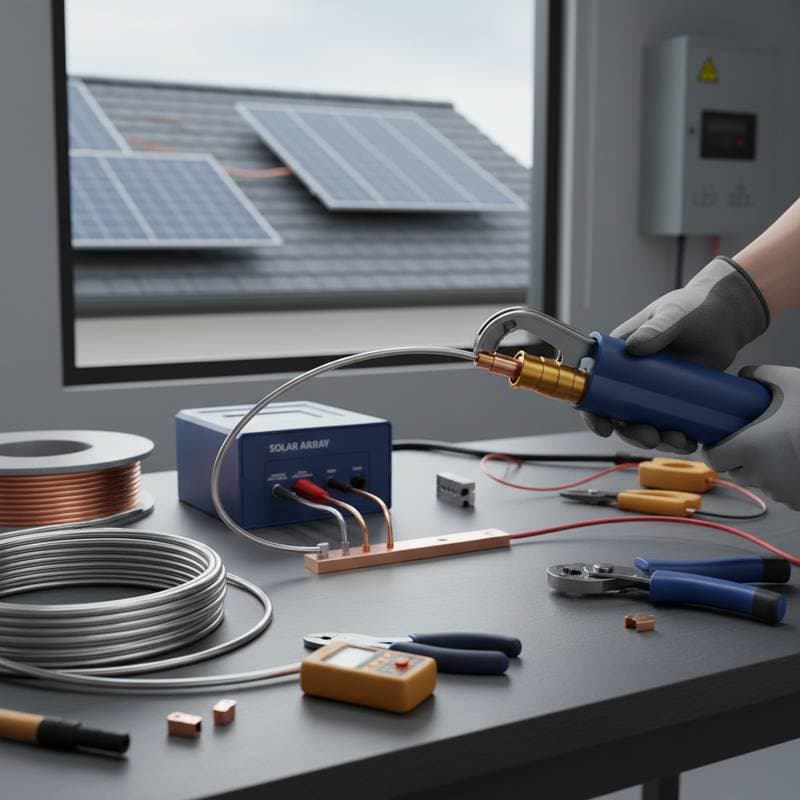
Aluminum Versus Copper: Gaining a Cost Advantage in DIY Solar Wiring
New solar enthusiasts often prioritize panels and inverters during do-it-yourself installations, overlooking wiring choices. However, selecting between aluminum and copper conductors profoundly impacts system expenses and long-term performance. This decision, influenced by fluctuating metal prices, requires balancing cost, safety, and practical installation considerations.
Core Principles of Each Material
Copper serves as the traditional standard for solar wiring due to its excellent conductivity, mechanical strength, and corrosion resistance when terminated correctly. Aluminum, lighter and more affordable per foot, exhibits higher electrical resistance, necessitating thicker gauges to handle equivalent currents. Consequently, aluminum wire costs 30 to 50 percent less than copper, varying with market rates and specifications.
In ground-mounted arrays or extended runs, these savings accumulate rapidly. Off-grid projects frequently reduce material expenses by thousands through aluminum adoption for lengthy DC or AC segments. Proper implementation demands specialized connectors, anti-oxidation compounds, and precise torque application to prevent loose connections that risk overheating.
Evaluating Costs and Practicality for DIY Projects
DIY builders emphasize upfront expenses, where aluminum excels. For instance, a 100-foot length of 2 AWG copper wire typically exceeds the price of equivalent aluminum by more than double. Accounting for aluminum's need for upsizing to minimize voltage drop reduces the margin, yet it retains appeal for expansive sites distant from inverters or combiner boxes.
Aluminum's reduced weight simplifies pulling through conduits and eases handling on rooftops or in trenches. Terminations, however, require meticulous care, as aluminum expands and contracts more with temperature changes, potentially loosening joints over time without secure installation.
Assessing Durability and Sustained Performance
Copper provides extended lifespan and superior thermal resilience, enduring repeated adjustments and environmental pressures while maintaining conductivity. In rooftop systems facing moisture or coastal salt exposure, copper proves the more dependable option. Aluminum performs adequately in protected environments like conduits or buried lines, provided sealed fittings and oxidation barriers are applied.
Interviews with veteran installers reveal a key insight: aluminum ensures safety with strict adherence to protocols, but copper offers greater tolerance for minor errors. Overlooking details with copper seldom results in issues, whereas similar oversights with aluminum may cause heat buildup or corrosion. This perspective draws from practical fieldwork rather than exaggeration.
Integrating Budget Constraints with Performance Needs
A hybrid strategy suits most DIY solar endeavors. Employ copper for concise rooftop links and aluminum for prolonged buried or trenched paths. This method controls costs and voltage losses effectively. Essential tools include compression lugs, anti-oxidation paste, and a torque wrench for reliable terminations.
Grid-tied setups with compact wiring distances favor copper for simplicity and assurance. Larger off-grid or farm-based systems benefit from aluminum's economies, preserving safety through accurate execution.
Implementing Your Wiring Strategy
The financial benefits of aluminum over copper exist alongside distinct installation demands. Evaluate site layout, run lengths, and conduit specifications before deciding. Consider initial outlays alongside termination longevity. Thoughtful preparation yields a wiring configuration that harmonizes efficiency, security, and economy. Savvy DIY solar constructors recognize wiring as the essential foundation supporting every effective array.