
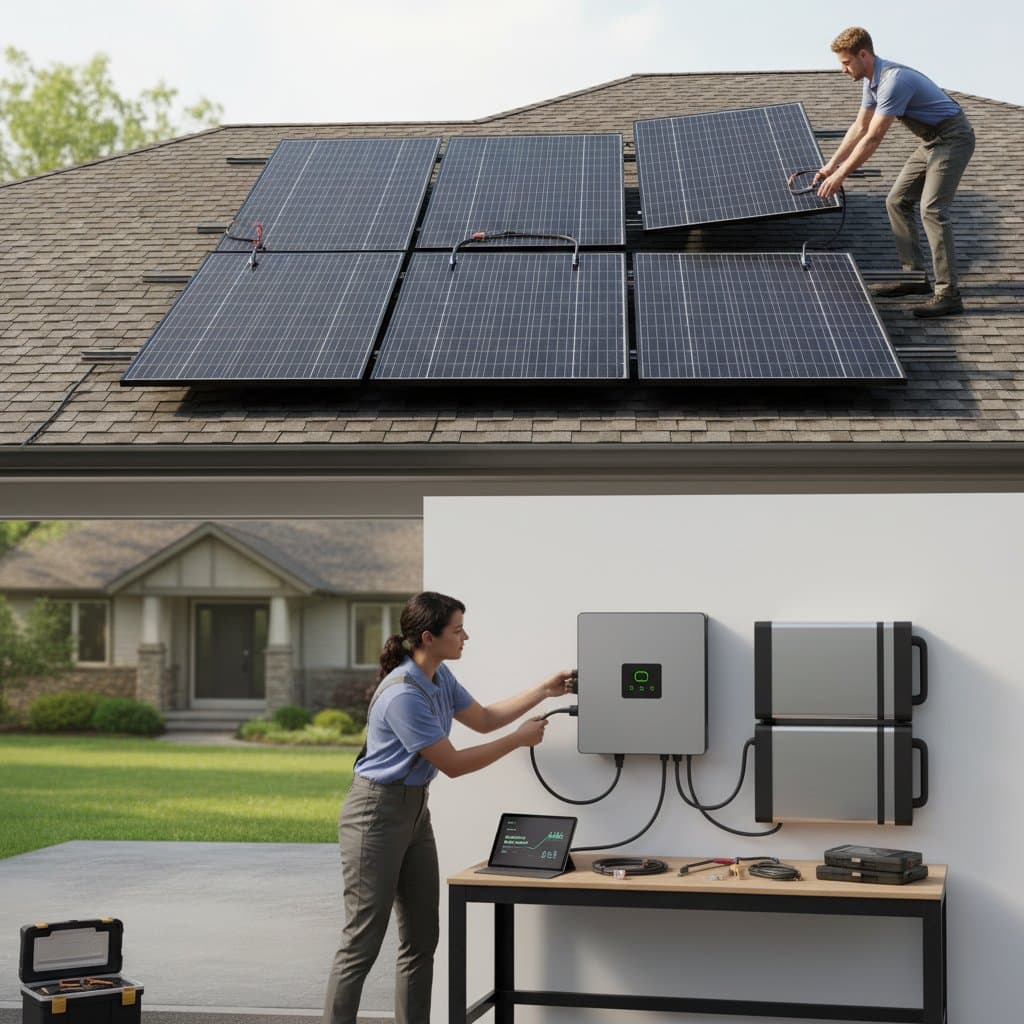
The $6,000 Plug-and-Play Solar Kit for Straightforward DIY Installation
Residential solar installations once involved intricate roof configurations, electrical permits, and teams of professionals working on rooftops for several days. The landscape shifts rapidly with the emergence of pre-wired, plug-and-play solar kits. These innovations redefine how homeowners approach energy self-sufficiency. The $6,000 plug-and-play solar kit stands as a prime example, delivering a comprehensive system that requires minimal assembly for prompt functionality.
With extensive observation of the U.S. solar industry across various technological advancements, this kit emerges as a pivotal development in the do-it-yourself market. It transitions solar energy projects from the domain of experts to accessible endeavors for capable homeowners using everyday tools over a single weekend.
Core Elements of Plug-and-Play Design
At the center lies the pre-wired inverter and battery integration hub. Cables come clearly labeled, connectors follow universal standards, and components align precisely for voltage and current requirements. Users avoid calculations for panel strings or concerns over load distribution. The process involves linking the panels, connecting to a standard household outlet, and observing reduced energy consumption on the utility meter.
Standard inclusions comprise:
- Six 400-watt solar panels, secured on durable, lightweight aluminum frames
- A hybrid inverter that supports both grid-connected and independent operations
- A compact lithium battery for energy storage and peak demand management
- Complete wiring sets and safety switches rated for exterior environments
The design emphasizes seamless integration over mere affordability. During evaluation of a comparable setup last year, the entire process from unpacking to operation spanned under two hours. For those in rental properties or hesitant about permanent rooftop systems, this kit provides an adaptable route to sustainable energy.
Pricing and Broader Market Insights
Priced at $6,000, the kit occupies an optimal position in the market. It undercuts traditional professional setups significantly while generating appreciable daily energy offsets. The configuration produces several kilowatt-hours each day, sufficient to power essential appliances such as lights, refrigerators, and household devices in a typical home.
Industry analysis indicates that producers focus on individuals seeking reliable output without navigating net metering paperwork or building approvals. The modular architecture allows for future enhancements. Users can incorporate an additional inverter, expand battery capacity, or install extra panels without overhauling the existing framework.
Such pricing stems from efficiencies in the solar manufacturing ecosystem. Costs for panels continue to decline, and modern inverters now consolidate battery oversight, grid interfacing, and protective features into streamlined devices. This integration renders plug-and-play systems economically feasible for widespread use.
The Value of Simplified Systems
Analysis of numerous residential solar offerings reveals that adoption obstacles stem less from technical challenges and more from mental hurdles. Concerns about electrical errors or regulatory non-compliance deter many. A fully prepared kit alleviates these anxieties. Feedback from purchasers highlights it as an approachable introduction to solar living without intimidation.
The increasing uptake of these kits prompts considerations for regulatory adaptation. Homeowners installing grid-compatible systems sans permits face varying utility responses. Some receive requests for disconnection pending review, whereas others operate discreetly and enjoy lowered utility statements. Policymakers must align frameworks with rising consumer interest.
Step-by-Step Setup for DIY Success
To build assurance in managing solar projects, follow these structured steps for the $6,000 kit installation.
-
Site Preparation: Select a south-facing location with minimal shading, such as a ground mount or sturdy shed roof. Ensure the surface supports approximately 200 pounds of panel weight.
-
Unboxing and Component Check: Verify all parts upon arrival, including panels, inverter, battery, cables, and mounting hardware. Lay out items in an organized workspace.
-
Panel Mounting: Secure the aluminum frames to the chosen site using provided brackets and screws. Position panels at a 30-degree angle for optimal sunlight capture in most U.S. regions.
-
Wiring Connections: Attach panel outputs to the inverter hub following labeled diagrams. Connect the battery to the designated port, then link the inverter to a grounded outdoor outlet.
-
System Activation: Power on the inverter and confirm connections via the built-in display. Monitor initial output to ensure panels generate expected voltage under daylight conditions.
-
Monitoring and Maintenance: Use the inverter's interface to track performance. Clean panels monthly and inspect cables seasonally for wear.
This sequence empowers users to complete setup independently, fostering confidence in renewable energy management.
Advancing Toward Scalable Energy Solutions
For those prepared to integrate clean power into daily life, the $6,000 plug-and-play solar kit serves as an effective starting solution. Its cost-effectiveness, growth potential, and intuitive operation grant users authority over energy consumption free from binding agreements or elaborate procedures.
Future enhancements, including advanced monitoring applications and seamless ties to home automation, will propel DIY solar into everyday availability. Homeowners benefit from immediate reductions in energy costs, reduced environmental impact, and enhanced resilience against power disruptions.