
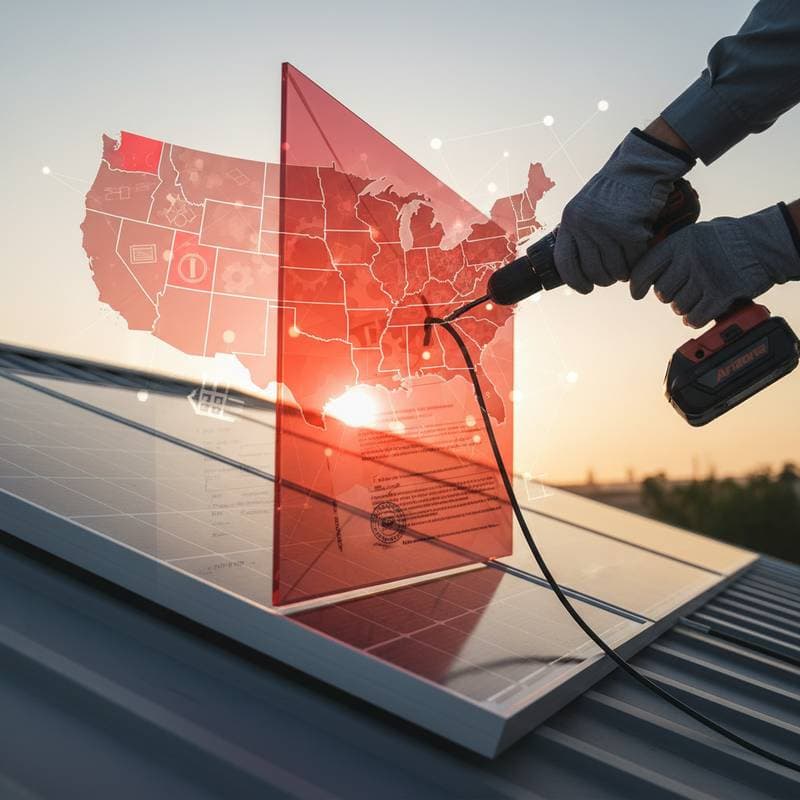
States Restricting DIY Solar Installations
Interest in solar energy grows steadily across the United States. Homeowners often consider installing panels themselves to reduce labor expenses. However, several states prohibit such self-installations through licensing laws, electrical codes, and safety standards. Individuals planning solar projects must understand these regulations to avoid legal issues and ensure safe implementation.
Reasons for State Restrictions on DIY Solar
States regulate electrical work to safeguard property owners and the power grid. Solar systems connect to high-voltage utility lines, where errors can lead to fires or grid disruptions. Regulators enforce these limits under general electrical contractor statutes rather than solar-specific laws.
In restricted states, licensed electricians or certified solar contractors must handle grid connections. This requirement prioritizes adherence to safety protocols and interconnection guidelines. Professional involvement prevents hazards that untrained individuals might overlook.
States Prohibiting DIY Solar Installations
Certain states enforce rules that bar homeowners from installing solar systems without professional help. These regulations cover wiring, permitting, and inspections to uphold safety. Below are key examples.
Massachusetts
Massachusetts requires licensed electricians for all electrical tasks, including solar setups. Homeowners cannot install pre-engineered kits without expert support. Local inspectors enforce compliance strictly; violations result in fines up to $1,000 or orders to dismantle the system.
Oregon
Oregon treats solar installations as electrical work under building codes. Only licensed electricians or certified installers qualify to perform the job. Self-installers face inspection failures, which can invalidate warranties and disqualify projects from state rebates.
Minnesota
Minnesota mandates licensed electrical contractors for solar photovoltaic systems. This applies to both grid-tied and off-grid configurations, including ground-mounted arrays. The state Board of Electricity oversees enforcement to ensure consistent safety across properties.
Washington
Washington permits DIY only for fully off-grid systems disconnected from utilities. Grid-tied installations demand certified professionals. Even off-grid projects may require inspections to confirm code adherence, such as proper grounding and overcurrent protection.
North Carolina
North Carolina prohibits homeowners from grid-connecting solar systems without licensed contractors. Utilities verify licensing before approving interconnections. Regulators highlight how these measures prevent unsafe configurations that could harm users or infrastructure.
States with Partial DIY Limitations
Other states avoid total bans but add hurdles through permits or local rules. These variations complicate self-installation efforts.
California
California permits homeowner installations with appropriate building and electrical permits. Local authorities often demand engineer certifications or installer documentation for approval. Navigating these steps requires detailed plans, such as load calculations and site assessments, which deter many from full DIY.
Florida
Florida allows property owners to install systems independently in theory. Utility interconnections, however, need licensed electrician approval. Providers reject applications lacking a contractor license, effectively mandating professional input for operational setups.
New York
New York does not explicitly forbid DIY solar. Permitting offices typically insist on licensed verification for safety checks. Homeowners must submit as-built drawings and compliance affidavits, restricting standalone self-managed projects.
Navigating Utility and Inspection Processes
Homeowners in permissive states still encounter rigorous utility and inspection demands. Providers request wiring schematics, equipment datasheets, and certification proofs. Activation occurs only after licensed inspectors validate installations against standards like UL 1741 for inverters.
Incentive programs often link rebates, tax credits, or net metering to professional work. For instance, programs under the federal Investment Tax Credit may scrutinize DIY claims during audits. These conditions indirectly limit cost-saving DIY options.
Addressing Safety and Liability Risks
Safety drives most restrictions on DIY solar. Faulty wiring risks electrical fires, equipment malfunctions, or grid backfeeds. Such issues threaten homeowners and nearby utility personnel during repairs.
Liability concerns compound the challenges. Standard homeowner policies often exclude unlicensed electrical claims. A post-installation incident could leave owners liable for damages without recourse. Contractors provide insurance that covers workmanship errors, offering protection absent in self-installs.
Steps to Verify Local Regulations
Prospective solar adopters should consult official sources early. This preparation prevents delays or penalties.
- Contact the local building department to confirm if homeowners may conduct electrical work.
- Review permit needs and whether professional seals or stamps are required.
- Inquire with the utility about interconnection protocols and documentation.
- Examine incentive eligibility to see if certified installers are mandatory.
- Speak with inspection authorities on required standards, like arc-fault protection.
Practical Alternatives for Restricted Areas
Residents in prohibitive states can still contribute to their projects. A hybrid model allows non-electrical tasks, such as mounting panels or preparing roofs, while professionals manage wiring. This cuts costs by 20 to 30 percent compared to full-service contracts.
Off-grid kits offer another path for unregulated setups. These power remote sites like workshops or boats without utility ties. Users must still adhere to basic codes, including battery storage safety, to minimize risks.
Ensuring Compliant Solar Success
Solar policies adapt as adoption rises. Early research into local laws streamlines projects and avoids rework. Partnering with professionals where needed secures reliable energy gains and financial benefits through preserved incentives.