
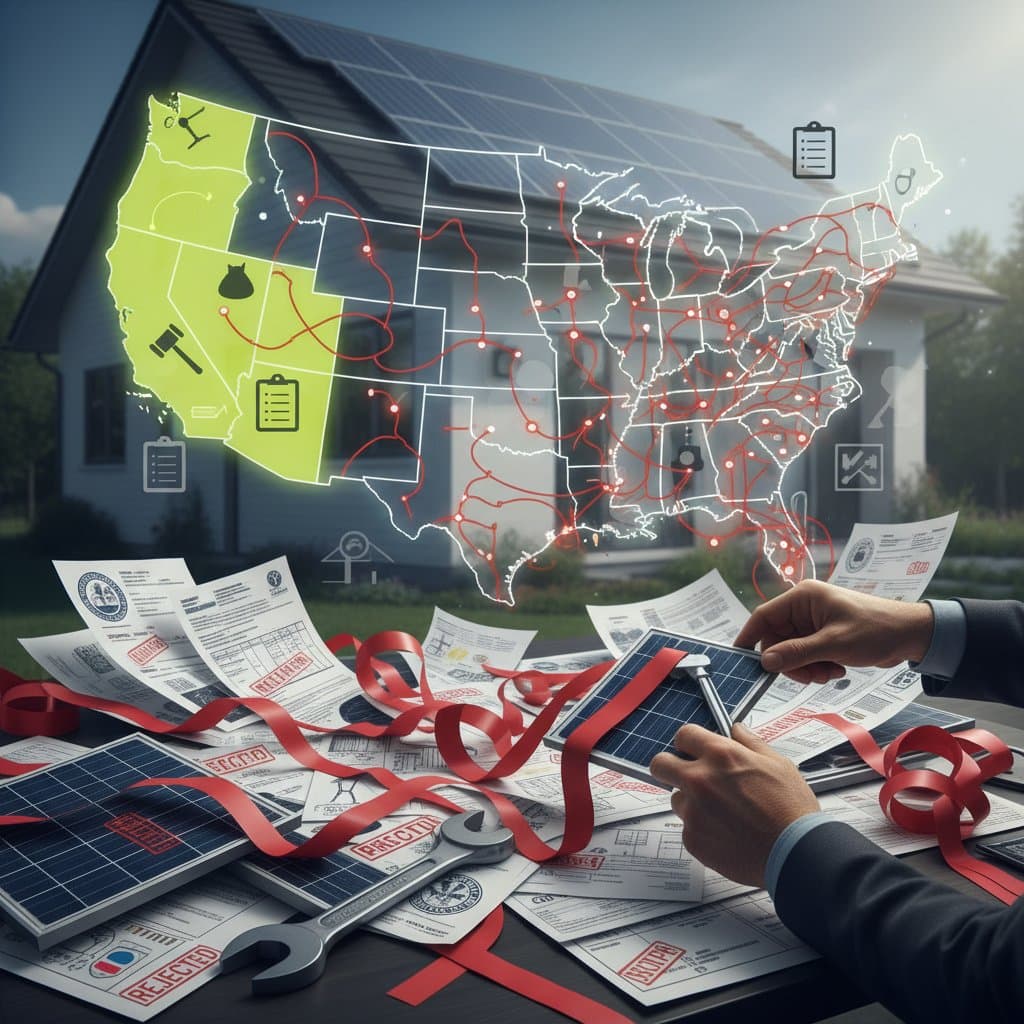
States Turning DIY Solar Into a Permitting Challenge
Homeowners in the United States who wish to install rooftop solar systems themselves often navigate complex local regulations, licensing requirements, and utility policies. These elements can make independent installations difficult or impossible in certain areas. While some states offer efficient processes, others impose obstacles that delay projects for months or prevent completion altogether. This inconsistent approach influences the growth of residential solar, particularly for self-installers.
Residential solar capacity has surpassed tens of gigawatts nationwide, with DIY efforts forming an increasing portion. However, restrictive environments limit this expansion. Barriers differ by location, including mandates for licensed professionals in every phase or utility rules that reject non-expert work.
Understanding Permitting Variations
Solar permitting falls under local jurisdiction, with city or county departments applying state electrical codes in diverse ways. This leads to significant differences nearby. One area might approve applications online the same day, while a neighboring one demands paper filings, multiple fees, and spaced-out inspections.
California leads with tools like the SolarAPP+ program for digital submissions, though adoption varies by municipality. States such as Florida, Texas, and Louisiana rely on conventional methods, adding scrutiny from weather-related codes or licensing statutes. For independent installers, these steps prove daunting.
"The primary obstacle for self-installers lies in the documentation," notes Mark Peterson, a solar permitting consultant in Arizona. "Jurisdictions demand unique plan formats, labels, and calculations. Weeks pass in preparation before installation begins."
Utility interconnection adds layers, requiring diagrams, equipment details, and verifications. Several states limit submissions to licensed contractors, sidelining homeowners.
States with Strictest Requirements
Nevada mandates licensed electrical contractors for all solar-related work, including simple connections for microinverter setups. Homeowners must hire experts for minimal tasks, eroding DIY savings.
Massachusetts enforces rules needing a master electrician's approval on permits. Rigorous safety checks lead to rejections for minor deviations. These standards prioritize protection but limit options, according to observers.
Illinois, New York, and Minnesota present delays and varying code applications. Local entities set unique documentation needs, causing resubmissions. Rural inspectors without solar expertise sometimes issue unfounded denials.
Interstate Renewable Energy Council data indicates permitting times range from one day in efficient areas to over a month in rigid ones. DIY efforts typically experience the extended durations.
Navigating Licensing Restrictions
Licensing serves as a key impediment, originally intended to ensure safe electrical practices. Solar work often qualifies as regulated electrical activity, especially for grid connections where errors impact infrastructure.
Oregon and Washington demand certified contractors for grid-tied arrays. Skilled homeowners face legal barriers to final connections, risking fines or rejected approvals.
"Regulations date to an era when solar demanded specialized skills," explains Lisa Grant, policy director at the Northwest Solar Association. "Modern microinverters offer simplicity and safety, yet rules remain outdated. Basic rooftop setups receive overly stringent oversight."
Arizona and Utah provide flexibility, permitting owner installations that pass inspections. Such policies support adoption in remote regions lacking professional services.
Utility Policies as Additional Gates
Local approvals do not guarantee utility acceptance. Providers may insist on contractor credentials for reviews or meter exchanges. Some limit approvals to vetted installers, citing liability over technical flaws.
North Carolina's Duke Energy portal requires licensed installer details to advance applications. Georgia and Alabama follow suit, with utilities showing limited support for residential solar.
"Safety claims mask efforts to maintain oversight," states Jeremy Lopez, a solar electrician advising cooperatives. "Professional networks allow control over integrations, preventing issues like backfeeds. This dependency raises expenses for homeowners."
Calculating Compliance Expenses
Fees for permits, inspections, and expert involvement inflate budgets by thousands. Small systems may need engineering certifications, including load analyses and diagrams.
Soft costs like these represent over 25 percent of residential solar outlays. DIY participants bear higher administrative burdens without volume efficiencies.
Off-grid or unpermitted setups tempt some, but risks include insurance invalidation, lowered property values, and fines. Utilities occasionally disconnect unauthorized systems.
Advances in Streamlining Approvals
Initiatives aim to ease processes nationwide. The Department of Energy's SolarAPP+ automates compliance, cutting times in involved areas. Arizona and Colorado test digital platforms for uploads, feedback, and scheduling.
Implementation lags due to resource shortages or resistance to change. Utilities often favor separate systems.
"Technology aids efficiency, but requires broad involvement," Grant observes. "Statewide directives and utility alignment could end disparities, allowing quick progress for all."
Impacts on the Solar Sector
Inconsistent rules affect industry dynamics. DIY appeals to those seeking independence, yet barriers discourage entry and hinder hardware innovations like easy-mount systems.
Persistent restrictions may cede U.S. advantages to regions promoting self-generation. Labor markets vary too, with strict states fostering more contractors and flexible ones enabling diverse projects, influencing costs and education.
Building a Fairer System
Experts advocate safety-focused reforms, such as tiered licenses for approved kits or uniform digital tools. Utility pilots certify trained homeowners for basic connections.
"Solar resembles standard appliances now," Peterson asserts. "Treat it as such under inspection, akin to generators or chargers, to enable safe homeowner involvement."
Steps to Advance Your Project
-
Review local requirements upfront. Contact your building department to clarify self-installation permissions before buying components.
-
Check utility guidelines. Inquire about homeowner application acceptance and needed documents for interconnection.
-
Select certified kits. Pre-engineered options supply essential labels, plans, and certifications to ease submissions.
-
Maintain thorough records. Track specifications, drawings, and official interactions to avoid setbacks.
-
Adhere to safety protocols. Complying with codes protects you and ensures dependable performance, regardless of perceived burdens.