
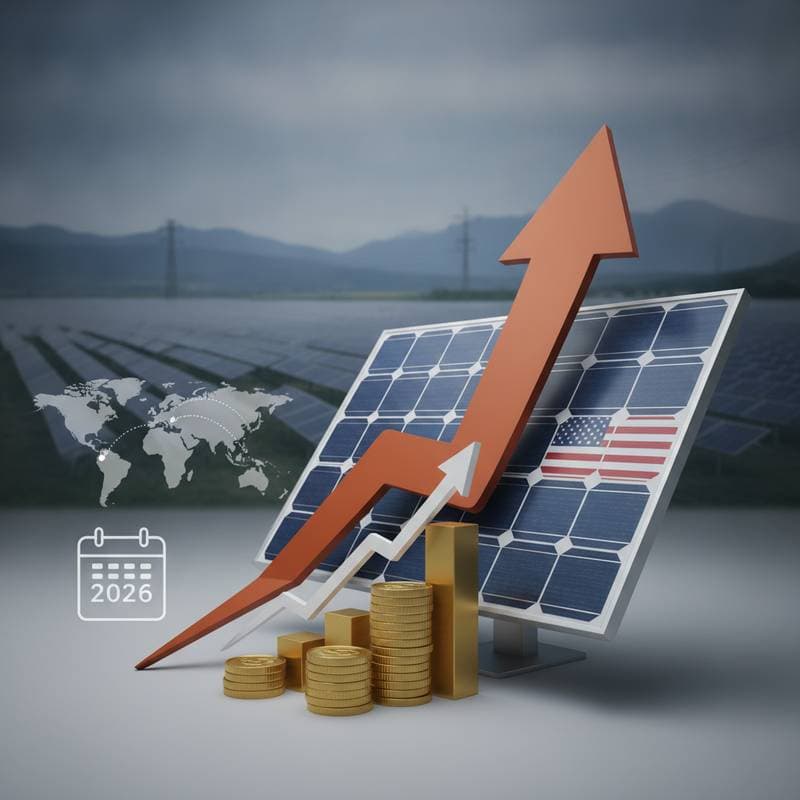
2026 Solar Tariffs Set to Raise Panel Prices by 18%
Solar developers, installers, and procurement teams are preparing for a price shift. New import duties are expected to raise panel costs by an estimated 18 percent once the 2026 solar tariffs take effect. The policy adjustment, confirmed through trade and regulatory filings, will target crystalline silicon photovoltaic modules imported from several key manufacturing regions.
Core Policy Details
The tariff package will apply to finished solar modules and certain components such as cells and wafers. Trade officials have described the policy as a continuation of existing measures intended to support domestic production capacity. The new rates will replace the current duty structure with a higher average rate meant to encourage investment in local manufacturing while reducing dependence on imports.
Several major manufacturers that rely on overseas production have already begun revising their pricing models. Procurement officers are reporting early signs of contract adjustments. Distributors anticipate higher warehouse costs and elongated delivery timelines.
Market Response and Pricing Outlook
Preliminary forecasts suggest that the overall module price could rise by roughly 18 percent once the tariffs are fully implemented. This projection includes the combined effect of raw material costs, logistics, and currency fluctuations. Analysts note that while the increase will not halt project development, it will alter payback periods and financing models for new solar installations.
Installers serving the residential and commercial sectors are preparing to communicate cost changes to customers. Many are accelerating procurement plans to lock in current rates before the new duties activate. In the utility-scale segment, developers are revising bid assumptions for projects expected to enter construction after the tariff transition date.
Domestic Manufacturing Implications
The tariff measure is being viewed by policymakers as a tool to expand domestic panel assembly and upstream manufacturing. Several companies have already announced plans to increase production capacity or establish new facilities within the United States. Federal and state incentives continue to support these investments, particularly through tax credits tied to domestic content requirements.
Industry observers note that while the tariffs may foster near-term price pressure, they could also strengthen long-term supply chain resilience. A larger domestic manufacturing base could reduce exposure to international disruptions and provide greater price stability over time.
Developer Strategies and Supply Adjustments
Developers are expected to adopt several strategies to manage the tariff impact:
- Advance Purchasing: Many are accelerating procurement schedules to secure inventory before import duties apply.
- Supplier Diversification: Companies are exploring new sourcing options from countries not affected by the tariffs.
- Technology Shifts: Some project planners are evaluating thin-film or hybrid systems to mitigate cost increases.
- Contract Renegotiations: Developers are working with suppliers and financiers to adjust pricing terms and project timelines.
Procurement managers emphasize that early planning will be crucial to maintaining project margins. The most competitive firms are expected to use forward contracts and long-term supplier relationships to minimize exposure to short-term price fluctuations.
Supply Chain Adjustments Underway
The tariff announcement arrives at a time when the solar industry is already managing multiple supply and policy dynamics. Global demand remains strong, but freight rates, material shortages, and currency variations continue to influence pricing. Utility planners and corporate buyers that rely on power purchase agreements are closely monitoring how the tariffs may influence levelized cost of energy calculations.
Preparation Steps for Procurement Teams
For solar companies, the focus now shifts to preparation and flexibility. Organizations that act early to secure inventory, diversify suppliers, and strengthen domestic partnerships will be best positioned to manage the coming tariff period. Installers can leverage this period to communicate transparently with customers about price trends and value retention through quality components and long-term warranties.
Developers planning large-scale installations can benefit from detailed sensitivity analyses to understand how tariff-driven price changes might affect project economics. Collaboration between manufacturers, distributors, and financiers will also help smooth the adjustment process.