
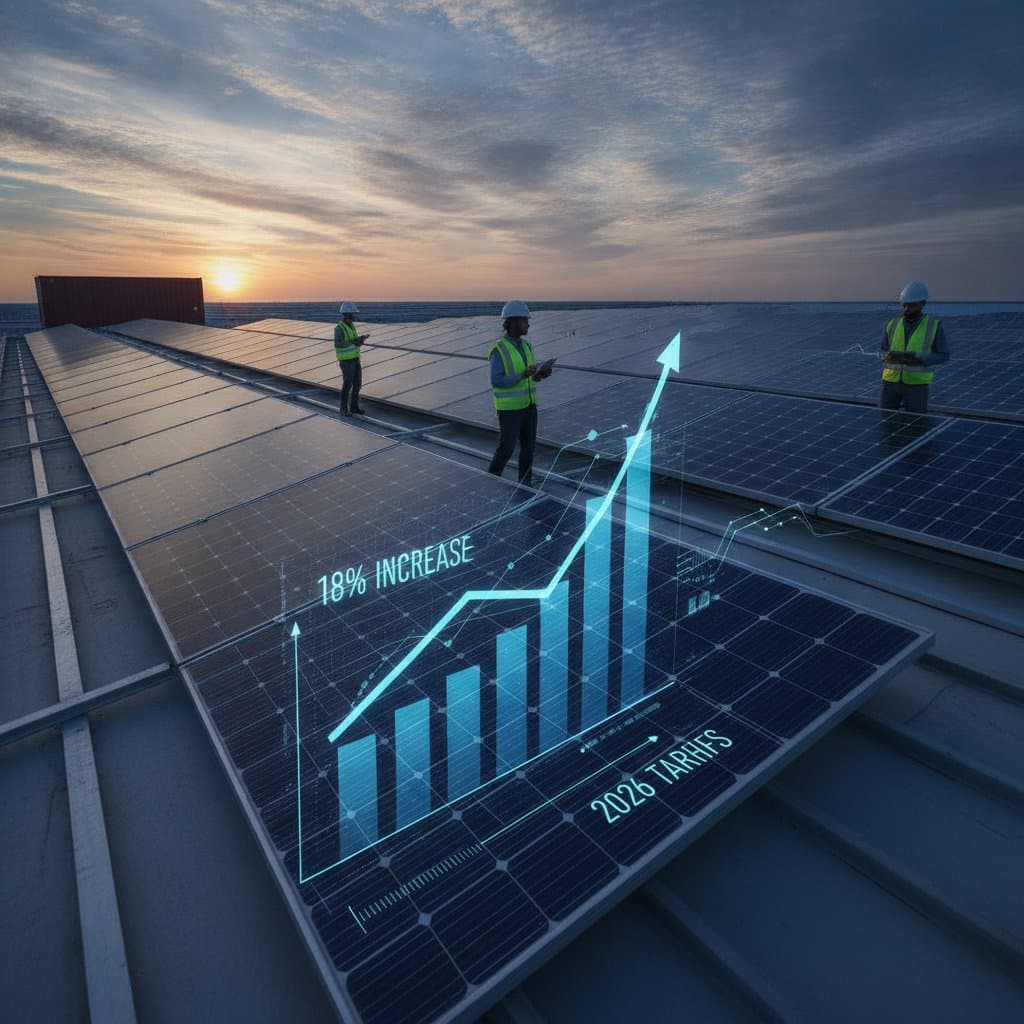
Solar Prices Jump 18 Percent in Spring Due to 2026 Tariffs
Solar equipment prices across the United States climbed 18 percent this spring after developers and distributors accelerated purchases in advance of new import tariffs taking effect in 2026. The price increase, observed across utility scale and residential segments, reflects a tightening supply chain and growing uncertainty about long term import costs.
Analysts tracking wholesale module pricing reported that average panel costs rose from about 27 cents per watt to nearly 32 cents per watt within a few months. The jump was most pronounced in shipments from Asian manufacturers, where traders adjusted bids to account for potential tariff exposure. Many solar buyers moved early to secure inventory before tariff schedules begin to influence landed costs.
Market Reaction to Future Tariffs
The upcoming tariff policy targets imported crystalline silicon photovoltaic cells and modules from several major producing countries. It is designed to encourage domestic manufacturing and reduce reliance on low cost imports. While the policy supports United States production goals, short term market effects have been immediate and widespread.
Distributors say that suppliers started quoting higher prices as soon as the tariff timeline became clear. Importers also began adjusting shipping schedules to bring in extra stock before additional duties apply. For many developers this means paying more upfront to avoid even steeper costs later.
Developers are trying to lock in pricing now before the next round of policy driven increases, said an executive at a national solar procurement firm. Nobody wants to be caught in the middle of a supply crunch once the tariffs are active.
Shifting Procurement Strategies
Installers and project developers are rethinking procurement strategies in response to the new environment. Some are increasing warehouse capacity to hold larger inventories, while others are negotiating long term supply agreements with domestic producers to stabilize costs.
Utility scale developers face a particular challenge. Large projects often require multi year procurement planning, and fluctuating panel costs can disrupt budgets, financing, and construction schedules. Several firms have already revised their cost forecasts for upcoming installations.
Smaller installers are also feeling the pressure. Many rely on distributors who pass along price increases directly. Without the buying power of large developers, these companies risk losing margins on fixed price contracts or delaying projects until prices stabilize.
Domestic Manufacturing Response
The tariff policy has reignited discussions around expanding United States panel manufacturing. Several companies have announced plans to increase production capacity, though most of these facilities will not be fully operational before the tariff period begins. Domestic producers see the policy as a chance to gain market share, but scaling up production remains complex.
Manufacturing executives say that while tariffs can create favorable market conditions, they do not automatically solve cost and supply challenges. Building new facilities requires significant capital investment, and sourcing equipment and materials can take time. Even with incentives in place, ramping up to meet national demand will be gradual.
We are expanding production lines, but the market will still rely on imports for the near term, said a manufacturer representative. Domestic capacity cannot replace the entire import volume overnight.
Policy and Industry Context
The upcoming tariffs are part of a broader strategy to strengthen domestic clean energy supply chains. Federal officials have emphasized the need to balance energy security, job creation, and climate goals. Industry groups remain divided on whether tariffs will ultimately help or hinder solar deployment.
Trade associations representing developers warn that higher equipment costs could slow installation rates, particularly for community and residential projects. They argue that policy support for local manufacturing should be paired with measures that prevent price spikes from reducing market growth.
Manufacturing advocates counter that without trade protections, domestic producers cannot compete with heavily subsidized foreign suppliers. They believe the short term price increases are a necessary adjustment period before the benefits of local production are fully realized.
Long Term Price Outlook
Market watchers expect continued volatility in panel prices through the coming quarters. Some analysts project temporary relief once current inventory stockpiles move through the system, but sustained cost pressure is likely until new domestic production offsets import restrictions.
Developers are already incorporating higher equipment cost assumptions into bids and financial models. Lenders and investors are also revising risk assessments linked to supply chain exposure. While project economics remain favorable in many regions, the margin for error is shrinking.
Several procurement directors have indicated that they plan to diversify suppliers across multiple regions to reduce tariff related disruption. Others are exploring partnerships with United States manufacturers to secure stable pricing for long term portfolios.
Practical Steps to Manage Higher Costs
Industry professionals are focusing on practical steps to manage the new pricing landscape. Key strategies include early procurement to secure materials ahead of tariff implementation, supplier diversification to expand sourcing beyond traditional regions, domestic partnerships to build relationships with emerging United States manufacturers, contract adjustments to account for potential price fluctuations, and inventory planning to increase storage capacity for larger shipments.
These measures can help balance project timelines and control financial exposure as the tariff schedule approaches.