
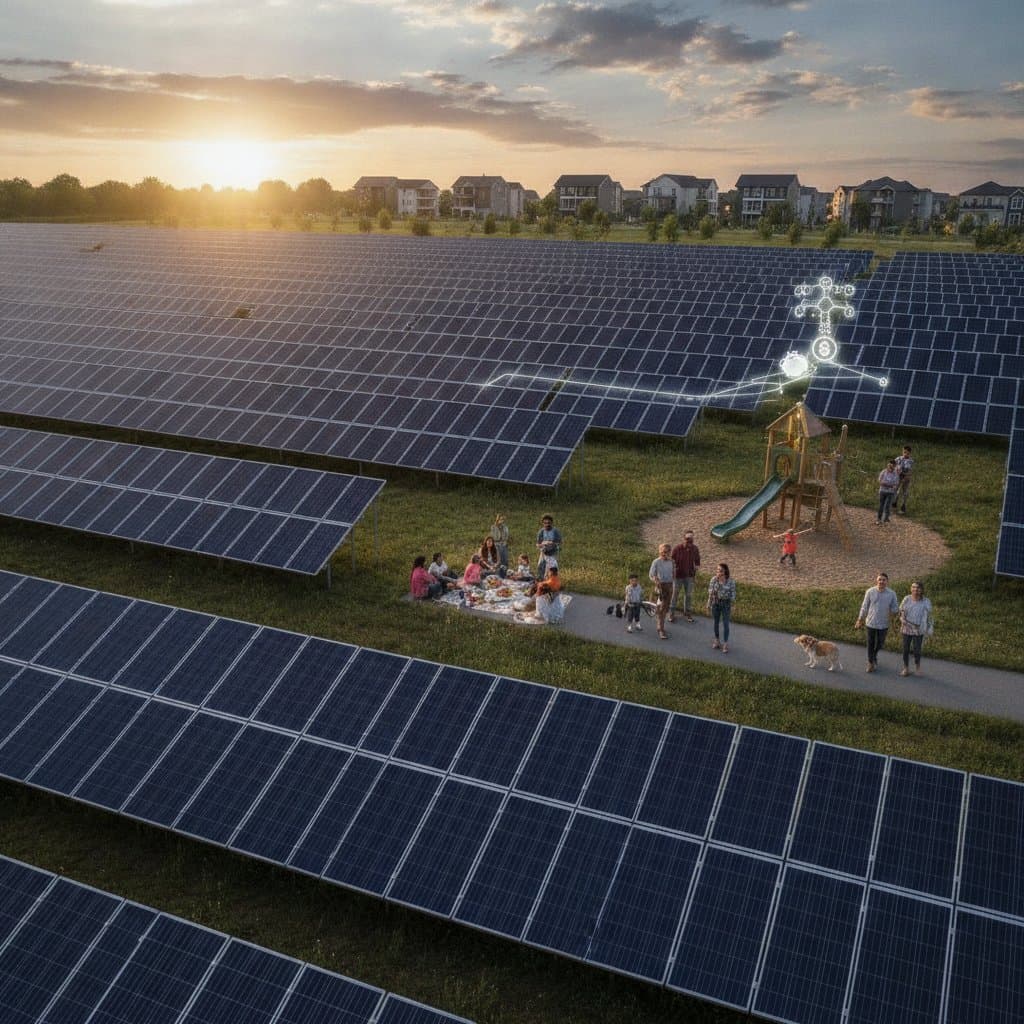
Community Solar Cuts Bills 40 Percent Without Rooftop Panels
Community solar has become one of the most effective tools for expanding renewable energy access in the United States. It changes how households and small businesses use solar power by removing the need for rooftop panels. Instead of installing equipment on individual homes, these projects allow customers to subscribe to a shared solar array located off site. Subscribers typically save around 40 percent on their electricity bills.
The model has matured through improved policy frameworks and greater public awareness. The process remains straightforward. A customer signs up, the assigned share of the solar farm produces energy, the utility credits that production to the account, and the bill drops.
How Community Solar Works
A developer builds a mid sized solar farm, often between one and five megawatts, on unused land or brownfields. The project connects to the local utility grid and generates electricity. The developer divides the project into virtual shares. Each share corresponds to a portion of the array output assigned to individual subscribers.
Subscribers receive credits on monthly electricity bills based on production from their portion. The credits offset usage and reduce the amount owed to the utility. This structure avoids upfront equipment costs and long term maintenance associated with rooftop systems.
The approach opens solar access for renters, apartment dwellers, and homeowners with shaded roofs or structural limits. It also supports regions where traditional rooftop adoption has lagged.
The Economics Behind the Savings
The savings figure reflects real financial benefits from project financing and operations. Developers secure long term power purchase agreements or state incentives that stabilize revenue. This stability supports subscription discounts for customers.
A project may set a fixed rate for solar credits below the utility retail price. The subscriber pays for the share of generation at the reduced cost and receives immediate savings. Economies of scale from larger installations lower per watt costs compared with rooftop systems. Centralized maintenance and permitting further reduce overhead.
Customers in multiple states typically save between 30 and 40 percent annually compared with standard utility rates. These savings require no capital investment from participants.
Why Rooftop Solar Remains Limited for Many
Rooftop solar faces barriers including roof space, orientation, shading, and local regulations. Renters and residents of multi family buildings often lack control over roof use. Homeowner association rules can add further restrictions.
Community solar removes these obstacles. Participants need not own property or modify homes. Subscriptions can transfer within the same utility territory if a customer relocates. This flexibility appeals especially to low and moderate income households.
Policy Evolution Driving Growth
Community solar programs exist because of deliberate policy design. Virtual net metering allows shared generation to count toward individual accounts. Early adopting states now maintain active markets while others develop similar frameworks.
These programs help meet renewable portfolio standards by expanding solar participation. Utilities that once resisted the model now partner with developers or operate their own subscription offerings.
Social and Environmental Benefits
Community solar projects create construction jobs, lease payments for landowners, and new tax revenues for rural counties. They strengthen grid resilience by placing generation closer to demand centers. Many developers site projects in low income or environmental justice communities and include benefit agreements that fund job training.
Technology Enabling Scale
Subscription platforms now automate billing, credit allocation, and customer communication. Smart meters and data analytics track each subscriber share accurately. Real time monitoring helps developers optimize performance and address issues promptly.
Market Outlook
Developers continue to expand into new regions while utilities integrate shared solar into grid modernization plans. Some states test community battery storage paired with solar farms. Universities, hospitals, and local governments subscribe as part of sustainability strategies.
Steps to Subscribe
Most states with active programs maintain online directories of available projects. Residents can compare options and select subscriptions. Many programs require no long term commitment. Community solar delivers measurable bill reductions and broader access to clean power for households previously unable to install rooftop systems.