
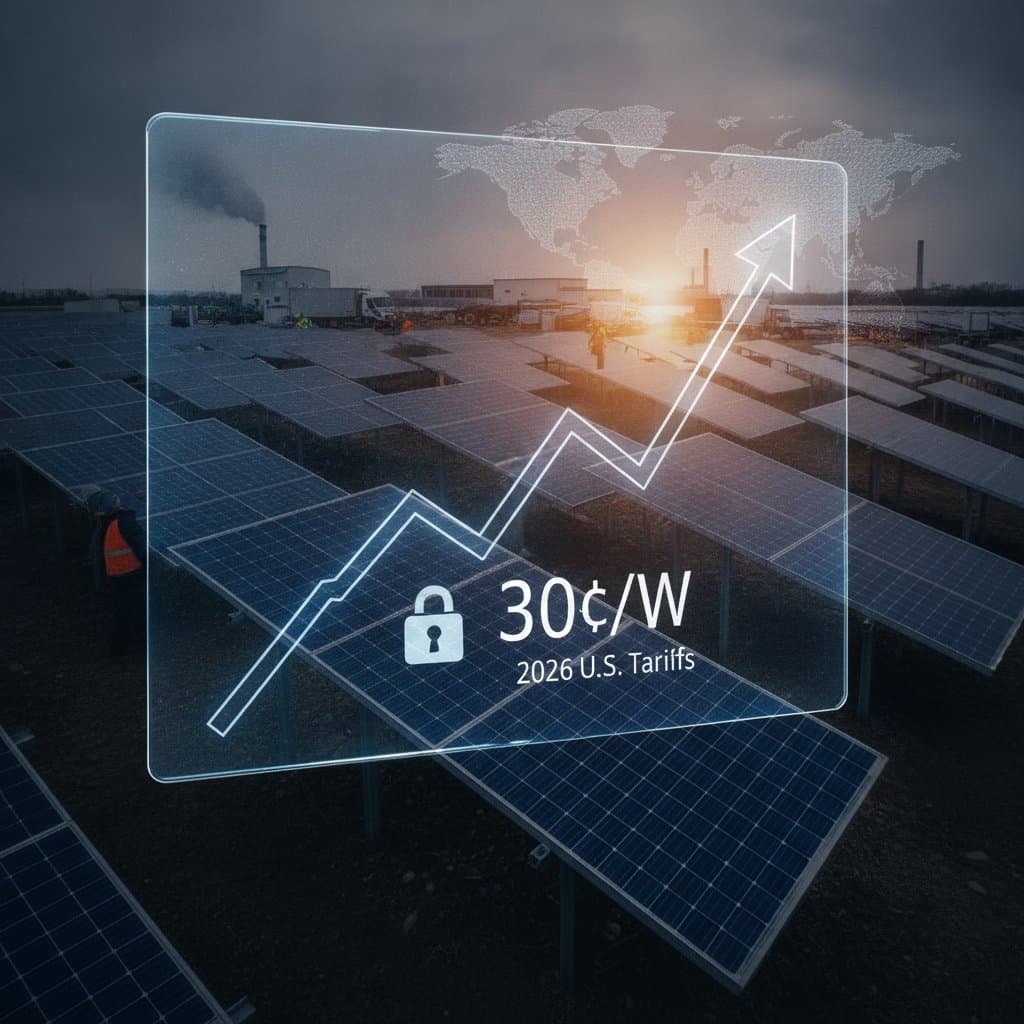
2026 Solar Tariffs Raise Panel Prices to 30 Cents per Watt
Solar developers and installers are preparing for higher equipment costs after the federal government confirmed new import tariffs on photovoltaic modules and cells. Trade officials said the updated tariff structure will apply to most imported solar components. The increase affects utility-scale, commercial, and residential projects that rely on imported crystalline silicon modules.
Key Details of the Tariff Adjustment
The tariff update applies to imports from multiple manufacturing regions that supply a large share of the U.S. solar market. Industry analysts expect the new pricing to influence procurement schedules. Some installers are accelerating orders before the effective date.
The updated rates form part of a broader trade policy review. This review targets supply chain dependencies and domestic manufacturing incentives. According to data from several market research groups, the average price of a standard solar module is projected to climb from roughly 25 cents per watt to just under 30 cents per watt once the tariff takes effect.
Industry Response and Procurement Adjustments
Solar industry associations expressed concern that the timing of the tariff increase could slow deployment during peak construction activity. Many developers are now reviewing purchase agreements and supply commitments to manage the expected price jump. Some distributors have already started adjusting inventory levels or renegotiating supply contracts to lock in pre-tariff pricing.
A spokesperson for a national solar trade group said the policy change might encourage more domestic production but warned that short-term disruptions are unavoidable. "We support growing U.S. manufacturing capacity, but the industry needs predictable pricing to sustain project development," the spokesperson said.
Domestic Manufacturing Implications
The tariff decision is part of a larger effort to strengthen domestic solar manufacturing. Several U.S.-based producers plan to expand production lines for modules, wafers, and cells. The increase in tariffs could make domestic products more competitive in terms of price.
Manufacturers with existing facilities in the U.S. may see stronger demand from developers seeking to avoid tariff costs. Industry suppliers say they are exploring long-term contracts that stabilize pricing for both sides while encouraging expanded local production.
Market and Policy Context
The solar sector has experienced several tariff cycles. Each cycle influenced market behavior differently. Previous rounds prompted developers to diversify suppliers and explore new sourcing strategies.
Financial analysts expect a temporary slowdown in new project starts as stakeholders adjust to the new price environment. They predict a rebound once the market absorbs the cost changes and new domestic capacity begins to meet demand.
Preparing for the Price Shift
Installers and procurement teams are now focusing on timing and logistics to reduce exposure to higher costs. Some are considering mixed sourcing strategies that combine imported and domestic modules. Others are increasing collaboration with finance partners to adjust project budgets and maintain profitability despite higher equipment expenses.
Developers are also evaluating contract structures that share risk between buyers, suppliers, and investors. These strategies can help stabilize long-term project economics while the market adjusts to the new tariff environment.
Strategic Steps for Tariff Adaptation
Companies that secure diversified supply chains and maintain clear communication with partners will manage the transition effectively. The tariff increase introduces short-term challenges. It also reinforces the ongoing effort to strengthen domestic production and supply resilience across the solar market.