
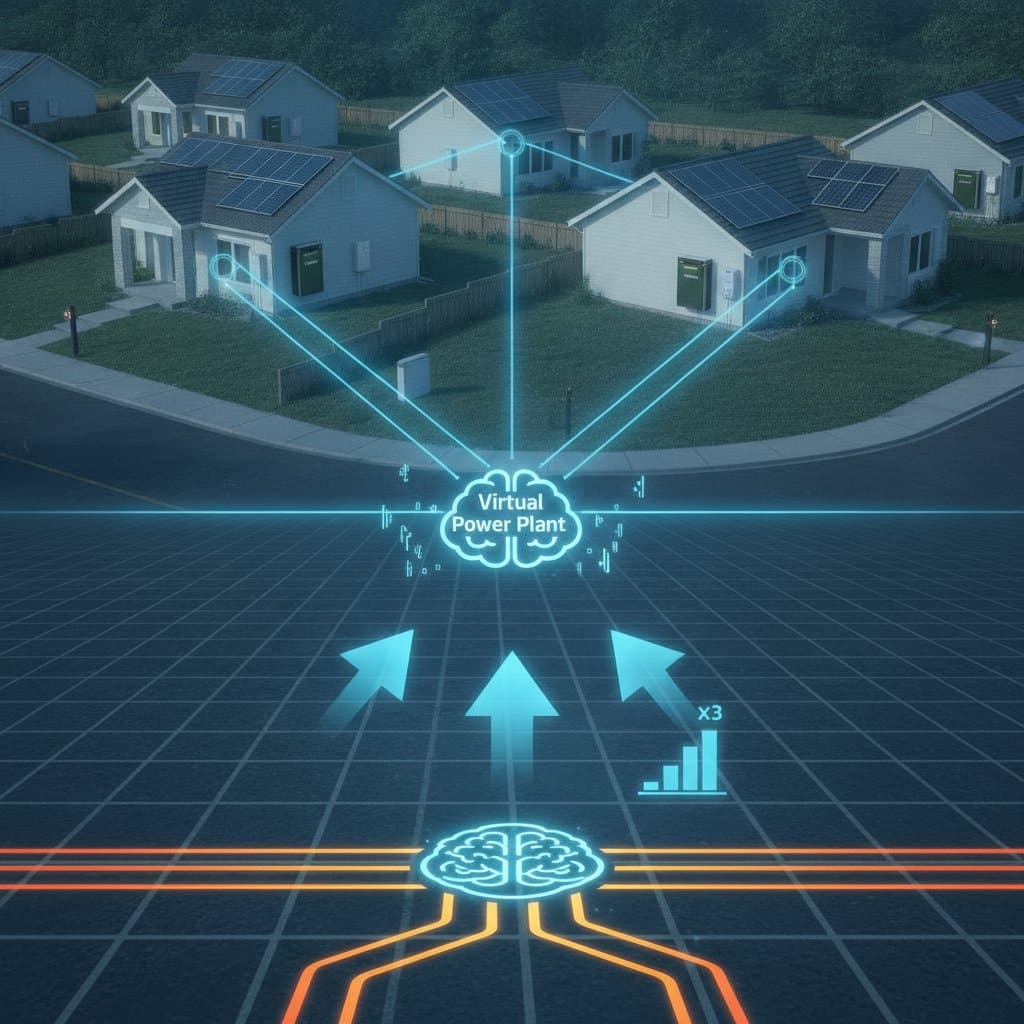
How Virtual Power Plants Increase Payments for Rooftop Solar
Virtual power plants aggregate distributed energy resources to deliver greater value than standalone solar systems achieve. Homeowners who join these networks often receive payments up to three times higher than standard utility buyback rates.
Core Mechanics of Virtual Power Plants
A virtual power plant coordinates rooftop solar arrays, home batteries, and smart appliances across many residences. The network responds to grid signals by discharging stored energy or reducing demand during peak periods. Utilities compensate participants for these services because they avoid the cost of building new power plants or transmission lines.
Participants install compatible equipment and enroll through a program operator. Once active, the system automatically optimizes battery cycles and appliance use without requiring daily homeowner input. Monthly statements show earnings from energy sales plus any capacity or frequency regulation payments.
Financial Impact on Homeowners
Traditional net metering credits excess solar production at retail rates that average 10 to 15 cents per kilowatt hour in many regions. Virtual power plant programs instead sell aggregated capacity and ancillary services into wholesale markets. Reported earnings reach 30 to 45 cents per kilowatt hour during high demand events.
Battery storage multiplies these returns. Systems sized between 10 and 20 kilowatt hours can discharge during the four to six highest priced hours each month. Annual statements from existing programs show net increases of 800 to 1500 dollars after subtracting any added hardware costs.
Steps to Participate
- Verify that local utility or state rules permit virtual power plant enrollment.
- Confirm that existing solar inverters and batteries meet program communication standards.
- Compare offers from at least three approved operators on total payout structure and contract length.
- Schedule installation of any required gateway device and complete enrollment paperwork.
- Monitor the first three statements to confirm expected credit amounts and adjust battery settings if needed.
Equipment and Program Considerations
Most programs require internet connected inverters and batteries with open application programming interfaces. Lead acid batteries rarely qualify because of limited cycle life and slow response times. Lithium iron phosphate units paired with hybrid inverters satisfy the majority of technical requirements.
Contract terms vary from one year to five years. Shorter agreements allow exit if performance falls short, while longer contracts sometimes include performance guarantees. Review termination fees and data sharing policies before signing.
Grid Stability Benefits
Aggregated resources reduce strain on distribution feeders during summer afternoons. Operators can curtail output or shift loads within seconds, providing the same response profile as a small gas peaker plant. This capability earns additional revenue streams beyond simple energy sales.
Utilities increasingly issue requests for proposals that specifically seek virtual power plant capacity. The resulting contracts create predictable revenue for participants over multiple years.
Next Actions for Interested Homeowners
Contact the solar installer who performed the original system commissioning to determine upgrade needs. Request program brochures from at least two operators and compare sample payout calculations based on local solar production data. Enrollment typically completes within four to six weeks once equipment compatibility is confirmed.