
Technical Considerations for Installation
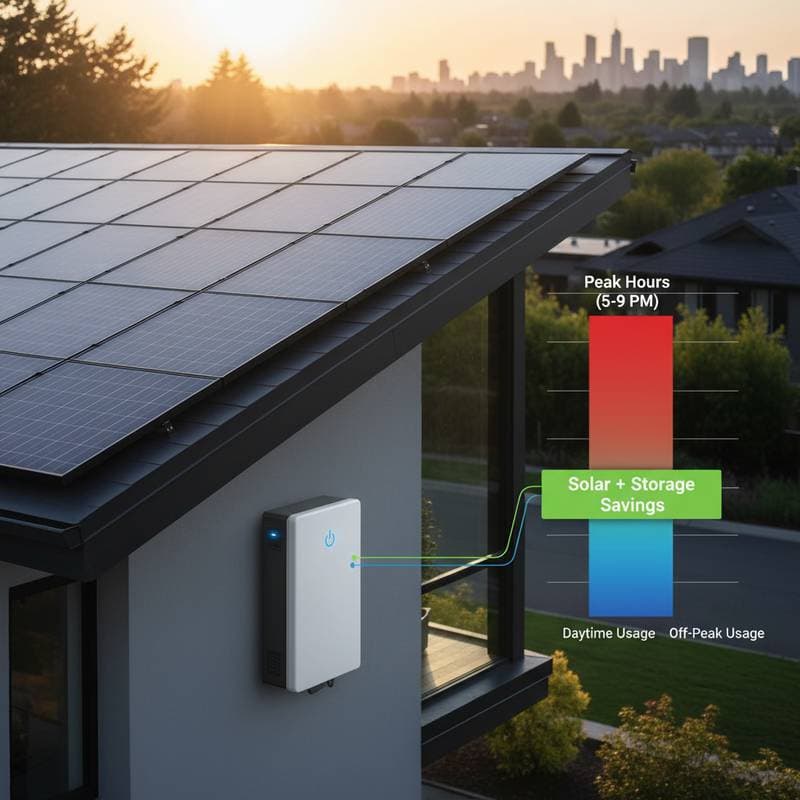
EPC contractors and installers play a vital role in ensuring that solar-plus-storage systems align with time-of-use (TOU) rate structures. They must select batteries with sufficient capacity to capture surplus solar generation during off-peak periods and discharge efficiently during costly peak times. For residential setups, this often means sizing systems to cover 50 to 100 percent of evening loads, depending on household patterns.
Compliance forms the foundation of successful projects. Installers verify adherence to local interconnection standards, navigate permitting processes, and meet utility metering requirements. These steps prevent delays and ensure seamless integration with the grid. During commissioning, teams conduct thorough testing to confirm that the system operates as designed, capturing real-world performance data against initial models.
Ongoing monitoring sustains optimal function. Remote software tracks battery state of charge, solar output, and usage patterns, alerting technicians to issues like degradation or suboptimal discharge timing. Regular maintenance, including firmware updates and inspections, extends system lifespan and maximizes return on investment.
Policy Drivers and Incentives
Federal and state policies fuel the expansion of solar and storage technologies. The federal Investment Tax Credit (ITC) delivers substantial relief by offsetting 30 percent of eligible costs for solar installations and standalone batteries installed through 2032. This credit applies to a broad range of projects, from rooftop residential arrays to utility-scale facilities.
States layer on additional support. California’s Self-Generation Incentive Program (SGIP) has disbursed billions to fund storage deployments, with priority for installations in wildfire-risk zones and low-income communities. New York’s NY-Sun initiative and Massachusetts’ SMART program provide rebates and incentives tied to grid support and carbon reduction goals, encouraging widespread adoption.
Utilities contribute through innovative programs. Many now run TOU optimization services or virtual power plants (VPPs) that reward participants for dispatching stored energy during system-wide peaks. In these arrangements, aggregated batteries act as a distributed resource, earning owners credits or payments while bolstering grid stability. Participants might receive $100 to $300 per kilowatt-year, varying by utility and location.
Business Implications for Installers and Developers
TOU-driven demand for storage creates significant opportunities for solar contractors and EPC firms. As rates grow more variable, clients seek comprehensive packages that guarantee savings under dynamic pricing. Firms skilled in configuring systems for peak arbitrage—storing low-cost midday power for evening use—capture larger market segments in both homes and offices.
Tom Tansy, Executive Director of the SunSpec Alliance, observes, “Energy storage is now a standard part of the conversation. Customers want to know how to control costs under TOU rates, and batteries provide the flexibility to do that.” This shift prompts installers to train teams on TOU-specific design tools, such as simulation software that models annual savings based on local tariffs.
Developers apply these principles at scale. Co-locating storage with utility-scale solar farms allows generation shifting to align with peak demand windows, boosting revenue under time-sensitive power purchase agreements. For instance, a 100-megawatt project might increase its value by 20 percent through optimized dispatch, appealing to investors focused on hourly market dynamics.
Financial backers recognize the advantages. TOU optimization enhances cash flow predictability, making projects more attractive to lenders. Banks now factor storage into risk assessments, viewing it as a buffer against rate hikes and regulatory changes, which lowers interest rates and eases financing.
Overcoming Market Barriers
Growth in solar-plus-storage faces hurdles, yet solutions exist. Battery prices have fallen 89 percent since 2010, but they still account for 40 to 60 percent of system costs. Installers mitigate this by sourcing from reliable suppliers and bundling with solar to leverage ITC synergies, reducing effective outlay to under $200 per kilowatt-hour.
Supply chain issues, including shortages of inverters and modules, demand proactive planning. Firms diversify vendors and stock critical parts to avoid project timelines stretching beyond six months. Collaboration with manufacturers on lead-time forecasts helps maintain momentum.
Interconnection processes pose another challenge. Some utilities mandate detailed impact studies for systems over 10 kilowatts, assessing effects on voltage and frequency. Advocates push for standardized protocols to cut approval times from months to weeks, lowering administrative expenses that can reach 20 percent of total costs.
Education bridges knowledge gaps. Clients often confuse TOU tiers with flat rates or overlook how solar timing affects storage value. Installers succeed by using simple visualizations—charts showing before-and-after bills—and calculators projecting savings, such as $500 to $1,500 annually for a typical home. These tools foster confidence and drive conversions.
Long-Term Benefits of Energy Independence
Solar-plus-storage extends beyond short-term savings to deliver enduring security. Systems insulate users from rate volatility, with locked-in solar production offsetting 70 to 90 percent of needs over 25 years. This stability proves invaluable as TOU plans proliferate across 30 states.
Resilience stands out during disruptions. On-site batteries power critical circuits for hours or days, safeguarding against blackouts from storms or equipment failures. Commercial users avoid downtime costs, estimated at $5,000 per hour for small manufacturers, while homes keep lights, refrigeration, and medical devices running.
Projections indicate residential storage will grow threefold by 2027, propelled by TOU pressures, backup demands, and cost reductions. Early adopters position themselves for future grid evolutions, including vehicle-to-grid integration that further optimizes energy flows.
Advancing with Intelligent Energy Strategies
Future TOU management hinges on advanced platforms uniting solar, batteries, electric vehicles, and smart appliances. These systems employ machine learning to predict usage peaks, rate changes, and weather impacts, orchestrating discharges to capture the lowest costs. For example, a home controller might charge an EV off-peak and draw from storage during evenings, amplifying savings by 15 to 25 percent.
Solar professionals must prioritize TOU expertise. Analyze local tariffs, apply design best practices like east-west panel orientation for extended production, and align with client priorities such as cost reduction or sustainability. This knowledge equips teams to offer tailored recommendations, from basic residential kits to enterprise-level microgrids.
Embracing solar-plus-storage transforms TOU challenges into opportunities. Participants achieve not only halved peak costs but also fortified operations and sustainable practices. As innovations unfold, proactive implementation ensures sustained financial and energy security.