
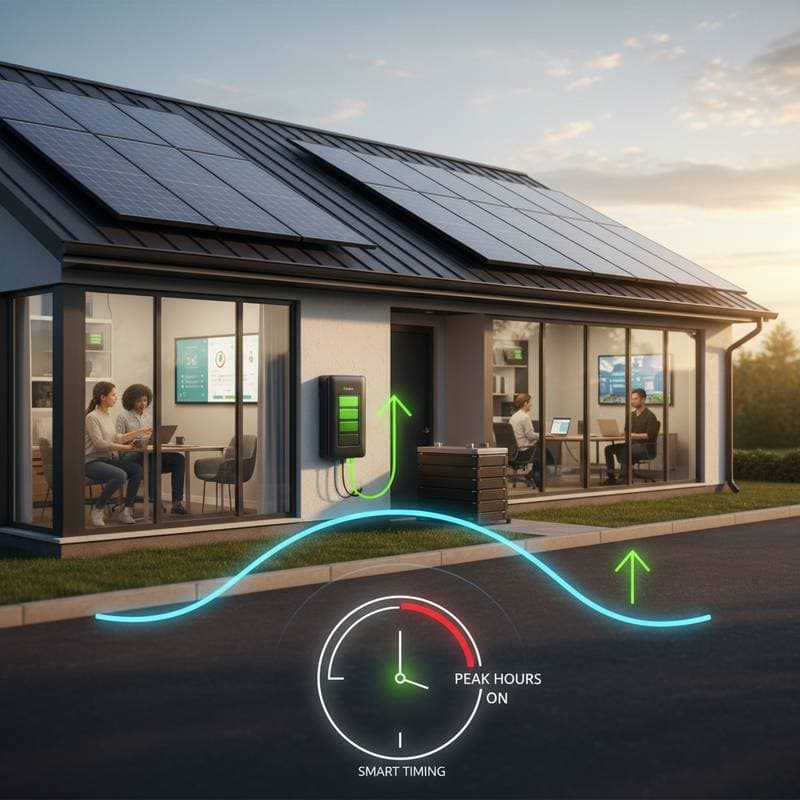
Beat Peak Pricing and Save on TOU Bills Daily
For homeowners and businesses on time-of-use electricity plans, the daily rhythm of energy consumption has never mattered more. The cost of running appliances or charging an electric vehicle can swing dramatically depending on when the power is drawn from the grid. Utilities have been reshaping their rate structures to encourage smarter energy habits, and the result is a landscape filled with opportunity for those who understand how to manage it.
From my years of reporting on solar and energy storage markets, one truth has become obvious: beating peak pricing is not about luck or guesswork. It’s about timing, control, and a little bit of technology. The households that win this daily game of energy chess are the ones that combine solar generation with flexible consumption strategies, and they do so with precision.
Understanding How Time-of-Use Pricing Works
Under a time-of-use (TOU) rate, electricity costs vary depending on demand across the grid. When everyone is running air conditioners or cooking dinner, prices surge. When demand drops overnight or during midday solar surpluses, prices fall. Utilities use TOU pricing to reduce stress on the grid and to reward customers who shift their usage to off-peak periods.
Peak hours typically overlap with the late afternoon and early evening, when solar production tapers off but home activity spikes. This mismatch between generation and demand is the central challenge of the modern grid. The key to saving money lies in reshaping how and when energy is consumed.
Solar Power’s Natural Advantage
I’ve seen countless homeowners install solar thinking of it purely as a long-term investment. Yet under TOU rates, solar becomes a daily money-saving tool. During midday, when panels are producing the most, the grid price is often lower. But with a properly designed system that includes energy storage or smart load management, that daytime generation becomes valuable currency for offsetting high-priced consumption later in the day.
Think of it this way: every kilowatt-hour stored from your solar system and used during peak hours is one less unit you have to buy at elevated prices. That’s where batteries, smart inverters, and intelligent energy management come into play.
The Storage Factor
Energy storage has evolved from a niche luxury to a practical necessity for anyone serious about cutting TOU bills. The concept is straightforward. Store excess solar energy when prices are low, then discharge it when rates spike. The difference can be dramatic.
In my field interviews, I’ve heard homeowners describe their batteries as “quiet accountants” working behind the scenes. They track pricing signals, monitor solar production, and automate when to draw from the grid or the battery. The result is a flattened daily cost curve that can reduce bills by a third or more, depending on the region and rate structure.
For commercial customers, this strategy scales even more effectively. By combining solar, storage, and predictive software, businesses can manage not only their energy costs but also their demand charges. That’s the kind of operational control that turns energy from a fixed expense into a managed asset.
Smart Load Shifting
Even without storage, there are practical ways to beat peak pricing. The first step is understanding your load profile. Which appliances draw the most power, and when? Once that’s clear, simple scheduling adjustments can produce measurable savings.
Here are some strategies that consistently deliver results:
- Run heavy appliances during off-peak windows. Dishwashers, laundry machines, and pool pumps can often be delayed until prices drop.
- Use smart thermostats. Pre-cooling or pre-heating your home before peak hours reduces the need for power when rates rise.
- Charge electric vehicles overnight. Many utilities offer super off-peak rates during late-night hours.
- Leverage solar production directly. Align daytime activities like cooking, cleaning, or charging devices with solar output to minimize grid reliance.
Each home has its own rhythm, but the principle remains consistent: shift flexible loads away from expensive hours.
The Role of Automation
The growing ecosystem of smart home energy management tools is making TOU optimization easier than ever. I’ve tested several systems that integrate with solar inverters, batteries, thermostats, and EV chargers. The best ones automatically coordinate these devices to minimize costs without constant user input.
For instance, they can detect when the price signal crosses a certain threshold and instantly switch the home to battery power. Or they can delay a water heater cycle until solar output rises. Automation removes the guesswork and turns TOU savings into a daily routine.
This kind of dynamic control used to be reserved for large commercial facilities with energy management systems. Now, residential customers can access similar capabilities through compact, intuitive platforms that learn their habits and optimize performance over time.
Why Peak Avoidance Matters Beyond Your Bill
The financial benefit of avoiding peak pricing is obvious, but there’s a broader grid-level story too. When thousands of homes shift consumption away from the evening peak, they collectively reduce the need for utilities to fire up expensive peaker plants. Those plants are typically the least efficient and most polluting generators in operation. Shaving those peaks means cleaner air, lower emissions, and a more stable grid.
In that sense, every kilowatt-hour shifted to off-peak use is a small act of grid support. It’s a community-level contribution that also happens to save money. For solar owners, it’s the perfect intersection of personal benefit and public good.
Evaluating Your TOU Strategy
A successful TOU strategy begins with data. Review your utility bill, note the peak and off-peak windows, and calculate how much of your usage falls into each category. Many utilities now provide online dashboards that break this down in detail. If you have a smart meter, you can often view hourly data to identify patterns.
Pair that information with your solar production profile. If your panels produce more energy than you use during the day, consider how much of that could be stored or redirected to high-consumption tasks. If your consumption still peaks in the evening, a battery system or automated control may be worth exploring.
Professional energy auditors or solar installers with experience in TOU optimization can model your expected savings before you invest in new equipment. The key is to treat your energy system as a living ecosystem rather than a static installation.
The Future of TOU and Consumer Control
Utilities are increasingly refining TOU structures to reflect real-time grid conditions. Some regions are introducing even more granular rate systems that change hourly based on renewable supply and demand. As this evolves, the advantage will go to those with flexible systems capable of responding automatically.
Solar companies are already adapting. Many new inverters and storage systems come equipped with native TOU optimization settings. Software updates allow these devices to respond to changing price signals without manual intervention. The integration between solar generation, storage, and dynamic pricing is becoming seamless.
From my perspective, this trend represents the next phase of consumer energy independence. It’s not just about generating your own power anymore, but about using it intelligently in sync with the grid. The smartest systems will predict, adapt, and execute energy decisions in real time to keep costs low and reliability high.
Making It Happen
Beating peak pricing is not a one-time project. It’s a daily practice grounded in awareness, technology, and a willingness to adjust habits. Start small by identifying your peak hours and shifting one or two major loads. Then, if you have solar, explore storage options that fit your budget and lifestyle. Finally, consider automation tools that can manage the details for you.
Every household or business that takes this step contributes to a more balanced energy system. The reward is tangible: lower bills, reduced environmental strain, and a deeper sense of control over your power use. With solar, storage, and smart strategy, your energy decisions become proactive instead of reactive. The grid may set the rates, but you decide how to respond.