
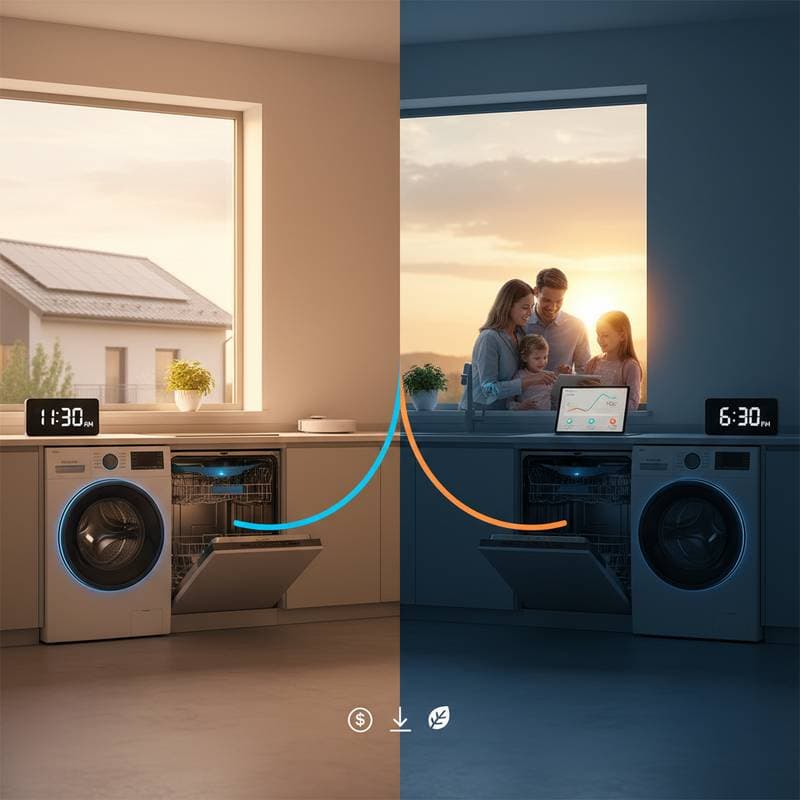
Best Times to Run Appliances and Reduce Your Electric Bill
Electricity costs vary throughout the day as utilities adjust prices based on demand levels. Homeowners enrolled in time-of-use (TOU) rate plans can lower monthly bills by operating appliances during periods of lower pricing. This approach allows consumers to maintain comfort and convenience while achieving significant savings.
Understanding Time-of-Use Rates
Time-of-use rates apply different prices to energy consumption based on the time of day. Peak hours, characterized by high demand, carry higher costs. Off-peak hours, with reduced demand, feature lower rates, and some utilities include mid-peak periods at intermediate prices.
The purpose of these structures is to shift non-essential energy use to times of lower grid stress. Such plans are prevalent in states with substantial solar energy adoption, including California, Arizona, and Nevada. These regions use TOU to manage fluctuations from midday solar peaks and evening demand increases. For instance, running a laundry cycle or charging an electric vehicle during peak times can double the associated costs compared to off-peak operation.
Common Peak and Off-Peak Periods
TOU schedules differ by utility, but patterns remain consistent across many programs. Peak demand typically occurs in the late afternoon and early evening, coinciding with heightened residential usage. Off-peak times generally span overnight and early morning hours.
Certain providers offer super off-peak rates during the lowest demand periods, often late at night. A representative schedule might include:
- Peak hours: 4 p.m. to 9 p.m.
- Off-peak hours: 9 a.m. to 4 p.m. and 9 p.m. to 7 a.m.
- Super off-peak hours: midnight to 6 a.m.
Homeowners must verify their utility's specific schedule, as it varies by location and may change seasonally to account for daylight shifts and usage trends.
High-Impact Appliances for Scheduling
Major appliances consume the largest portions of household electricity. Redirecting their use to off-peak windows yields substantial savings. Focus on these key categories:
- Washing machines and dryers: These units run for 1 to 2 hours and use 500 to 1,000 watts. Schedule cycles to start at 10 p.m. or 5 a.m. to avoid peak charges.
- Dishwashers: Select models with built-in timers; set them to begin operation at 11 p.m. for completion by morning.
- Water heaters: Install a timer to limit heating to off-peak intervals, such as 1 a.m. to 5 a.m., ensuring hot water availability during the day.
- Electric vehicle chargers: Opt for Level 2 chargers with scheduling features; charge from 10 p.m. to 6 a.m. Many utilities offer discounted EV rates for overnight use.
- Air conditioners and heat pumps: Activate pre-cooling from 2 p.m. to 4 p.m. or pre-heating in winter mornings to minimize runtime during peak hours.
Leveraging Smart Home Automation
Smart devices enable precise control over appliance timing aligned with TOU rates. Thermostats like Nest or Ecobee adjust temperatures automatically, while smart plugs from brands such as TP-Link control power to individual devices. Wi-Fi-enabled appliances, including modern washers and EVs, integrate with apps for remote scheduling.
Utilities often provide apps that display current rates and suggest optimal run times. For example, set a dishwasher to start when prices fall below 10 cents per kilowatt-hour. Market analysis from Wood Mackenzie indicates that smart energy systems have seen adoption rates double in recent years, fueled by solar integration and escalating energy prices. These technologies not only cut costs but also ease grid pressure by distributing demand more evenly.
Enhancing Savings with Solar Power
Homeowners with solar panels can amplify TOU benefits by matching appliance use to generation peaks. Solar output is highest from 10 a.m. to 3 p.m., often an off-peak window. Run energy-intensive tasks like drying clothes or operating pool filters during these hours to consume self-generated power directly.
Battery storage systems, such as those from Tesla, store excess daytime energy for evening discharge, offsetting peak purchases. First Solar emphasizes that effective energy management rivals panel installation in importance. A company representative stated, "Energy management is the next frontier in residential efficiency. The goal is not only to generate clean power but to use it at the right time."
Exploring Utility-Specific Programs
TOU offerings vary by region to address local grid dynamics. Pacific Gas and Electric in California features plans with peak rates up to 50 cents per kilowatt-hour, compared to 15 cents off-peak. Arizona Public Service provides tiered options with EV incentives, while Florida Power & Light emphasizes summer peak avoidance.
Incentive gaps can reach 25 cents per kilowatt-hour, motivating behavioral shifts. Regulatory bodies promote TOU as a tool for demand management, delaying the need for grid expansions and facilitating renewable integration. The U.S. Energy Information Administration reports that millions of households now participate, with enrollment on the rise.
Steps to Implement Energy Savings
Start by accessing your utility's rate details via their website or bill. Track appliance usage with a simple energy monitor to identify peak-hour offenders. Make targeted changes: delay the dishwasher until after 9 p.m., or program the water heater for overnight operation.
Invest in affordable tools like a $20 smart plug for lamps or fans. Solar owners should review production data from inverters to align loads with sunny periods. These steps require little upfront effort yet compound into hundreds of dollars saved annually.
Benefits of Timed Energy Use
Adopting TOU strategies empowers households to control costs amid rising rates. Beyond financial gains, this practice supports a more resilient grid by smoothing demand peaks. For solar users, it maximizes clean energy value, contributing to broader sustainability goals. Simple scheduling adjustments prove that efficiency gains are accessible to all.