
Unpacking the Promise of AI Energy Monitors
Smart home innovations now extend to energy management, where AI-powered monitors aim to lower electricity costs by as much as 40 percent. Homeowners, utility experts, and energy specialists debate the validity of these bold assertions. The core issue centers on whether these tools generate substantial savings or merely enhance existing practices with advanced labeling.
Understanding AI Energy Monitor Functionality
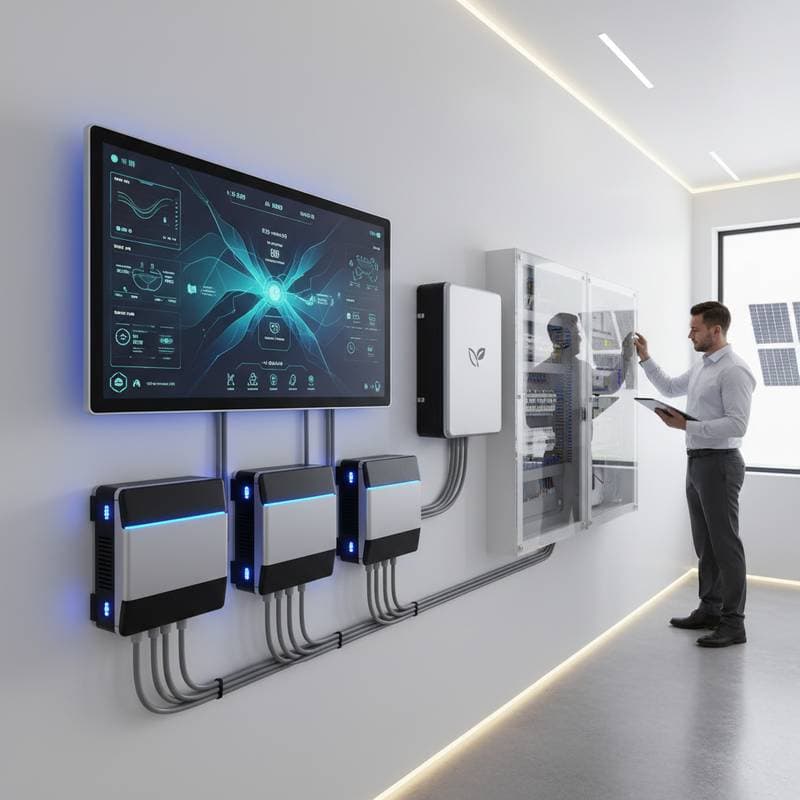
AI energy monitors function as sophisticated data hubs linked to a homes electrical panel or smart meter. They gather live data on usage from specific circuits and appliances, applying machine learning algorithms to spot wasteful patterns. Users receive tailored advice on altering habits, shifting energy loads to off-peak times, or directly controlling compatible smart devices.
These systems excel at detecting usage trends and forecasting demand spikes. For example, if data shows excessive air conditioning during midday heat, the monitor might propose pre-cooling the home earlier in the morning. Advanced versions connect with solar panels or home batteries, directing excess renewable energy to high-demand appliances before relying on utility power.
Evaluating the 40 Percent Savings Claim
Providers advertise potential bill reductions from 20 to 40 percent, yet field results show significant variation. Studies from independent sources reveal that outcomes rely on homeowner participation, property dimensions, and baseline efficiency levels. Homes with modern, efficient setups often experience smaller improvements, whereas those with outdated wiring or erratic usage patterns benefit more substantially.
Pairing monitors with automated controls amplifies results. Smart thermostats, electric vehicle chargers, and plugs enable the system to dodge peak pricing automatically by redistributing loads. Without such features, the device serves primarily as an informational tool, requiring consistent adherence to its suggestions for any meaningful impact.
Addressing Privacy and Performance Issues
The allure of cost savings comes with valid worries about data security and system dependability. These monitors handle extensive household usage information, frequently uploaded to cloud servers operated by external companies. Concerns arise over potential sharing with utilities or marketing firms, though providers maintain that aggregated, anonymized data enhances overall grid stability and prediction accuracy.
Performance inconsistencies can undermine trust. Inaccurate identification of appliance signatures or neglect of weather variations might yield flawed recommendations. Instances of erroneous data have triggered pointless notifications or suboptimal automation. Experts emphasize regular calibration and firmware updates to sustain precision over time.
Enhancing Renewable Energy Integration
AI monitors prove especially effective in residences equipped with solar arrays or storage solutions. They synchronize generation data with consumption habits, timing operations like laundry or dishwashing to coincide with peak solar output. This approach maximizes self-generated power usage and schedules battery releases to cover evening demands without expensive grid pulls.
Utility companies increasingly collaborate with these technologies to ease network strain. Aggregated control of distributed resources allows for smoother supply-demand equilibrium. Pilot programs indicate advantages for ratepayers and operators alike, although supportive policies lag behind technological advances.
Weighing Installation and Ongoing Costs
Initial expenses for hardware and services span from several hundred to thousands of dollars, influenced by feature depth. Certain models provide perpetual access to insights via a single payment, while others demand monthly fees for advanced analytics or device syncing. To assess return on investment, consider local rates, annual usage volume, and commitment to implementing changes.
Energy professionals view these tools as enduring aids for optimization rather than instant profit generators. Their primary benefit emerges from heightened awareness and precise control. Sustained application leads to tangible reductions, but anticipating a consistent 40 percent drop risks unmet expectations.
Practical Steps for Effective Energy Management
AI energy monitors mark progress in smarter household power handling, though the field continues to evolve. Success requires reliable inputs, robust automation, and ongoing user input. In solar-equipped homes, they foster equilibrium by matching demand to available generation.
For broader adoption, conduct a home energy audit before installation to target key areas. Select systems compatible with existing smart devices for seamless operation. Track monthly bills post-setup to measure progress and refine strategies, turning data into lasting efficiency gains.