
Understanding Bifacial Solar Panels and Their Energy Gains
Rooftop solar installations have long focused on maximizing sunlight absorption within confined spaces. Conventional monofacial panels capture light solely on their front surface, limiting overall output. Bifacial panels address this limitation by absorbing sunlight from both sides, potentially increasing electricity production by up to 30 percent without expanding the physical footprint. This advancement allows engineers to design more effective residential and commercial solar arrays.
The technology relies on photovoltaic cells that respond to direct, diffuse, and reflected light. In practical terms, installers position panels to benefit from ground or roof reflections, which can vary based on location and materials. For instance, a well-designed system in a suburban setting might achieve consistent gains through careful site assessment.
Key Features of Bifacial Panel Construction
Bifacial panels resemble standard modules visually, yet their internal design sets them apart. The front side uses traditional anti-reflective coatings to maximize direct sunlight capture. The rear incorporates transparent backsheets or dual-glass layers that permit light to penetrate and activate the cells from behind.
Cells in bifacial panels feature specialized doping and texturing to handle low-light conditions efficiently. This setup converts reflected rays from surrounding environments into usable energy, which monofacial panels ignore. Manufacturers specify rear-side efficiency ratings, often ranging from 70 to 90 percent of front-side performance, depending on the model.
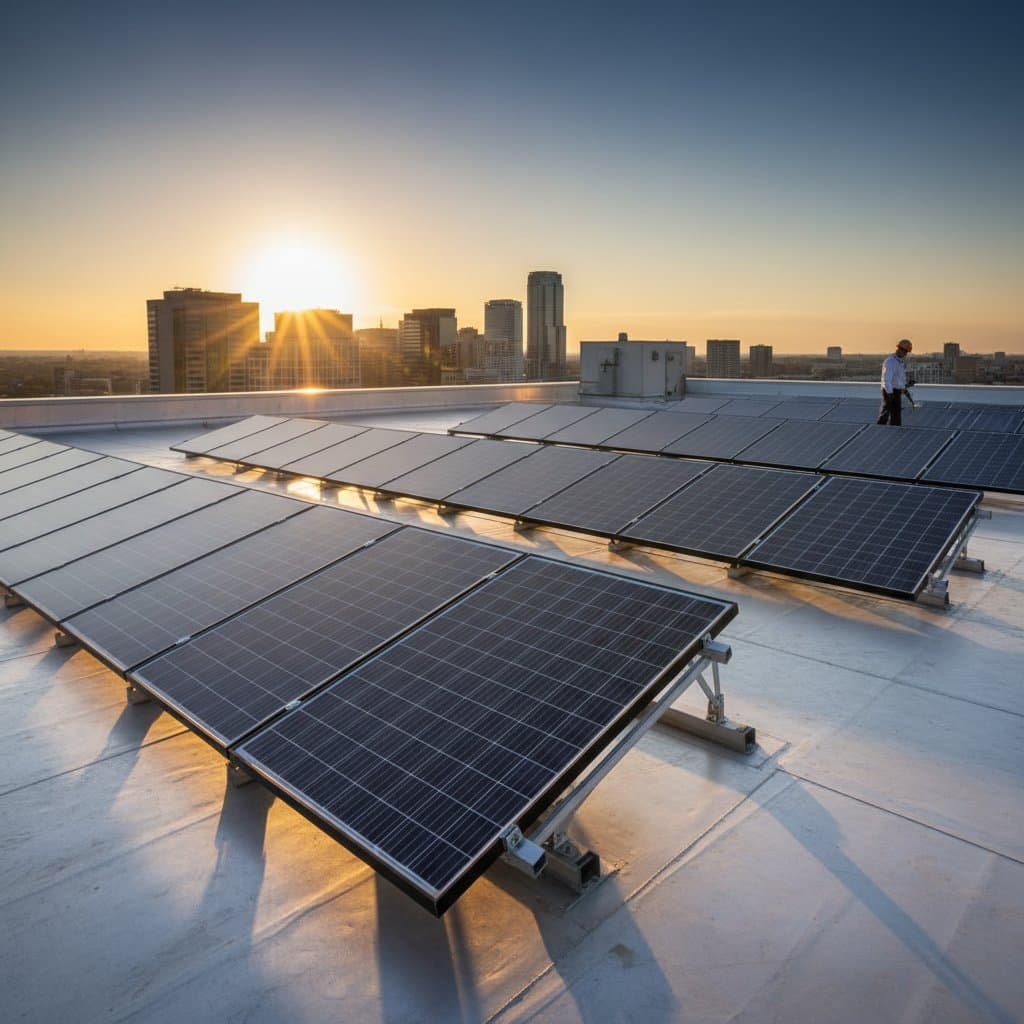
Surface reflectivity plays a crucial role in outcomes. Light-colored roofs, such as those with white thermoplastic polyolefin membranes, can boost rear gains by 20 percent or more. In contrast, dark asphalt surfaces might limit benefits to 5 to 10 percent. Property owners can enhance results by applying reflective coatings or selecting gravel ballast with high albedo values.
Urban deployments often surprise with higher yields due to reflections from adjacent structures. Field tests in city environments reveal that concrete sidewalks and glass facades contribute additional light, sometimes exceeding manufacturer projections by 5 percent.
Optimizing Installation for Maximum Performance
Effective bifacial integration requires adjustments to traditional mounting practices. Panels must elevate slightly above the roof surface, typically 4 to 12 inches, to allow reflected light access without shading the rear. Standard racking systems with vertical standoffs achieve this clearance while maintaining wind resistance.
Tilt angles influence results significantly. Optimal orientations, often 10 to 30 degrees depending on latitude, expose the rear to more diffuse light. East-west facing rows in ground-mounted arrays maximize bifacial advantages, though rooftop constraints favor south-facing setups in the northern hemisphere.
Ventilation emerges as another benefit. The gap beneath panels promotes airflow, reducing operating temperatures by 5 to 10 degrees Celsius compared to flush-mounted designs. Cooler cells maintain higher voltage output, compounding the efficiency gains from dual-sided capture.
Weight considerations arise with dual-glass variants, which can weigh 10 to 20 percent more than single-glass panels. However, recent innovations include tempered glass thinned to 2 millimeters and reinforced polymer frames that distribute loads evenly. Structural engineers recommend pre-installation roof assessments to confirm capacity, often revealing that most modern buildings accommodate the added mass without reinforcement.
Installers benefit from following manufacturer guidelines for torque settings and alignment. Precise leveling ensures uniform light exposure, preventing hotspots that could degrade performance over time.
Calculating the Financial Advantages
The value of bifacial panels lies in their impact on return on investment. Increased energy yield shortens payback periods from 7-10 years to 5-8 years in many scenarios. For a typical 10-kilowatt residential system, a 15 percent average gain translates to an extra 1,500 kilowatt-hours annually, reducing utility bills accordingly.
Commercial applications amplify these benefits where roof space constraints limit array size. A 100-kilowatt installation on a warehouse might avoid the need for costly expansions, while the higher output lowers the levelized cost of energy to under 5 cents per kilowatt-hour in sunny regions.
Upfront costs for bifacial modules run 10 to 20 percent higher than monofacial equivalents, but incentives like tax credits offset this differential. Long-term warranties, often 25 to 30 years, cover degradation rates below 0.5 percent annually, ensuring sustained productivity.
Industry professionals report consistent real-world results after initial deployments. Data from multiple sites confirms gains of 10 to 25 percent, influenced by local conditions. This predictability encourages adoption in premium projects, where clients prioritize reliability over minimal initial expense.
Integrating Bifacial Technology into Broader Solar Strategies
Advancements in complementary technologies enhance bifacial performance further. Pairing panels with high-efficiency inverters optimizes direct current to alternating current conversion, minimizing losses. Smart monitoring systems track rear-side contributions in real time, allowing adjustments for seasonal variations.
Reflective roofing upgrades, such as cool roof coatings, integrate seamlessly with bifacial arrays. These materials not only increase light bounce but also reduce building cooling loads by 10 to 15 percent, creating a synergistic effect on overall energy savings.
For new constructions, architects incorporate bifacial-ready designs from the outset. This includes specifying roof substrates with reflectivity in mind and planning for elevated mounting in structural blueprints. Retrofitting existing roofs involves minimal disruption, often completed in a single day for small systems.
As production scales, bifacial panels become accessible for mid-range budgets. Their ability to generate more power from limited areas aligns with growing energy needs in densely populated regions. Property owners gain a competitive edge through lower operational costs and enhanced sustainability credentials.
Realizing Greater Energy Independence
Bifacial solar panels elevate rooftops from passive barriers to active energy assets. By leveraging every available light source, they deliver measurable increases in output that support ambitious clean energy goals. Homeowners and businesses alike discover that targeted upgrades yield lasting financial and environmental returns, paving the way for widespread adoption.