
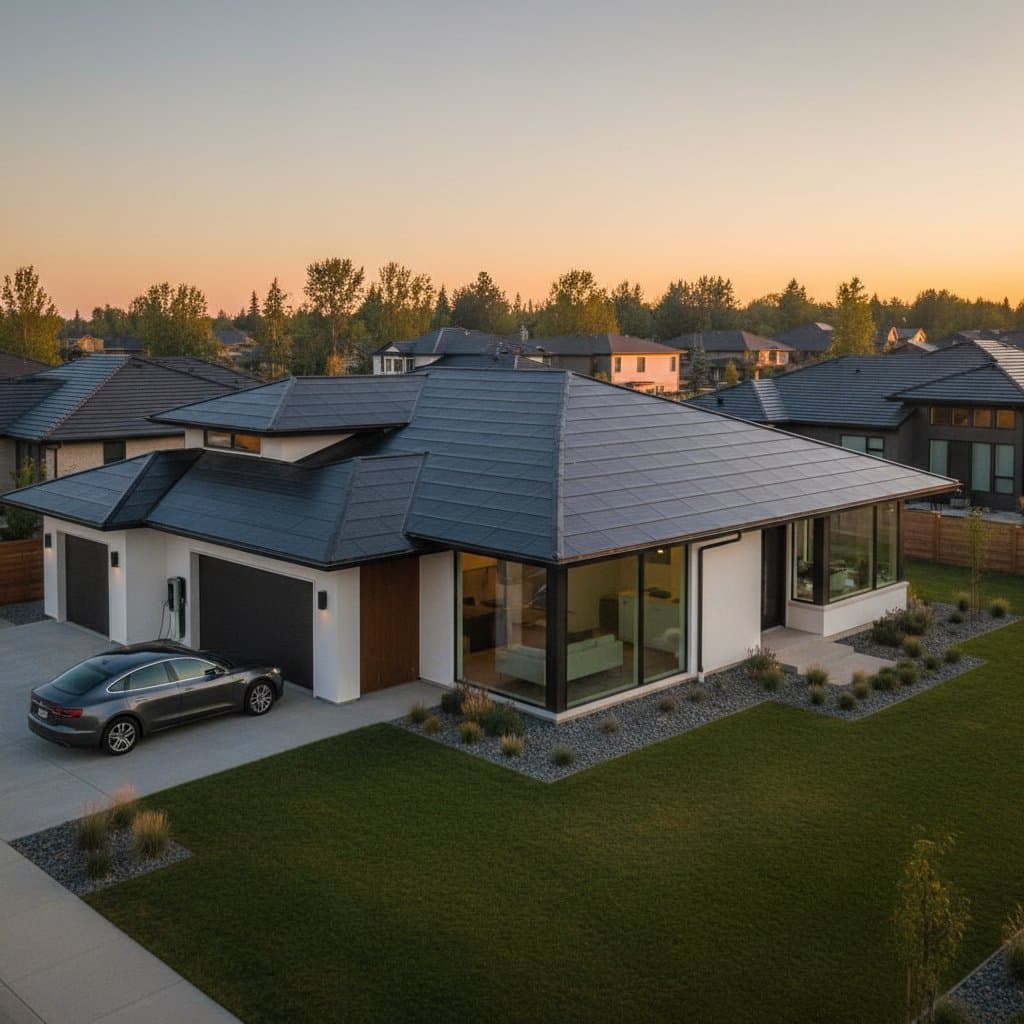
Solar Shingles Match the Affordability of Traditional Panels
Solar shingles once served as a premium option. These products integrated energy generation with roofing but carried high costs that limited adoption among homeowners. Recent data from installers indicates that integrated solar roofing now competes directly with rack-mounted solar panels in pricing. This development marks a key milestone for building-integrated photovoltaics.
The Path to This Achievement
Tesla introduced the solar roof concept years ago, envisioning a complete replacement of traditional roofing with energy-producing tiles. This approach promised aesthetics without visible racks. Initial costs, however, exceeded those of standard solar arrays plus conventional roofs by two or three times. Challenges included production constraints, supply issues, and complex installations.
Industry progress has addressed these hurdles. Roofing and solar manufacturers refined designs, standardized procedures, and increased production volumes. Firms such as GAF Energy, CertainTeed, and Luma Solar altered the market dynamics. Their products now deliver installed costs comparable to or lower than a new roof combined with panels in various regions.
Factors Driving the Cost Reduction
Manufacturing scale stands out as the primary driver. Commercial production volumes lowered unit costs significantly. Solar panels experienced similar benefits decades earlier, and shingles follow suit.
Installation efficiency contributes substantially. Previous systems demanded sequential work from roofers, electricians, and solar specialists, inflating expenses. Modern designs employ uniform methods handled by one trained team. For instance, GAF Timberline Solar uses a nail gun for attachment, bypassing custom hardware and reducing labor time.
Advancements in materials further support affordability. Photovoltaic cells in shingles achieve higher efficiency, requiring fewer units for equivalent output. Roofing components enhance durability against weather, minimizing manufacturer liabilities. These elements cut both direct expenses and indirect risks, aligning total costs with conventional setups.
Real-World Cost Comparisons
Consider a standard home requiring a full roof replacement and a 6 kW solar system. Previously, asphalt shingles plus panels cost considerably less than solar shingles. Current installer quotes place integrated systems at three to four dollars per watt, varying by location and roof design. This aligns closely with traditional solar plus roof replacement expenses.
Homeowners planning a roof upgrade can now select solar shingles without added premiums. This parity shifts focus from trade-offs between appearance and performance to overall benefits like savings and reliability.
Design and Durability Benefits
Beyond economics, solar shingles provide unmatched integration. They merge with the roofline, preserving visual harmony and avoiding penetration points. In areas with rigorous aesthetic guidelines or historic preservation, this feature proves essential.
Performance in severe conditions adds value. Rack-mounted panels on racking create vulnerabilities in high winds or storms. Integrated shingles function as core roofing elements, engineered for resilience as primary weather barriers.
Maintenance simplifies over time. Repairs to the roof avoid disassembly of the solar array, potentially saving substantial amounts across the system's life.
Tesla's Role and Market Evolution
Tesla popularized solar shingles through widespread awareness. Despite initial pricing and supply challenges, the company demonstrated viable power generation without obtrusive designs. Current offerings show improved consistency, yet face competition from established roofing brands with extensive installer networks.
Tesla's contribution lies in market education. Competitors now deliver similar aesthetics and functionality at lower entry points, fostering segment growth. Roofing manufacturers must enhance efficiency or capacity to compete, while the industry gains confirmation of mainstream potential.
Installer Strategies and Industry Changes
Installers respond with agility. Roofing professionals, previously separate from solar work, train teams for photovoltaic shingle installations. This integration of trades represents a notable trend in building energy practices.
Solar specialists access hesitant customers through shingles. Roofers gain income from energy-focused services amid rising incentives for efficiency. Training initiatives from leading brands underscore accelerating adoption.
Prospects for Integrated Solar Roofing
Future developments promise continued cost declines. Expanded production and refined processes will drive efficiencies. Enhanced cell performance and software for energy optimization will boost output per area.
Architecturally, solar integration shifts toward normalcy. Energy generation joins essentials like insulation in building designs, becoming standard in new builds and renovations.
Steps for Homeowners and Professionals
Homeowners facing roof needs should evaluate solar shingles against separate installations. Gather quotes from certified providers to assess total value, including incentives and long-term returns.
Professionals must prioritize skill development, logistics, and outreach. As perceptions evolve, integrated solar emerges as a core offering, blending roofing with renewable energy seamlessly.
Solar shingles now stand ready for widespread use. Mature technology, stable pricing, and market readiness transform them from innovation to essential choice for roof projects.