
Microinverters vs. String Inverters: Reliability Insights from 2026
The solar industry has debated inverter architectures for decades. Microinverters offer panel-level optimization, enhanced resilience, and straightforward design. String inverters provide cost efficiency, established reliability, and reduced failure points. Recent field data from installers and service networks presents a balanced view of reliability across these technologies.
Professionals who track inverter performance since the rise of distributed generation have observed evolving failure patterns. Centralized systems once appeared superior in simplicity. However, the reliability differences between microinverters and string inverters diminish, revealing unexpected complexities.
Emerging Reliability Trends in the Field
Service reports from leading providers indicate sharp declines in microinverter failure rates compared to prior models. Improvements in thermal management, silicon components, and communication protocols minimize hot-spot degradation that affected earlier versions. Installers report extended operational periods with few interventions, shifting from frequent replacements.
String inverters sustain their strong endurance profile. Enhancements in cooling systems, power stage redundancy, and firmware updates combat component fatigue. Top-performing models now match microinverter lifespans, provided installations adhere to best practices to counter environmental stress.
Data highlights a shift away from major electronic failures. Minor issues, including connector corrosion, communication disruptions, and firmware glitches, now shape maintenance needs for both types.
Key Influences on System Reliability
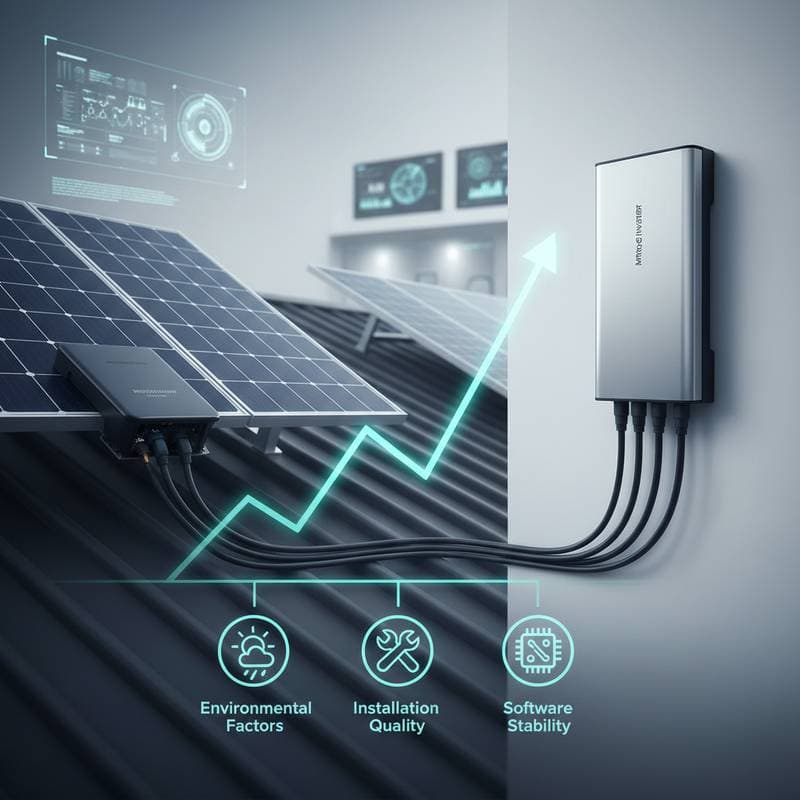
Component quality alone does not determine reliability in practical settings. System design, environmental conditions, and maintenance routines play critical roles. Analysis of service logs from fleet operators in varied climates reveals clear patterns. Coastal areas experience elevated inverter wear from salt and humidity, affecting all types equally. Colder regions see increased microcracks and circuit board stress due to thermal fluctuations.
DC connectors and wiring integrity often receive insufficient attention. Faulty crimps or unsealed connections lead to communication breakdowns. Microinverters face greater exposure with individual connectors per unit. String systems reduce connection points, yet a single weak link can disrupt an entire circuit.
To mitigate these risks, prioritize high-quality, weatherproof connectors during installation. Regular inspections of wiring seals can prevent up to 40 percent of communication-related failures, based on fleet operator experiences.
Financial Implications of Reliability Choices
Viewing reliability solely through failure metrics overlooks economic realities. Microinverters involve more components, but a single failure impacts only one panel. String inverter downtime halts production across multiple modules until repairs occur. This panel-level isolation advantages microinverters for maintaining output continuity, despite potentially higher overall failure rates.
Service logistics tilt toward string inverters. Technicians replace a central unit swiftly without navigating the array. Microinverter repairs demand more time and height-related safety measures, escalating costs for larger installations. Balance uptime benefits against labor expenses when selecting designs.
Conduct a cost-benefit analysis for each project. Factor in potential lost production revenue alongside repair timelines to guide decisions.
The Role of Software in Inverter Performance
Hardware forms one aspect of reliability; software defines the rest. Inverters function as software-driven systems, where code problems mimic hardware defects. Field technicians note that data transmission interruptions or erroneous reports prompt avoidable replacements. Manufacturers address this through remote firmware updates, though updates sometimes introduce glitches.
Distributed microinverter networks depend on robust data pathways. A gateway malfunction can hide multiple units from monitoring systems. String inverters connect directly to platforms, ensuring data accuracy but creating total visibility loss during failures.
Implement redundant monitoring gateways for microinverter setups to avoid blind spots. Schedule firmware reviews quarterly to catch and resolve software vulnerabilities early.
Evolving Perspectives Among Installers
Installer opinions have transformed notably. Ten years prior, widespread early microinverter issues led many to abandon them. Today, professionals regard microinverters as reliable options for residential roofs. Commercial teams, traditionally favoring centralized setups, explore hybrids combining both technologies.
The discourse moves from competition to targeted application. Microinverters suit shaded or irregularly oriented roofs, optimizing output where strings falter. String inverters excel in expansive, uniform arrays emphasizing ease and centralized oversight. Reliability serves as a common standard rather than a separator.
Strategies for Optimizing Inverter Reliability
Selection between microinverters and string inverters hinges on site specifics over raw statistics. Assess environmental exposures, available labor, and monitoring requirements. Consult installers overseeing active fleets for insights beyond manufacturer claims.
Both technologies achieve sustained performance with proper execution. Future advancements in predictive analytics and advanced firmware promise further gains. For now, focus on deliberate design, precise installation, and routine maintenance to maximize system longevity.