
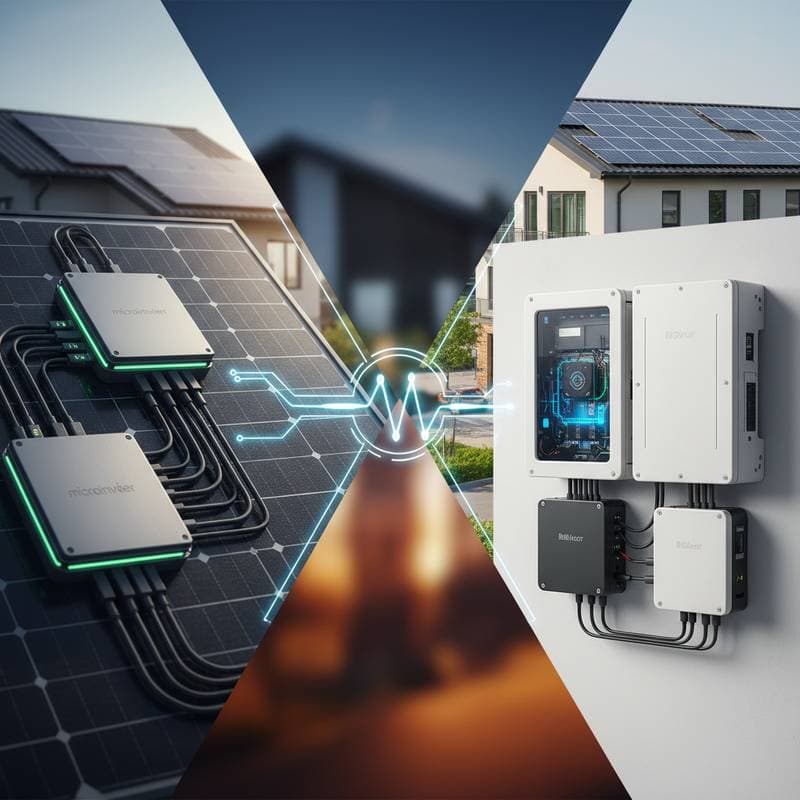
Micro vs String: 2026 Solar Price War Explodes
The global inverter market is entering a period of intense competition as pricing for both microinverters and string inverters narrows. Installers, developers, and distributors are reassessing procurement strategies while manufacturers adjust cost structures to maintain margin stability. This latest phase of market pressure is reshaping expectations for residential and commercial system design across multiple segments of the solar industry.
Pricing Pressures Reshape Market Behavior
Over the past quarter, equipment buyers have reported sharper price fluctuations across both product categories. The gap between microinverter and string inverter pricing, once substantial, has tightened as production costs decline for module-level power electronics. Manufacturers cite rising shipment volumes, reduced component costs, and improved supply chain continuity as the primary factors driving this shift.
Distributors confirm that aggressive discounting by second-tier producers has created downward momentum across the market. While premium brands continue to command higher margins, even established suppliers are adopting new pricing models to preserve market share. Equipment bundling, extended warranties, and integrated communication features now serve as key differentiators rather than optional upgrades.
Shifting Economics Between Technologies
Microinverters historically carried a higher upfront cost, justified by module-level optimization and improved performance in shaded or irregular array conditions. Recent cost compression has narrowed that premium, bringing total installed system prices closer to those achieved with conventional string inverter setups.
For installers, this change alters the traditional value equation. Projects that previously defaulted to string designs for cost efficiency now merit a closer analysis of energy yield, monitoring flexibility, and maintenance savings. Meanwhile, larger commercial and community-scale projects still lean toward string systems, where centralized control and lower per-watt costs maintain a financial advantage.
Competitive Strategies Among Manufacturers
Top-tier inverter companies are pursuing contrasting strategies in response to the evolving price environment. Some are doubling down on microinverter innovation, investing in higher output ratings and improved thermal performance. Others are reinforcing their string inverter portfolios, focusing on hybrid models that combine multiple MPPT inputs and smart communication platforms.
Several suppliers are also exploring modular inverter architectures that can adapt to both residential and small commercial configurations. This cross-segment adaptability allows them to respond to shifting demand without overextending production resources. Analysts tracking market trends note that consolidation activity among component suppliers could accelerate as pricing pressures intensify.
Installer Decision-Making Under New Cost Dynamics
For installers, the price war creates both opportunity and uncertainty. Lower inverter costs can improve project margins, yet they also require careful evaluation of manufacturer reliability and after-sales support. Warranty coverage, replacement logistics, and software integration now weigh more heavily in procurement decisions than minor price differences.
Some installers report that end customers are increasingly aware of inverter brand distinctions, especially in residential markets where online reviews and monitoring apps influence purchasing behavior. As a result, installer recommendations often depend on ecosystem compatibility, long-term service expectations, and local distributor support rather than initial equipment cost alone.
Integration With Module and Storage Technologies
The convergence of inverter and storage technologies adds another layer to the competitive landscape. Hybrid inverters that manage both PV and battery functions are gaining traction, particularly in regions where grid flexibility and backup capacity are high priorities. Microinverter manufacturers are responding with systems that pair seamlessly with modular storage units, creating plug-and-play options for installers.
String inverter suppliers counter with scalable DC-coupled systems that deliver higher efficiency for larger installations. This parallel development cycle is reshaping how project designers evaluate energy management strategies. The resulting product overlap intensifies the competition between inverter categories while expanding the range of solutions available to system owners.
Market Forecasts and Buying Trends
Market researchers tracking global inverter shipments forecast continued price compression through the upcoming installation cycles. The most pronounced effects are expected in the residential segment, where smaller system sizes make microinverter cost reductions more visible. Commercial and utility-scale buyers anticipate moderate declines, tempered by logistics costs and regional certification requirements.
Buyers preparing for procurement cycles are advised to monitor inventory levels closely. Temporary shortages of specific models could occur as manufacturers adjust production schedules to align with new pricing tiers. Early contract negotiations and flexible sourcing arrangements may help mitigate potential supply disruptions.
Quality, Compliance, and Long-Term Value
Despite intensified price competition, industry experts caution against treating inverter selection as a purely cost-driven decision. Quality assurance, certification compliance, and software reliability remain critical to long-term system performance. Low-cost entrants occasionally struggle to maintain consistent product quality, leading to higher maintenance costs over time.
Experienced installers emphasize the importance of evaluating total lifecycle value rather than sticker price alone. Key factors include ease of commissioning, firmware update support, and integration with monitoring platforms. With more projects connecting to digital energy management systems, interoperability has become a decisive consideration in equipment selection.
Taking Action in a Changing Market
For solar professionals, the current market transition demands adaptability. Regularly reviewing vendor partnerships, technical specifications, and pricing trends will be essential to maintaining competitive advantage. Installers should engage directly with manufacturers to clarify warranty terms and service expectations before committing to large purchases.
Developers evaluating portfolio projects can benefit from diversified inverter sourcing strategies that balance micro and string technologies according to site conditions. Distributors may find value in expanding training programs to help customers compare system architectures effectively.
As the price gap narrows further, long-term winners will be those who combine cost efficiency with performance reliability. The solar industry’s continued expansion depends on stable supply channels and informed purchasing decisions. Whether choosing microinverters for design flexibility or string inverters for scale efficiency, professionals who stay alert to evolving price dynamics will be best positioned to thrive in the next phase of the inverter market.