
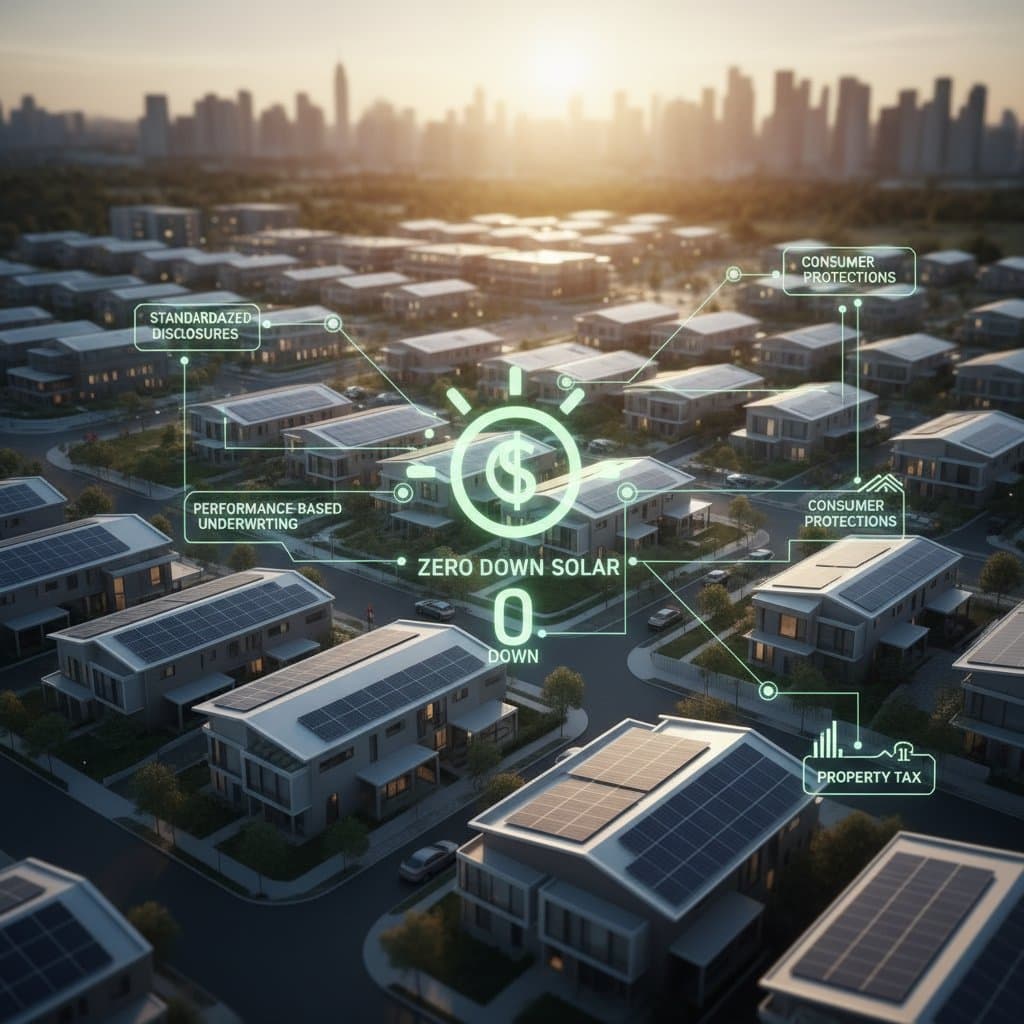
The New PACE Framework Enables Zero-Down Solar Financing by 2026
Discussions on residential and commercial solar financing continue to evolve, with a promising development on the horizon. A revised Property Assessed Clean Energy (PACE) program aims to establish zero-down solar as a standard option for homeowners and small businesses. This approach simplifies participation while addressing past challenges through balanced accessibility, accountability, and investor assurance.
PACE financing originated from early pilot initiatives where local tax authorities navigated novel lien arrangements. Initial enthusiasm outpaced regulatory clarity, leading some regions to pause programs due to concerns over interest rates and disclosure transparency. The fundamental concept persisted: repayments tied to property taxes transfer with the property, benefiting solar developers by reaching customers with reliable tax payment records but limited loan eligibility.
Key Differences in the Updated PACE Structure
The forthcoming PACE iteration incorporates insights from over a decade of implementation. Central to these updates is enhanced transparency, requiring all jurisdictions to adopt uniform disclosure forms and interest computation methods. A national database will monitor system performance, default rates, and repayment schedules, providing data that previously deterred broader lender involvement.
Performance-based underwriting represents another core advancement. Evaluations now incorporate projected solar output and regional energy costs alongside traditional credit and property assessments. For instance, if a system anticipates covering 70 percent of a household's electricity needs, this savings projection informs repayment feasibility, offering a more reliable indicator than property value fluctuations.
The Impact of Zero-Down Solar Accessibility
Zero-down solar financing extends beyond promotional appeal; it democratizes entry into sustainable energy. Conventional loans demand initial payments or robust credit, excluding many potential adopters. The revised PACE eliminates these hurdles, potentially unlocking solar installations for millions of underserved properties.
Installers benefit from streamlined client interactions. Emphasizing no upfront costs redirects discussions toward long-term savings and reliability. In regions with favorable solar economics, this tax-assessment-like mechanism fosters familiarity, as evidenced by installer feedback highlighting its intuitive appeal over leases or intricate loans.
Safeguards for Consumers and Market Expansion
Prior PACE efforts struggled to harmonize rapid growth with participant protection. Homeowners occasionally encountered obscured terms or complications during home sales due to enduring liens. Regulators addressed these issues through targeted reforms.
The new program mandates an independent audit for cost-benefit analyses, detailing anticipated savings, total costs, and breakeven periods. A required three-day review window allows property owners to evaluate options thoroughly. These measures may extend decision timelines modestly but cultivate enduring confidence.
Contributions from Local Governments and Investors
Local entities form the foundation of PACE administration, with tax officials overseeing fund distribution. The updated system introduces digital platforms for efficient assessment tracking, minimizing paperwork and enhancing collection precision. This modernization transforms administrative processes into efficient, user-friendly operations.
Investors view these changes favorably amid maturing green finance markets. Institutional portfolios increasingly favor secure, data-rich clean energy assets. Enhanced PACE transparency supports securitization efforts, drawing affordable capital to maintain competitive rates and bridging public initiatives with private funding.
Implications for Installers and Property Owners
Installers stand to gain operational efficiencies from a unified zero-down offering. Standardized protocols across states reduce the need for varied documentation, enabling focused training and cost reductions, particularly for regional providers.
Property owners acquire greater transaction flexibility, as assessments remain property-bound. A dedicated transfer form clarifies obligations for new buyers, mitigating sales disruptions and positioning solar enhancements as routine property attributes.
Advancing Sustainable Financing Solutions
Solar expansion hinges on financing advancements as much as technological gains. Annual improvements in panel efficiency falter without viable funding. The refined PACE aligns financial tools with rooftop innovations, promoting responsible growth.
Successful rollout depends on coordinated efforts among governments, installers, and financiers. This framework draws from historical experience to deliver equitable access, risk mitigation, and industry momentum, paving the way for widespread clean energy integration.