
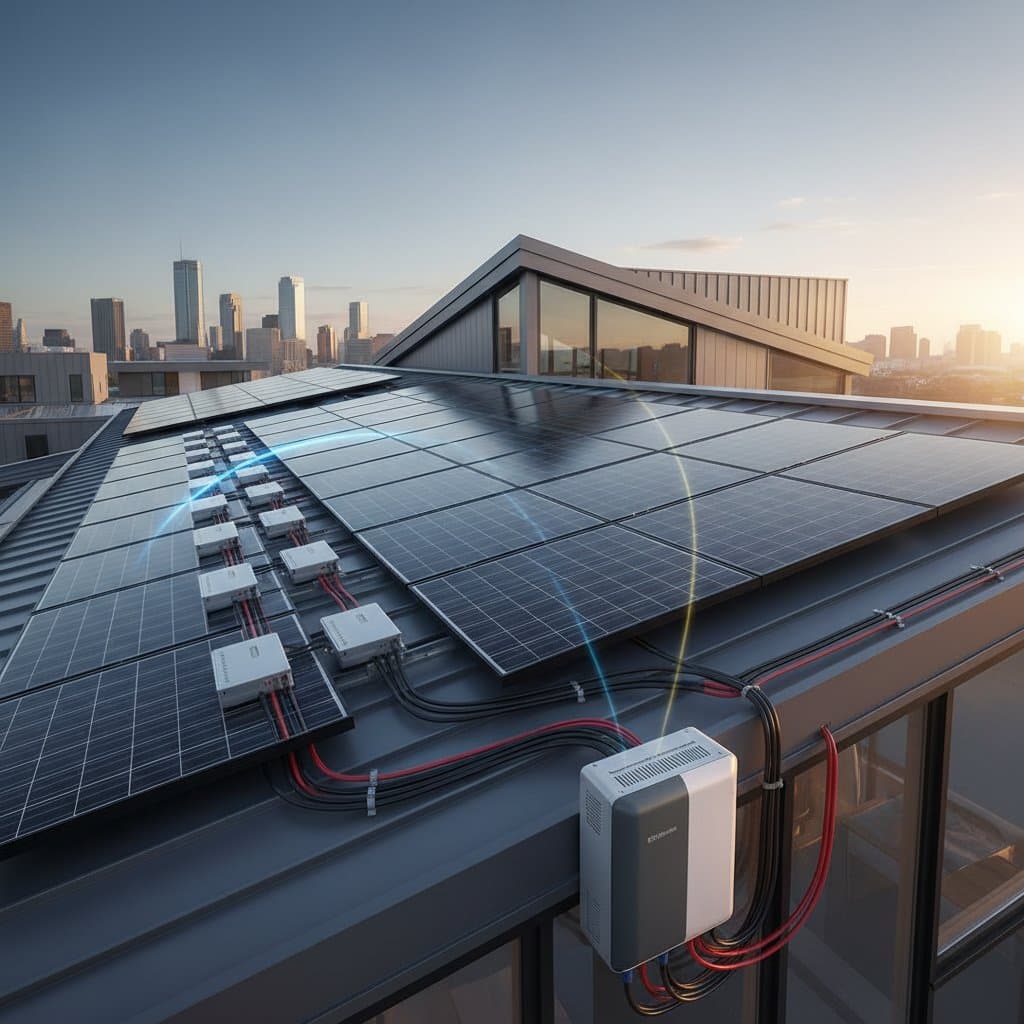
Microinverters Outperform String Inverters in 2025 Performance Data
Recent analysis of residential and small commercial solar installations points to a notable advancement in inverter technology. Microinverters, previously considered a high-end choice for challenging roof configurations, now exceed string inverters in key areas such as energy production, system durability, and upkeep expenses. This development prompts installers and developers to reevaluate their selections based on overall system effectiveness and enduring financial benefits.
For professionals in the field, the decision between these inverter types extends beyond initial project scale or roof layout. Current findings indicate that distributed systems provide superior performance and value over the full lifespan of an installation.
Key Performance Metrics
Extensive evaluations across diverse locations examined matching solar arrays fitted with either microinverters or string inverters. Results demonstrated that microinverter systems produced 6 to 12 percent more energy each year under comparable weather and site conditions. These gains held steady regardless of shading levels, panel alignments, or fluctuating temperatures.
The primary driver of this edge stems from individual panel optimization. In microinverter setups, each solar module functions autonomously, maximizing output even amid partial shade, dirt buildup, or variations in panel efficiency. String inverters, however, constrain the entire chain to the output of the least effective module, which often diminishes overall energy capture.
To apply this insight, installers can prioritize microinverters for sites with uneven sunlight exposure. Conduct a shading analysis during site surveys to quantify potential yield losses in string configurations and compare them against microinverter projections.
Durability and Upkeep Advantages
Long-term observations confirm that microinverters exhibit greater reliability in operational settings. By distributing electronic components across panels, these systems minimize risks from isolated failures; a single unit issue impacts only one module, not the whole array. Technicians note quicker diagnostics and repairs, often limited to targeted panel access rather than full system interruptions.
Leading manufacturers highlight enhancements in heat dissipation and weatherproofing, which prolong unit longevity in extreme environments. Warranties for many models now surpass 20 years, underscoring the technology's robustness.
String inverters typically necessitate replacement after 10 to 12 years. This disparity affects budgeting for replacements and influences reliability projections in project proposals.
Streamlined Installation Processes
Advancements in microinverter design have optimized setup procedures. Features like ready-to-use connectors, seamless integration, and integrated tracking tools cut down on assembly duration and commissioning steps. Teams avoid intricate voltage assessments or string length restrictions during rooftop work.
These systems accommodate diverse panel specifications within a single installation, bypassing voltage limitations that hinder string setups as panel outputs rise. Upgrades or swaps occur without overhauling the inverter infrastructure.
Residential crews benefit from this versatility on irregular roofs or multi-angle arrays. Small commercial projects gain scalability for phased expansions, enabling additions without major redesigns.
Results in Everyday Scenarios
Monitoring from active installations in areas with unpredictable weather reinforces microinverter superiority. Arrays in such locations deliver reliable energy gains, with unaffected panels operating at peak during shading from foliage or buildings.
String inverters excel in ideal, even illumination but falter in typical conditions affected by dust, debris, or transient shadows. Microinverters counteract these challenges through automatic per-panel adjustments, requiring no manual adjustments.
Independent platforms report elevated availability rates for microinverter arrays over time. For managers overseeing multiple sites, this consistency boosts income streams and cuts down on repair visits.
Financial Analysis for Stakeholders
Upfront pricing for microinverters exceeds that of string inverters by a modest margin. However, accounting for boosted yields, minimal interruptions, and reduced servicing brings the lifetime expenses into close alignment. Professionals observe that owners offset the premium via enhanced generation and fewer interventions within initial years.
Owners enjoy forecasting ease with dependable outputs and lengthy guarantees. Distributed architecture curbs income disruptions from faults, as individual modules operate independently.
Portfolio developers leverage unified dashboards for cross-site data, facilitating targeted upkeep and comparative evaluations.
Trends in Adoption Patterns
Surveys reveal increasing uptake of microinverters, especially among residential providers. Simplified planning and granular tracking appeal to both installers and end-users.
Small to medium commercial applications mirror this movement, particularly where shading or orientations complicate centralized designs. Utility-scale endeavors stick with strings for economies of scale, though hybrid integrations emerge.
Suppliers adapt by enhancing string-level optimization and module compatibility. Microinverter firms ramp up output and tailor units for advanced panels.
Safety Enhancements and Regulatory Alignment
Microinverters advance safety through panel-specific power deactivation, aligning with updated codes and easing concerns for emergency and service personnel. Onboard conversion removes rooftop high-voltage DC during shutdowns.
This integration obviates additional shutdown hardware, streamlining compliance and trimming component and labor outlays.
Insights from Performance Tracking
Built-in module-level analytics in microinverter systems deliver precise, ongoing performance views. Teams detect anomalies swiftly, enhancing response times and client relations.
Managers validate outputs and support warranty processes with detailed records. String monitoring, while advancing, remains string-focused, reducing issue isolation accuracy.
Future Directions in Solar Integration
Emerging disparities drive supply chain adjustments, with broader offerings in distributed options and updated training on designs and protocols.
Incentives increasingly favor efficient module-level technologies, spurring residential growth in shaded or intricate setups.
Selecting Inverters for Optimal Returns
When assessing options, weigh total performance, servicing needs, and user feedback alongside initial investments. Data affirms microinverters for variable or complex sites.
Ongoing innovations close cost differences and enrich smart integrations. For teams aiming to stand out via dependable delivery, these systems offer a reliable benchmark, evidenced by yields, records, and global implementations.