
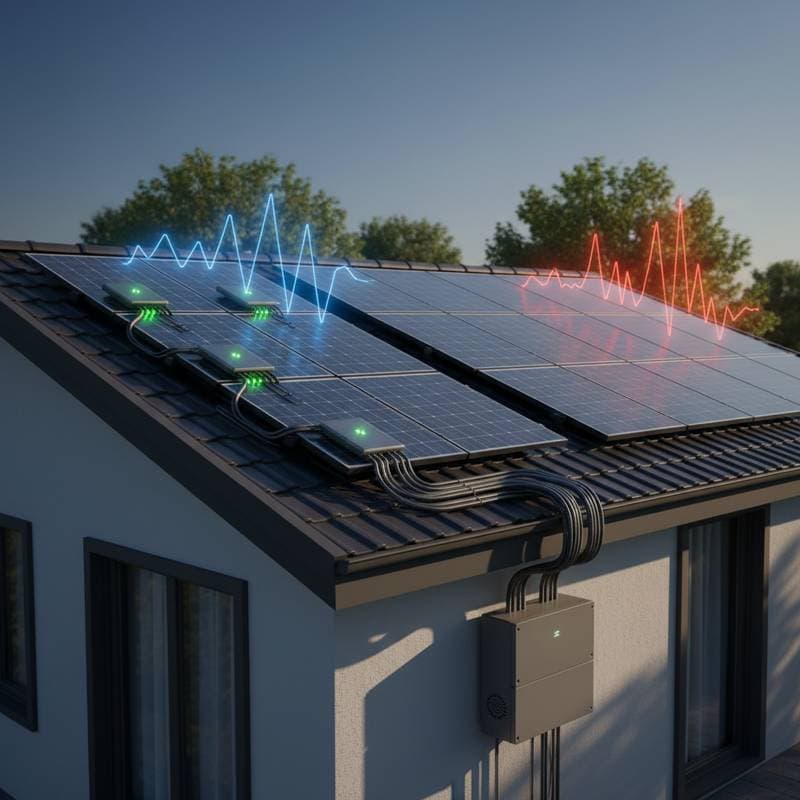
Why Microinverters Outperform String Inverters in Shaded Conditions
Solar installations face challenges from partial shade caused by trees, buildings, or roof features. In such environments, the choice of inverter technology significantly influences overall energy production. Microinverters provide consistent performance by addressing shade at the panel level, while string inverters often suffer reduced efficiency. This comparison equips installers and homeowners with insights to select the best option for sites with variable sunlight exposure.
Impact of Shading on String Inverter Systems
String inverters link solar panels in a series, where the current flows uniformly through the chain. Uniform sunlight exposure allows efficient operation, but partial shade disrupts this balance. A single shaded panel limits the current for the entire string, reducing output from all modules.
Shadows from chimneys or overhanging branches can decrease system production by 20 to 50 percent, depending on the extent of coverage. Bypass diodes in panels mitigate some losses by rerouting current around shaded cells, yet they fail to restore full potential. Over time, these inefficiencies accumulate, particularly in regions with seasonal foliage changes or urban obstructions.
How Microinverters Enable Independent Panel Optimization
Microinverters attach directly to individual panels, converting direct current to alternating current at the source. This setup isolates each module's performance, so shade on one panel does not compromise others. Unshaded panels maintain peak output, capturing maximum available energy.
In practical terms, this means a rooftop with east-west orientations or intermittent afternoon shade produces 10 to 25 percent more annually than a comparable string system. Installers gain freedom to position panels without strict alignment requirements, accommodating irregular rooflines or mixed exposures effectively.
Enhanced Reliability and Simplified Maintenance
The distributed design of microinverters minimizes single-point failures common in string systems. A fault in one unit affects only its panel, preserving production from the rest of the array. Built-in diagnostics enable rapid identification of issues through app-based alerts.
Maintenance becomes straightforward, as technicians replace individual units without system-wide shutdowns. This approach suits varied rooftop conditions, such as differing temperatures or debris accumulation, by allowing real-time adjustments per panel. Homeowners experience fewer disruptions and sustained performance over the system's lifespan.
Greater Design Flexibility for Varied Roof Configurations
String inverters demand panels in each string match in orientation and tilt to avoid mismatches. This restriction complicates installations on multifaceted roofs. Microinverters eliminate these limitations, permitting diverse panel placements without efficiency penalties.
For example, combining south-facing and north-facing arrays on the same home becomes feasible, optimizing space utilization. The technology also facilitates phased expansions; additional panels integrate seamlessly without rewiring. This adaptability proves essential for evolving energy needs, including future additions like battery storage.
Balancing Costs with Long-Term Benefits
Initial costs for microinverters exceed those of string inverters due to the per-panel units. However, higher energy yields in shaded conditions often recoup the difference within three to five years. Reduced shading losses translate to thousands of kilowatt-hours gained over a 25-year warranty period.
Simplified wiring lowers labor expenses and enhances installation safety by avoiding high-voltage DC runs. In evaluations of total ownership costs, microinverters frequently demonstrate superior returns for shaded or complex sites, outperforming string systems in net financial value.
Detailed Monitoring for Informed Management
Microinverters transmit panel-specific data to monitoring platforms, revealing production trends and anomalies. Owners track daily output per module, identifying underperformance from shade or dirt promptly. This level of detail supports proactive maintenance, ensuring the system operates near its rated capacity.
Installers leverage these reports to validate installations and address client concerns with evidence-based insights. Such transparency fosters trust and enables adjustments, like trimming branches, to sustain optimal yields. Ultimately, informed oversight maximizes return on solar investments.
Optimizing Solar Systems for Real-World Challenges
Partial shade and roof complexities define many modern solar projects. Microinverters address these hurdles by prioritizing individual panel efficiency and system resilience. They deliver measurable gains in energy harvest, operational uptime, and adaptability.
Homeowners and businesses benefit from reliable power generation tailored to their site's unique conditions. Installers achieve streamlined workflows and satisfied clients through this versatile technology. Selecting microinverters aligns installations with practical demands, securing enduring performance where sunlight varies.