
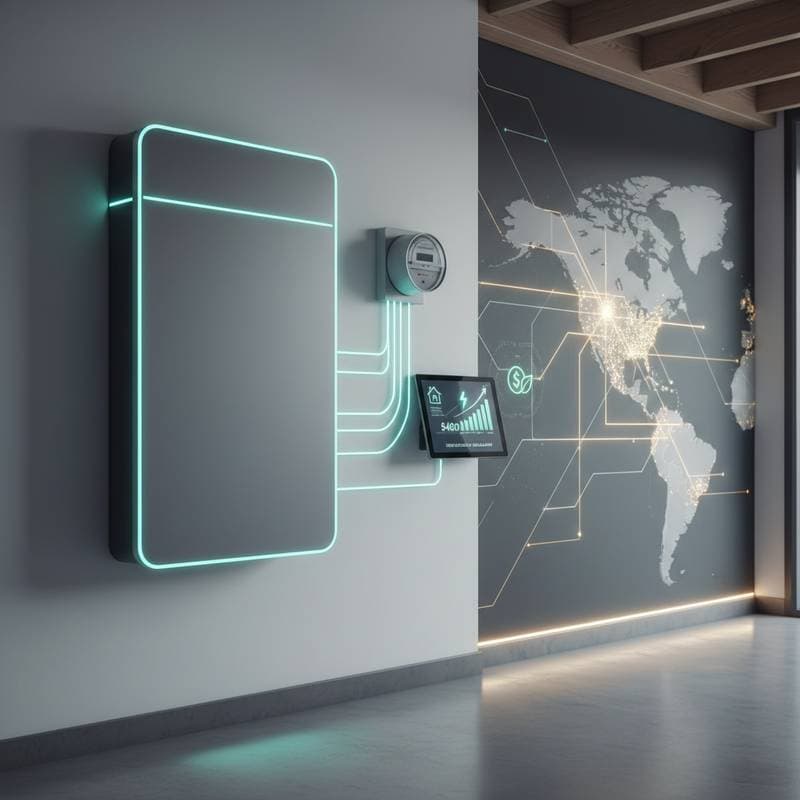
Earn $400 a Year Renting Your Battery to the Grid
Home battery systems now function as active contributors to grid stability. Virtual power plant programs across the United States compensate homeowners with up to $400 each year for limited access to stored energy during peak periods. This arrangement improves system economics while supporting reliable electricity delivery.
Virtual Power Plants Aggregate Home Resources
A virtual power plant coordinates rooftop solar arrays, home batteries, and smart inverters into a unified resource. Software platforms allow operators to draw small amounts of energy from many households at once. Participants keep priority access to their batteries for personal backup needs.
Programs typically schedule 10 to 20 discharge events annually. Each event lasts one to three hours and occurs only during high-demand conditions. Homeowners receive payment for both availability and actual energy supplied.
Payment Structures and Financial Returns
Compensation combines fixed capacity payments with performance incentives. In California, Massachusetts, and Vermont, utilities and aggregators offer enrollment credits plus per-event payouts. A typical 10 kWh battery enrolled for 5 kWh of dispatch capacity can generate between $350 and $450 annually.
These payments shorten battery payback periods by two to three years on average. Homeowners maintain at least 20 percent reserve capacity for outages. Most programs limit depth of discharge to protect long-term battery health.
Equipment and Installation Requirements
Eligible batteries must include smart inverters, reliable internet connections, and remote control software. Accepted models include Tesla Powerwall, LG Chem RESU, Enphase IQ Battery, and SonnenCore units. Installers confirm firmware compatibility and configure minimum state-of-charge settings before enrollment.
No additional hardware is required beyond these standard features. Stable Wi-Fi ensures accurate metering and timely dispatch. Certified installers can also earn referral fees from aggregators for onboarding new participants.
Regional Program Differences
New England markets provide higher capacity payments due to strong wholesale pricing. California programs focus on evening peak reduction and already operate multi-megawatt fleets. Vermont utilities offer bill credits in exchange for shared battery capacity.
Additional states plan to launch similar offerings within the next three years as interconnection rules standardize. Homeowners should compare dispatch frequency, contract length, and payment timing when selecting a program.
Battery Life and Warranty Considerations
Manufacturers design lithium-ion batteries for several thousand cycles. Virtual power plant events add only a small fraction of that total. Aggregators cap discharges at 60 to 80 percent of capacity to limit wear.
Most warranties explicitly cover grid-service participation when settings remain within specified limits. Homeowners should retain documentation of enrollment parameters and review terms with their installer before signing agreements.
Steps to Begin Participation
- Confirm that your battery model and inverter support remote dispatch through an approved platform.
- Contact your installer or local utility to review active aggregator programs.
- Compare payment rates, expected event frequency, and contract conditions.
- Complete enrollment and allow the aggregator to test communication with your system.
Homeowners who complete these steps gain steady annual income while contributing to grid reliability. The arrangement converts existing storage assets into a low-effort revenue source without compromising backup protection.