
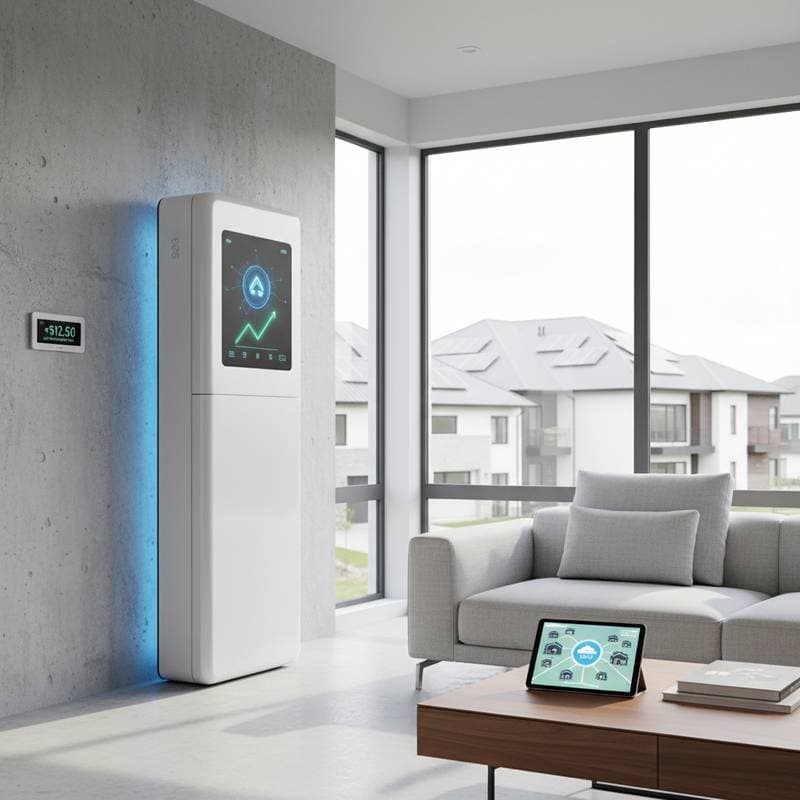
Earn Cash Renting Your Battery to Virtual Power Plants
Home batteries serve purposes beyond backup power during outages. They function as grid assets that produce income through connections to virtual power plants. Utilities and energy providers increasingly adopt this approach to stabilize supply and handle variations from renewable sources.
Homeowners receive compensation for sharing stored energy during peak demand or low renewable output periods. This arrangement converts residential batteries into revenue tools. It also contributes to a more stable overall energy network.
How Virtual Power Plants Work
Virtual power plants link distributed resources including rooftop solar, home batteries, and electric vehicle chargers via digital platforms. Aggregated systems operate as one coordinated unit that delivers power or manages demand on request.
Thousands of individual units together match the flexibility of conventional power plants. Operators track grid conditions and direct participating batteries to respond during critical times. The combined output enters wholesale markets or addresses local network needs.
Turning Stored Energy Into Income
Participants earn payments based on available capacity or energy supplied during events. Compensation may include fixed monthly fees or amounts tied to actual performance. A typical 10 kilowatt hour battery can discharge a portion during an event and generate a credit or direct deposit.
Event frequency varies with grid conditions. Even limited involvement produces meaningful returns across months or years.
Benefits Beyond the Payout
Participation supports lower use of fossil fuel peaker plants and improves renewable energy integration. It also enhances local reliability by preventing outages and cutting emissions at scale.
Households with solar panels gain extra value. Excess generation stored in the battery becomes available for sharing during high demand. This accelerates system payback and supports greater energy independence.
How Participation Works
Enrollment begins with a compatible energy retailer or utility program. The provider confirms battery compatibility and installs required software or hardware. Users retain override control and can define minimum reserve levels for personal backup needs.
Monitoring tools show when and how the battery responds to signals. Contracts outline usage limits and data protections.
Program Structures and Revenue Models
Compensation approaches include capacity payments for reserved availability, energy payments for discharged amounts, performance bonuses for rapid response, and hybrid combinations. Earnings depend on battery size, local rates, and event volume.
Returns typically offset a portion of equipment costs rather than replace primary income.
Technical and Operational Considerations
Eligibility requires compatible inverters and communication features. Newer batteries often include these capabilities by design. Programs limit discharge cycles to preserve battery life, and financial gains generally exceed any resulting wear.
Reputable operators follow cybersecurity standards and provide clear agreements on access rights.
Market Growth and Industry Momentum
Regulators promote virtual power plants to integrate renewables and avoid new infrastructure expenses. Partnerships among manufacturers, aggregators, and utilities simplify enrollment through improved software and incentive structures.
Key Players and Emerging Opportunities
Established platforms manage thousands of residential systems with predictive analytics. Third party aggregators handle market compliance and payments, allowing homeowners to participate without direct market involvement.
Policy and Regulatory Drivers
Incentive programs and demand response rules encourage distributed resource use for services such as frequency regulation and voltage support. Clear measurement and compensation standards build homeowner confidence in ongoing revenue potential.
Challenges to Consider
Regional differences in market rules and interconnection processes can slow adoption. Older batteries may lack necessary connectivity. Earnings fluctuate with seasonal grid conditions, so participants should treat payments as supplemental.
Maximizing Value from Battery Rental
- Confirm battery and inverter compatibility with program requirements.
- Establish reserve thresholds to protect personal backup capacity.
- Examine contract details on payment structure and participation limits.
- Track activity and earnings through available dashboards.
- Monitor regulatory updates that affect program economics.
Moving Toward a Shared Energy Future
Battery participation in virtual power plants converts stored energy into a productive resource for both owners and the grid. It delivers recurring payments while advancing renewable adoption and system resilience. Homeowners with existing solar and storage systems find this a direct extension of their setup.