
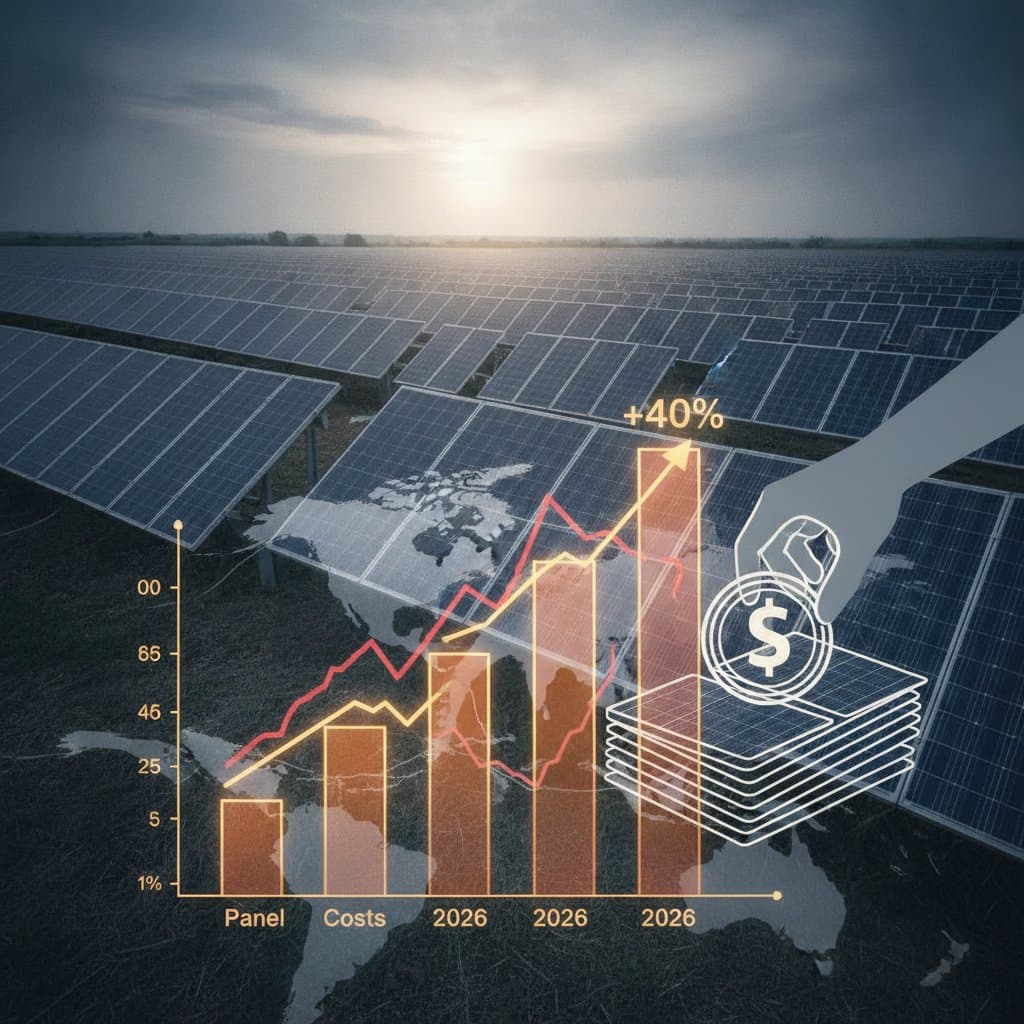
Solar Tariffs Could Increase Panel Prices by 2026
Solar developers and installers across the United States are preparing for a potential surge in panel prices. Trade officials are reviewing new tariff measures that could take effect within the next two years. The policy discussions center on imported crystalline silicon photovoltaic modules and cells from Southeast Asia.
Policy Review Signals Possible Rate Increases
The U.S. Department of Commerce and the Office of the U.S. Trade Representative are reviewing existing solar trade policies. They seek to determine whether current anti-circumvention rules should remain in place or expand to cover additional countries. The focus remains on supply chain tracing and component origin verification.
Industry analysts project that the outcome could drive panel prices up by as much as 40 percent if tariffs expand. This change would reverse several years of gradual price reductions. Developers are already revising procurement strategies to hedge against potential cost increases.
Developer Concerns Over Supply Chain Stability
Solar project developers report that uncertainty around tariff enforcement already influences purchasing decisions. Many distributors accelerate orders to secure inventory before new trade measures take effect. Large-scale project owners explore domestic manufacturing options even though capacity remains limited.
A procurement director at a major solar developer noted that the company reviews all contracts with overseas suppliers. The director stated that preparation for multiple cost scenarios is essential because expanded tariffs will affect project budgets and delivery timelines directly.
Some installers shift to U.S.-made panels or modules from countries not under scrutiny. Supply remains tight in these channels. Domestic production cannot yet meet national demand levels even with new manufacturing announcements.
Tariffs and Domestic Manufacturing Policy
Supporters of tariff expansion argue that stricter trade enforcement protects U.S.-based manufacturers from subsidized imports. Industry groups representing domestic producers contend that stronger trade barriers encourage investment in new factories. They cite recent announcements of new cell and module production facilities as evidence.
Opponents including clean energy trade associations argue that higher tariffs would slow solar deployment and undermine national renewable energy targets. They emphasize that most U.S. projects depend on imported components and that domestic supply growth will take years to satisfy demand.
Market Implications for Installers and Contractors
Installers in residential and commercial segments could face immediate cost pressures if tariffs increase. Many smaller companies rely on imported panels for competitive pricing. Contractors may need to renegotiate procurement terms or pass higher costs to customers.
Larger engineering procurement and construction firms build contingency plans that include diversified supplier networks. Some consider long-term supply agreements with U.S.-based manufacturers to lock in predictable pricing. Equipment distributors review inventory strategies to balance stock levels against the risk of price spikes.
Price Forecasts and Economic Effects
Market analysts revise price forecasts in anticipation of potential tariff adjustments. Current estimates suggest that module prices could rise between 15 and 40 percent depending on enforcement scope. Utility-scale developers with large procurement volumes may negotiate better terms while smaller projects experience sharper cost increases.
A research report from a solar finance advisory firm indicated that higher panel prices could reduce project margins and delay construction schedules. Lenders may require updated financial models. State-level renewable energy programs could also feel the strain if incentive budgets fall short.
Steps to Manage Tariff Impacts
Trade organizations prepare position statements as federal agencies finalize reviews. Manufacturers advocate for strong enforcement measures while installation groups push for balanced outcomes. Many companies conduct scenario planning to gauge effects on supply timelines and customer pricing.
Project developers monitor related trade cases involving polysilicon and wafer production. Reviewing supplier contracts diversifying sourcing and maintaining open communication with customers remain essential responses. The next phase of federal decision-making will determine whether the market experiences a temporary adjustment or a structural shift in cost dynamics.