
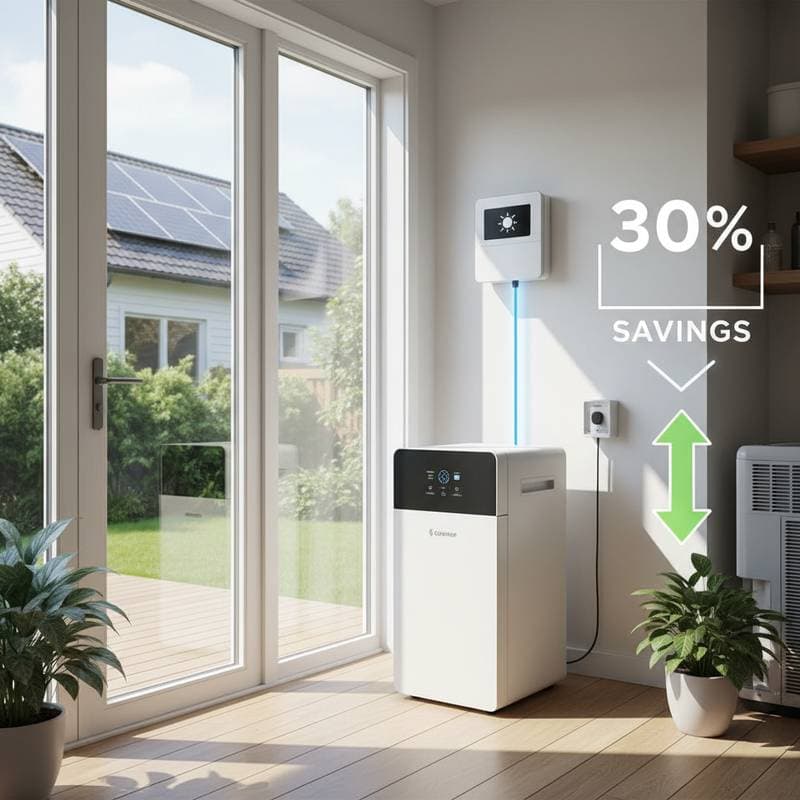
How Solar Dehumidifiers Slash AC Bills by 30%
Humidity often escapes notice as a major driver of high energy use in homes across America. Many attribute rising electricity costs to malfunctioning air conditioners or poor insulation. In reality, excess indoor moisture forces AC units to run longer, consuming far more power than necessary. A solar-powered whole home dehumidifier offers a targeted solution that experts in solar and HVAC systems recommend for substantial savings.
Why Humidity Drives Up Cooling Costs
Air conditioners cool air but struggle to remove moisture effectively. High humidity requires the evaporator coil to work harder, pulling out more water vapor and straining the compressor. This extra effort leads to higher electricity bills.
In humid climates, AC systems run almost nonstop, even if temperatures only need slight cooling. The root cause is moisture overload. A dedicated dehumidifier takes over moisture removal, allowing the AC to focus solely on temperature control and shortening its runtime significantly.
Advantages of Pairing Dehumidifiers with Solar Power
Traditional dehumidifiers use energy similar to a small AC unit, providing comfort but not always savings. The breakthrough comes from integrating a whole home dehumidifier with solar panels on the roof. These panels deliver power directly or offset grid usage, cutting operational costs to near zero.
Case studies from installers in Florida, Texas, and the Carolinas build strong evidence. Homeowners pairing solar setups with dehumidifiers see AC energy use drop by 25 to 30 percent on average. Units cycle less frequently, maintain steady temperatures, and operate more quietly.
How Whole Home Dehumidifiers Work
These systems connect to your existing HVAC ducts, processing air throughout the house. They use a refrigeration process to pull moisture from the air and circulate drier air back into living spaces. Unlike portable models confined to one room, whole home units provide uniform humidity control for faster, broader comfort gains.
Drier air feels cooler to the body, so you can raise the thermostat by a few degrees without noticing sticky discomfort. Advanced models include smart controls that tie into thermostats and humidity sensors. They activate only when relative humidity exceeds 45 to 55 percent, and solar power covers most of the energy needs for virtually free operation.
Boosting Performance with Solar Automation
Smart home integration unlocks the full value of this setup. Schedule the dehumidifier to run during peak solar production, using excess energy from panels efficiently. On cloudy days or evenings, it shifts to a low-power or standby mode to save resources.
This timing aligns energy generation with humidity control, maximizing self-consumption and reducing grid draws. Adding battery storage ensures reliable operation during low-light periods or outages. The approach uses renewable power to enhance air quality while relieving pressure on the AC.
Real-World Results from Installations
Practical examples confirm the impact. Consider a mid-sized home in coastal South Carolina fitted with a 7-kilowatt solar array and a 70-pint whole home dehumidifier wired to a dedicated solar circuit. Before installation, the AC ran about ten hours daily in peak summer; afterward, it dropped below seven hours, cutting monthly energy use by nearly one-third and improving overall comfort.
Technicians note that better humidity control extends AC lifespan. Less strain means fewer repairs and reduced wear on components like compressors and fans. These long-term gains add value beyond immediate bill reductions.
Health and Environmental Gains from Better Humidity Control
Beyond savings, managing humidity supports health and sustainability. Excess moisture fosters mold growth, dust mites, and damage to wood and walls. Whole home dehumidifiers keep air quality high, protecting occupants and maintaining home structure.
Solar powering eliminates the trade-off between comfort and eco-impact. These systems deliver clean, dry air with lower carbon output, aligning daily living with environmental goals.
Steps to Install a Solar Dehumidifier System
Start with a professional energy audit to evaluate your needs. Solar and HVAC specialists often team up to analyze humidity levels, check ducts, and size the dehumidifier for your solar configuration.
Confirm your inverter or app supports load scheduling based on solar output. Look into utility rebates for dehumidifiers that ease peak demand. Combined with federal solar incentives, these can accelerate payback. This combined strategy represents an effective path to home energy efficiency.
Building a Smarter, More Comfortable Home
Solar investments gain depth when humidity enters the equation. A whole home dehumidifier transforms your setup into a full comfort solution. It keeps spaces cooler, extends equipment life, and trims power costs effectively.