
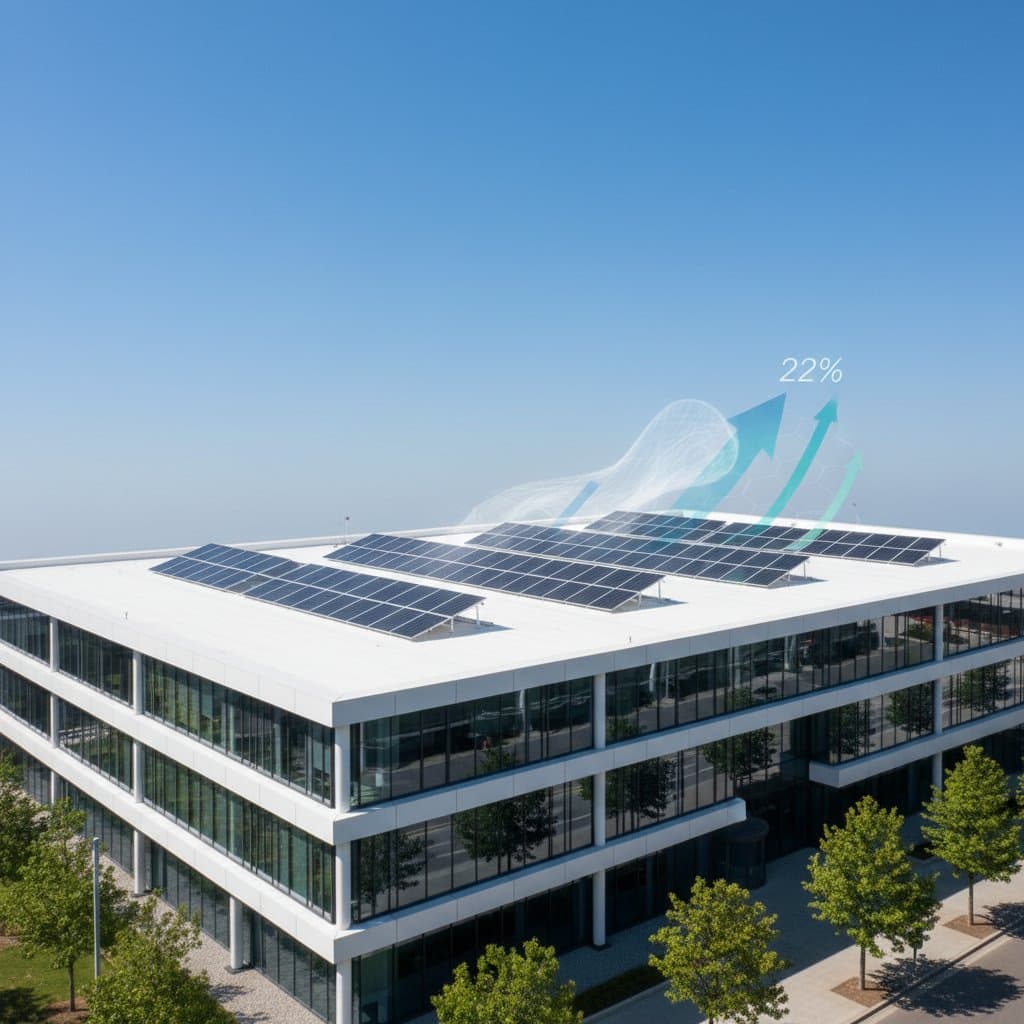
Pair Cool Roofs with Solar Panels for a 22% Energy Boost
Solar performance optimization often focuses on advanced technologies such as module coatings and inverter updates. However, one straightforward approach involves the roof surface beneath the array. Reflective, or cool, roofing materials paired with photovoltaic systems increase total output by up to 22 percent. This gain occurs through reduced rooftop temperatures that create a more favorable operating environment for the panels.
Why Roof Temperature Impacts Solar Efficiency
Heat reduces the electrical efficiency of solar modules. As temperatures rise, voltage output declines. In crystalline silicon modules, power output decreases by approximately 0.5 percent per degree Celsius above standard test conditions.
Dark asphalt roofs absorb sunlight and reach temperatures well above ambient air levels. This elevates module operating temperatures further. Cool roofs, made from highly reflective and emissive materials, redirect sunlight away from the surface. They maintain lower temperatures, which preserve panel efficiency. Field measurements show temperature differences of more than 30 degrees Fahrenheit between dark and reflective roofs on sunny summer days. Such reductions lead to significant improvements in energy production.
The Science Supporting the 22% Improvement
This 22 percent figure derives from modeling and field studies that compare black membrane roofs to reflective white or light-gray alternatives under the same solar arrays. The benefits arise from two key factors. Cooler conditions around the modules minimize resistive losses and voltage drops. Additionally, lower roof temperatures stabilize efficiency in wiring, conduits, and roof-mounted inverters.
In commercial settings, the advantages amplify due to extensive surface areas. A reflective roof beneath a centralized inverter system lowers thermal loads across numerous modules. This keeps the DC bus at a consistent temperature. Consequently, the system performs closer to its rated capacity during peak heat hours.
Advances in Cool Roof Technology
Cool roofs extend beyond basic white coatings. Contemporary systems use pigments that reflect infrared light in various colors. Options include reflective shingles, membranes, and metal panels that satisfy cool roof standards while preserving building aesthetics. These materials feature solar reflectance index (SRI) values, which measure both reflectivity and emissivity.
Effective installations combine high-SRI membranes with ventilated solar mounting systems. The gap between the roof and panels promotes convective airflow, which dissipates heat. This setup enhances cooling beyond initial expectations and elevates overall performance.
Economic and Environmental Benefits
The energy gains provide strong justification, yet additional advantages strengthen the case. Cool roofs decrease building cooling demands and lower air conditioning expenses. Integrated with solar, they enable more efficient HVAC sizing. The reflective properties also prolong roof membrane lifespan by minimizing thermal cycling and maintenance needs.
Environmentally, these roofs combat urban heat islands by limiting heat absorption in cities. Widespread adoption on commercial buildings alters local microclimates and enhances air quality. Combining solar generation with heat management transforms rooftops into versatile platforms for sustainability.
Key Installation Guidelines for Contractors
Approach the roof and solar array as a unified system rather than isolated elements. Assess the existing roof's reflectivity and thermal properties prior to installation. If the roof approaches the end of its lifespan, upgrade to a cool roofing product alongside solar addition for optimal results.
Select mounting hardware that ensures adequate airflow under the modules. Configurations that allow space prevent heat buildup and maximize cooling benefits. Avoid setups that position panels too close to the roof, as they create stagnant air pockets.
For property owners, the added expense of cool roof upgrades recovers rapidly through enhanced energy output. Utilities and state initiatives offer rebates for reflective roofing as an efficiency measure.
- Evaluate roof condition: Measure current SRI and identify replacement needs.
- Choose compatible materials: Select roofs with SRI above 78 for low-slope applications.
- Optimize mounting: Use racking systems with at least 4 inches of clearance for ventilation.
- Monitor post-installation: Track temperature and output to verify gains.
Case Studies from Actual Projects
A Southwest distribution center replaced its worn black membrane roof with a reflective coating before adding a 1.2-megawatt solar array. The site's energy manager reported a 15 percent reduction in peak summer cooling loads. The solar system exceeded projected output consistently.
In the Midwest, a project featured a gray reflective metal roof with bifacial modules. The surface cooled the roof and reflected light to the panels' undersides. This configuration yielded several extra percentage points in generation.
Maximize Solar Returns Through Reflective Roof Integration
This pairing offers installers an opportunity to provide high-value, differentiated solutions. Building owners gain improved investment returns and enhanced interior comfort. Reflective roofs with robust solar systems represent a proven method to achieve up to 22 percent more energy without altering panel specifications.