
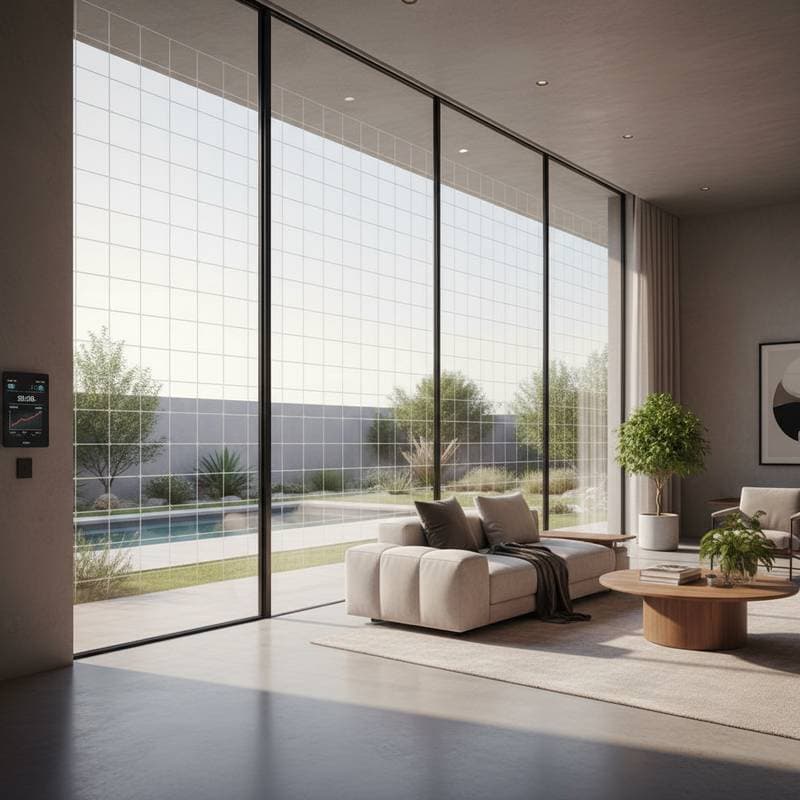
Power-Generating Smart Windows: Evaluating the $8,000 Investment
Solar technology has evolved beyond rooftop panels and garage inverters. Power-generating smart windows now embed electricity production directly into home glass, while also regulating heat and light. Homeowners often wonder if these transparent solar solutions justify an average installation cost of $8,000.
Understanding Transparent Solar Window Technology
These smart windows go beyond basic tinting. They incorporate photovoltaic materials that harvest ultraviolet and infrared light, converting it to electricity while allowing visible light to pass through. Thin-film semiconductors or organic coatings enable this dual function, creating glass that appears ordinary yet generates power discreetly.
Early developments stemmed from university research licensed to startups. Efficiency posed the primary hurdle, as full-spectrum absorption would tint the glass undesirably. Advances in prototypes have boosted performance, positioning the technology as viable for energy-focused builders.
Real-World Efficiency and Energy Output
A complete set of smart windows on a two-story home might produce one to two kilowatts. This equals about one-quarter the output of equivalent rooftop solar panels. The windows operate continuously without occupying additional space and enhance insulation alongside daylight management.
Many models include electrochromic layers that adjust tint automatically, easing air conditioning demands. Manufacturers estimate a full installation reduces annual electricity consumption by 10 to 20 percent, varying by window orientation and local climate. This partial offset yields notable savings, and the seamless building integration appeals to architects pursuing green certifications without roof modifications.
Breaking Down the $8,000 Installation Cost
Current pricing for retrofitting key exterior areas on a mid-sized home falls between $7,000 and $10,000. This covers materials, control systems, and labor. Pure power generation does not recoup the expense solely through kilowatt-hours.
Consider the context: these windows replace standard double- or triple-pane units, which already demand significant investment. The added cost for solar functionality typically increases the total by 20 to 30 percent during window replacement projects. Long-term gains from reduced utility bills and better thermal control help recover much of the premium.
Seamless Integration into Home Design
Architects value the design versatility of these windows. Available in neutral or custom tints, they blend with various aesthetics. Connections to microinverters or frame-embedded DC circuits eliminate visible wiring.
In commercial settings, they enable power-producing curtain walls and skylights without aesthetic disruption. Technically, developers balance transparency, insulation, and electrical output. Modern laminated designs, akin to automotive glass, address issues like edge sealing and moisture, with durability ratings spanning decades to match or exceed traditional windows.
Current Market Landscape and Production Hurdles
Production remains constrained, with select companies operating pilot facilities that yield thousands of square feet monthly. Far from mainstream photovoltaic scales, the supply chain for specialized coatings like perovskites and organics continues to develop. This limited availability contributes to the elevated pricing.
Support from government research and building funds drives demonstration projects, verifying real-world performance across weather conditions. Positive outcomes could accelerate scaled manufacturing and price reductions in coming years. Presently, the technology targets early adopters and innovative homeowners.
Insights from Actual Installations
In a Southwest sustainable community, one project paired rooftop solar with smart windows on south- and west-facing sides. Data indicated the windows supplied 15 percent of overall solar generation and maintained cooler interiors by several degrees during peak afternoon heat. Occupants reported minimal blind use and reduced HVAC operation.
Visually, the glass resembled premium tinted varieties; power production remained imperceptible without close inspection. Pre-assembled wiring simplified electrical work, streamlining contractor processes for these hybrid installations.
Advancing Multifunctional Building Surfaces
Solar windows extend beyond electricity production to unify insulation, shading, and generation in one material. This aligns with building-integrated photovoltaics, where envelopes actively contribute to energy needs.
For the $8,000 decision, assess your objectives. Rooftop systems offer quicker returns for maximum output. Smart windows excel in window replacement or new builds, providing efficiency, comfort, and resilience to future energy standards in a single upgrade.