
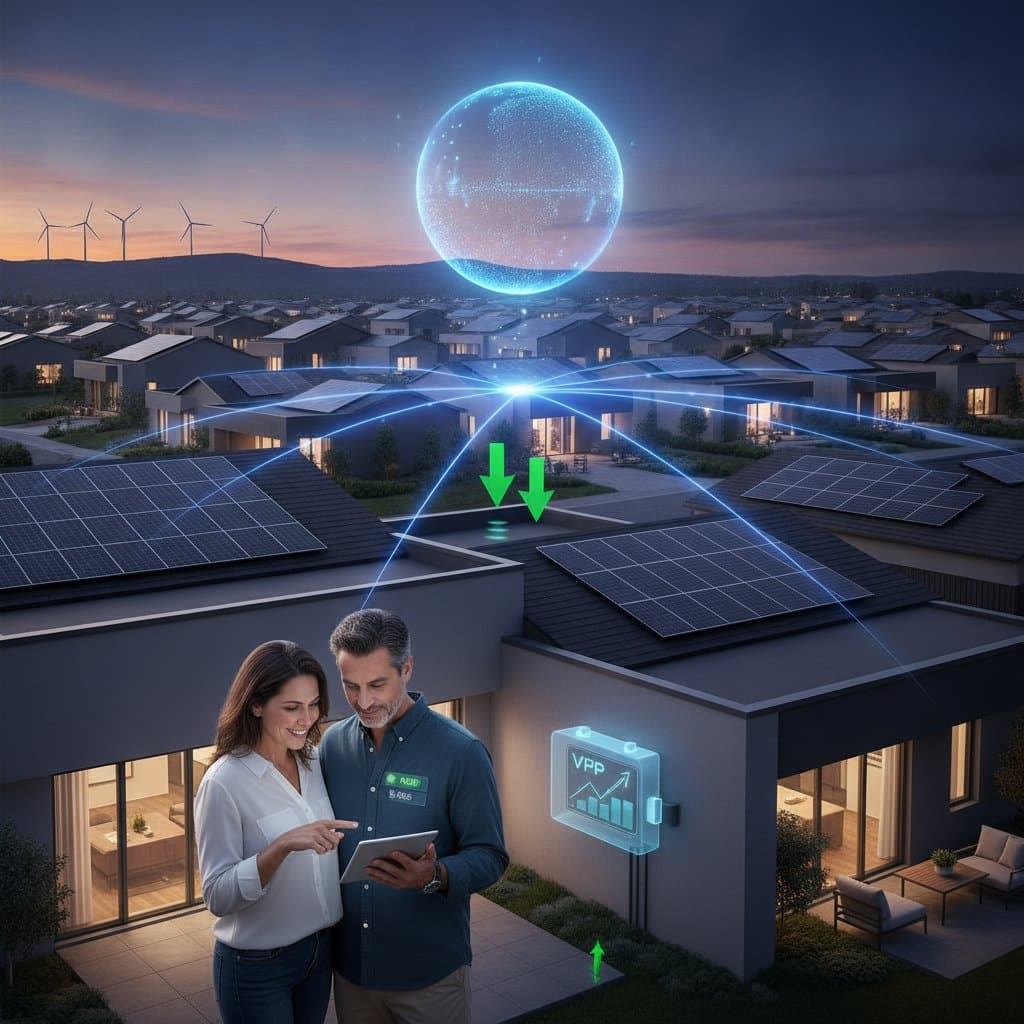
Earn Cash by Turning Solar Into Virtual Power Plants
For years rooftop solar has been about independence. Homeowners installed panels to lower their bills, reduce grid reliance, and feel a bit more self-sufficient. That story is shifting. The rise of virtual power plants, or VPPs, is turning that self-reliance into a shared revenue stream.
Instead of passively exporting excess energy for credits, solar owners are now getting paid for participating in grid services that help balance supply and demand. It moves solar from a static household asset into an active participant in the energy economy. The idea of individual homes forming a dynamic grid resource was once theoretical. Today it is becoming a genuine business model for homeowners and developers alike.
What a Virtual Power Plant Actually Does
A virtual power plant is a network of distributed energy resources, usually rooftop solar and batteries, that are aggregated and controlled as one coordinated system. When grid operators need extra energy or need to reduce demand, the VPP can respond almost instantly by pushing power to the grid or drawing less from it. That capacity has real market value.
For homeowners, joining a VPP often means agreeing to let a third-party operator manage when their battery charges or discharges. The operator combines hundreds or thousands of these small systems, creating a flexible power source that can compete with traditional generators in grid markets. Participants earn payments for the services their systems provide, such as frequency regulation, peak shaving, and capacity support.
From Net Metering to Grid Services
Traditional net metering pays solar owners for excess generation, but it does not account for when that power is produced. A VPP changes that. Timing becomes the key ingredient. Discharging stored energy during high-demand periods can be worth much more than exporting it at midday when solar production peaks everywhere.
One homeowner in California joined a VPP program run by the local utility. They still receive net metering credits, but they also earn monthly payments for allowing their battery to be dispatched during peak hours. The combination of savings and payments covers their entire electricity bill most months. That kind of value proposition is drawing more people into these programs.
How the Technology Works Behind the Scenes
The technical backbone of a VPP is advanced software that monitors and communicates with each participating system. It adjusts battery behavior in real time based on grid conditions, market prices, and weather forecasts. The software coordinates enough to ensure the group acts as a unified resource.
Installers and equipment manufacturers are building these capabilities directly into their systems. Some inverters now ship with VPP-ready functionality that can integrate with multiple program operators. That interoperability is essential. No one wants to replace hardware just to join a new grid service platform.
The real breakthrough is automation. Homeowners do not have to track when the grid needs help. Their system responds automatically, and the payments show up in their account. It is a low-effort way to turn solar assets into steady income generators.
Why This Matters for the Broader Market
Virtual power plants are good for participants and good for the grid. Instead of utilities investing in new peaker plants, they can rely on distributed resources that already exist in neighborhoods. It is far cheaper and cleaner. Many utilities are now testing programs that pay customers directly for participation, and some communities are developing independent VPPs that contract with grid operators on their own.
The appeal goes beyond economics. VPPs support grid resilience by reducing stress during extreme weather or equipment failures. They also give local communities more control over their energy resources. For solar owners, it is about turning personal sustainability into a shared public benefit without giving up ownership or autonomy.
Getting Started with VPP Participation
If you already have solar and possibly a battery, the first step is to check whether your equipment is compatible with available VPP programs in your area. Many utilities and third-party aggregators publish eligibility lists. Joining typically requires signing a participation agreement and linking your system through a secure software platform.
For those considering new installations, it is worth asking installers about VPP-ready systems. Having the right inverter and battery communications in place ensures you can join future programs as they expand. Virtual power plants are changing how we think about solar ownership. They turn clean energy into a flexible, income-generating service that benefits both homeowners and the grid.