
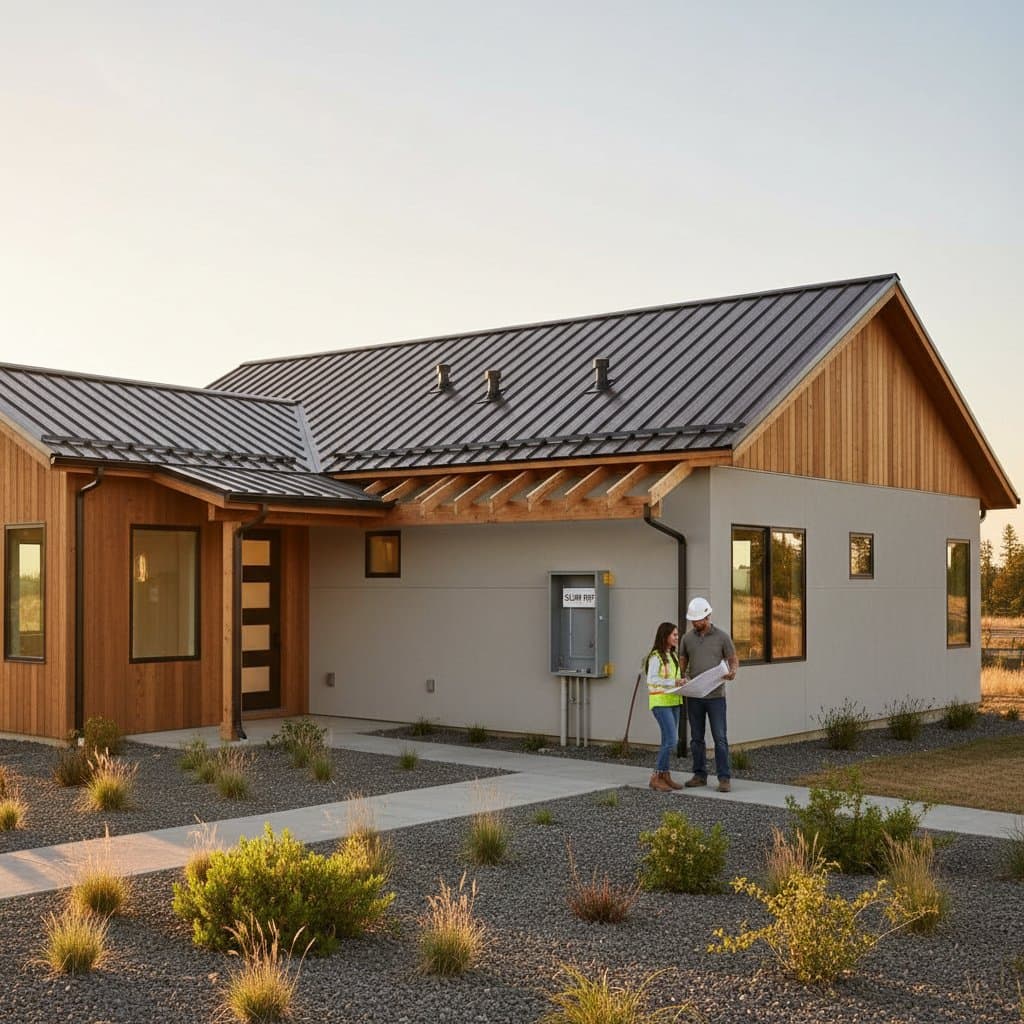
The $3,000 Solar Preparation That Saves $12,000 on Future Installations
Homebuilders throughout the United States understand that allocating about $3,000 during new construction phases can spare future homeowners up to $12,000 when adding solar panels later. This strategy, termed solar-ready construction, appeals to builders, electricians, and developers due to its tangible financial and practical advantages. Contractors incorporate elements like wiring conduits, roof load reinforcements, and electrical reserves early on, which sidesteps the expenses and disruptions of retrofitting an established structure.
The financial logic is direct. Retrofitting solar onto a completed home often involves cutting through walls, installing external conduits, or bolstering roofs, each adding significant costs. By preparing from the outset, the installation process becomes smoother, faster, and substantially cheaper.
Key Elements of Solar Preparation
A solar-ready home does not include panels or inverters but equips the structure with foundational support for photovoltaic systems. Essential features include confirming the roof can bear the weight of solar equipment, installing conduit paths from the roof to the electrical panel, allocating space in the main service panel for a solar breaker, placing dedicated junction boxes in the attic or roof space, and providing clear labels along with installer documentation.
According to the National Renewable Energy Laboratory, these measures cut future installation expenses by 25 to 40 percent. Builders spend $3,000 to embed these features during initial construction, potentially saving homeowners $12,000 or greater when installing a photovoltaic array. These reductions stem from lower labor needs, eliminated repairs to walls or ceilings, and compressed project schedules.
Reasons Builders Prioritize Solar Readiness
Builders see solar preparation as a way to stand out in competitive markets. Prospective buyers favor homes designed for energy efficiency, and even those not ready to buy panels appreciate the built-in potential. This preparation allows builders to promote properties as forward-thinking without the expense of a complete solar setup.
"Installing conduit and reserving roof space during construction is one of the easiest value-adds we can offer," said Mark Wilkes, Vice President of Operations at SunEdge Builders in Arizona. "It takes almost no extra time, yet it gives the homeowner flexibility and saves them a large expense down the line."
In regions like California, Colorado, and New York, local governments embed solar-ready mandates into building codes for new residences. These regulations detail conduit dimensions, electrical panel reserves, and optimal roof orientations. Builders who implement these proactively gain an advantage by meeting evolving rules and buyer preferences ahead of competitors.
Essential Technical Steps in Construction
Effective solar preparation hinges on thoughtful electrical and structural design. Electricians route conduits from the primary electrical panel to an easily reachable attic or roof area. These conduits must accommodate wiring for standard residential systems, typically 1 inch in diameter for setups up to 10 kW, ensuring the panel has room for a backfed breaker.
For roofs, select zones with low shading and verify structural integrity to handle extra weight. Solar modules and mounting hardware impose 3 to 5 pounds per square foot. Factoring this into original plans prevents the need for later reinforcements.
"From an engineering perspective, designing the roof for solar is simple if addressed early," said Laura Chen, Structural Engineer at Pacific Design Group. "Adding a few pounds per square foot to the load calculations is minor, but doing it post-construction can mean reinforcing rafters or tearing open ceilings. The difference in cost is enormous."
Business Advantages for Builders and Developers
From a commercial standpoint, solar-ready features draw in eco-aware clients. They align with certifications such as LEED or ENERGY STAR, which emphasize readiness for renewables. For large-scale builders, the added cost per unit stays low when spread across projects.
Running conduits and reserving panel space during framing and wiring phases adds negligible time to the build. Developers in planned communities adopt uniform solar-ready blueprints to streamline processes and future upgrades.
Many builders collaborate with regional solar providers to match their designs. Such partnerships confirm that conduits, access points, and electrical setups comply with installation needs, cutting assessment times for installers and fostering connections in the renewable sector.
Influences from Policies and Market Trends
Various states integrate solar-ready stipulations into their building codes, targeting single-family and low-rise multifamily units. These rules specify conduit locations, roof alignments, and electrical reserves. In areas without mandates, local authorities promote optional checklists to encourage uptake.
National tax credits for home solar systems fuel ongoing interest. Owners of prepared homes show greater willingness to proceed with installations upon seeing the cost benefits. Combined with local policies, builder efforts, and consumer demand, this drives broader adoption of solar-ready practices.
"Builders are realizing that solar readiness is not just about compliance, it is about future-proofing their product," said Kevin Morales, Policy Director at the Solar Energy Industries Association. "It is a low-cost step that makes the home compatible with the clean energy market that is growing across the country."
Detailed Cost Analysis
A standard solar-ready setup incurs about $3,000 in extra construction expenses, encompassing conduit installation, junction boxes, labeling, and roof assessments. Homeowners subsequently bypass costs that can exceed $12,000, such as drywall alterations for conduits, panel expansions or subpanel additions, roof strengthening, extra permits for electrical changes, and prolonged timelines from modifications.
These savings translate to real financial gains for residents. Builders who document their solar preparations enhance home values and accelerate sales. Market experts observe that such properties move quicker than similar ones without renewable foundations.
Evolving Standards and Industry Adaptations
Manufacturers of equipment and solar engineering firms now offer standardized kits for these preparations. These include pre-labeled conduits, appropriately sized junction boxes, and comprehensive guides for crews. Forward-thinking builders incorporate them into standard offerings, making solar readiness routine.
Inspectors benefit from straightforward approvals thanks to consistent labeling and records. Uniform guidelines reduce jurisdictional variances and associated expenses.
"Standardization is key," said Rachel Owens, Senior Project Manager at BrightBuild Consulting. "If every builder follows a consistent solar-ready template, installers can quote systems faster, permitting becomes smoother, and the overall cost curve drops for everyone."
Challenges and Paths to Overcome Them
Despite clear upsides, solar-ready adoption encounters obstacles. Certain builders resist due to misconceptions about complexity or limited short-term demand. Aligning electrical and structural teams can prove tricky, and in some locales, inspectors may lack expertise in these specs, slowing reviews.
Targeted education addresses these issues. Groups like the Interstate Renewable Energy Council provide protocols and sample codes to simplify rollout. As more developers and officials adopt these tools, barriers fade.
Securing Lasting Benefits Through Solar Integration
Rising calls for efficient homes, paired with solar incentives, establish solar-ready construction as essential. The initial $3,000 outlay during building eradicates up to $12,000 in later retrofit fees. Advantages include simplified enhancements, stronger environmental performance, and elevated appeal to subsequent owners.
Builders who lead with this approach shape industry directions. Electricians and installers handle projects with greater ease. Homeowners secure adaptable, cost-effective paths to solar adoption.
The American housing sector advances toward reduced carbon footprints and self-reliance in energy. Solar-ready methods stand as a smart fusion of engineering precision and commercial foresight.