
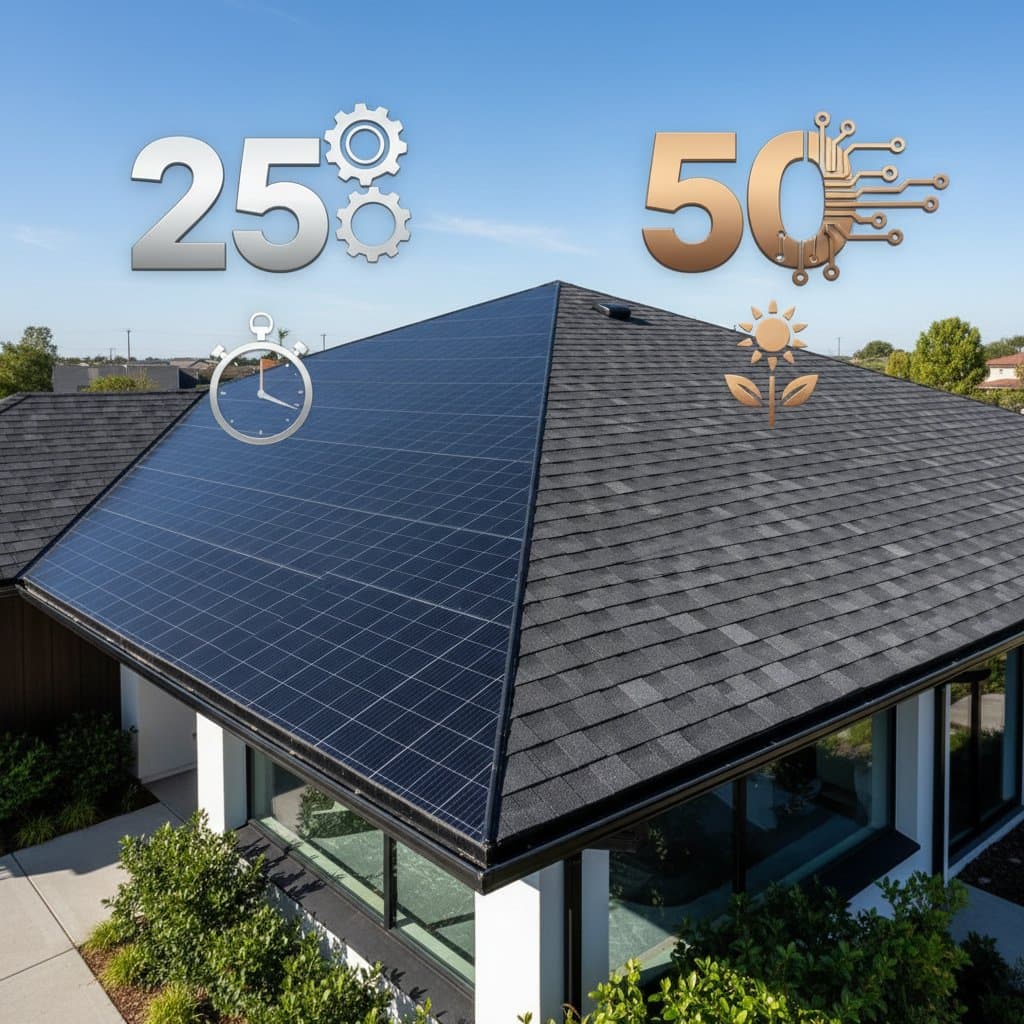
Solar Shingles: Comparing 25-Year and 50-Year Warranties
Solar shingles integrate photovoltaic technology directly into roofing materials, offering homeowners a seamless way to generate renewable energy while protecting their homes. These products merge the aesthetics of traditional shingles with solar power generation, reshaping expectations for rooftop installations. Warranty lengths, particularly the difference between 25 years and 50 years, serve as key indicators of a manufacturer's confidence in durability and performance, influencing decisions on cost, reliability, and long-term value.
Key Differences in Warranty Coverage
A 25-year warranty represents the established benchmark in solar products. It generally guarantees the shingles against defects in materials and workmanship, while also ensuring a minimum power output, often 80 to 90 percent of the original rating after 25 years. This coverage aligns with the typical lifespan of many solar components, providing solid protection for standard residential applications.
In comparison, a 50-year warranty extends this assurance far into the future, often surpassing the expected life of supporting systems like inverters. Manufacturers offering these longer terms typically include enhanced guarantees for both physical integrity and energy production, reflecting advancements in material resilience. Industry reports indicate that demand for such extended protections has grown as solar-integrated roofing gains popularity among buyers prioritizing longevity.
Engineering Innovations Supporting Longer Warranties
The length of a warranty ties directly to the quality of materials and design. Traditional 25-year solar shingles rely on tempered glass fronts and polymer backings, materials proven effective but susceptible to environmental stresses such as temperature fluctuations and UV radiation over time. These components deliver reliable performance for decades, yet they may show gradual degradation under prolonged exposure.
Advanced 50-year models incorporate superior elements, including specialized encapsulants that seal cells against moisture ingress and thicker protective layers to withstand mechanical impacts. Some designs feature metal framing around solar cells for added durability and improved heat dissipation through optimized airflow pathways. These innovations minimize risks from thermal expansion and water accumulation, allowing the shingles to maintain efficiency longer.
Brian Larkin, product engineering director at a North Carolina-based solar roofing manufacturer, explains, "Material science is driving warranty confidence. The difference between 25 and 50 years can come down to how well the system manages heat and moisture over decades."
The Role of Professional Installation
Durability hinges on installation practices, regardless of warranty length. Both 25-year and 50-year warranties require adherence to manufacturer guidelines, such as using certified installers trained in precise techniques for alignment and sealing. Proper torque on fasteners and correct underlayment placement prevent issues like leaks or structural shifts that could compromise the system.
Failure to meet these standards often results in voided coverage, especially for problems stemming from poor workmanship, such as electrical shorts or cell microcracks. To mitigate this, many companies offer combined warranties that pair product guarantees with installer performance bonds. Homeowners benefit from selecting vetted professionals who document every step, ensuring claims process smoothly if issues arise.
Maria Cortez, vice president of residential programs at a national solar trade group, notes, "Integrated solar roofing is as much a construction product as it is an energy system. If the flashing or underlayment is compromised, even the best module warranty cannot protect the homeowner."
Implications for Contractors and Project Developers
For installers and engineering firms, longer warranties shape operational strategies. A 50-year option can differentiate a bid, appealing to clients focused on future-proofing, but it demands rigorous compliance with protocols, including detailed inspections and ongoing supplier partnerships. Contractors must track installation records meticulously to support potential warranty activations years later.
Financing partners also factor in warranty terms when assessing risk. Extended coverage from a stable manufacturer can lower interest rates on loans or insurance premiums, making projects more attractive. Developers should evaluate the issuing company's financial health, as a robust balance sheet underpins the enforceability of long-term commitments.
Evaluating Costs and Long-Term Benefits for Homeowners
Premium 50-year solar shingles command a 15 to 30 percent higher initial price due to superior materials and comprehensive coverage. Homeowners planning to stay in their property for 30 years or more often find this investment worthwhile, as it aligns with the roof's full lifecycle and maximizes energy savings over time. Calculate potential returns by estimating annual output against utility rates to compare payback periods.
For those anticipating a move sooner, a 25-year warranty suffices, covering the property's value-adding phase without excess upfront cost. Transferable warranties enhance marketability; agents observe that homes with 50-year solar protections sell faster and at premiums of 2 to 5 percent, signaling low-maintenance energy independence to buyers.
Insights from Leading Manufacturers
Companies pioneering 50-year warranties position their products as complete roofing solutions, rivaling high-end asphalt or composite options. Tesla, GAF Energy, and CertainTeed emphasize designs that endure alongside the home's structure, using warranties to build trust in solar's permanence. These firms invest in rigorous testing to back their claims, focusing on both defect-free construction and sustained power delivery.
Laura Kim, head of product strategy at a California-based solar roofing developer, states, "The customer expects the solar roof to last as long as the rest of the structure. Our goal is to eliminate the perception that solar technology is fragile or temporary. A 50-year warranty communicates permanence."
Review warranty fine print carefully, as some limit power degradation guarantees or exclude certain environmental damages. Balance these details against the manufacturer's reputation for honoring claims.
Selecting the Right Warranty for Your Project
Warranty choice depends on your timeline, budget, and risk tolerance. Assess manufacturer track records through customer reviews and industry benchmarks to ensure reliability. For optimal results, pair a strong warranty with energy modeling tools that project savings based on your location's sunlight and consumption patterns.
As solar shingle technology advances, longer warranties underscore maturing standards in efficiency and resilience. Homeowners and professionals alike gain from options that match ambitious sustainability goals with practical, enduring performance.