
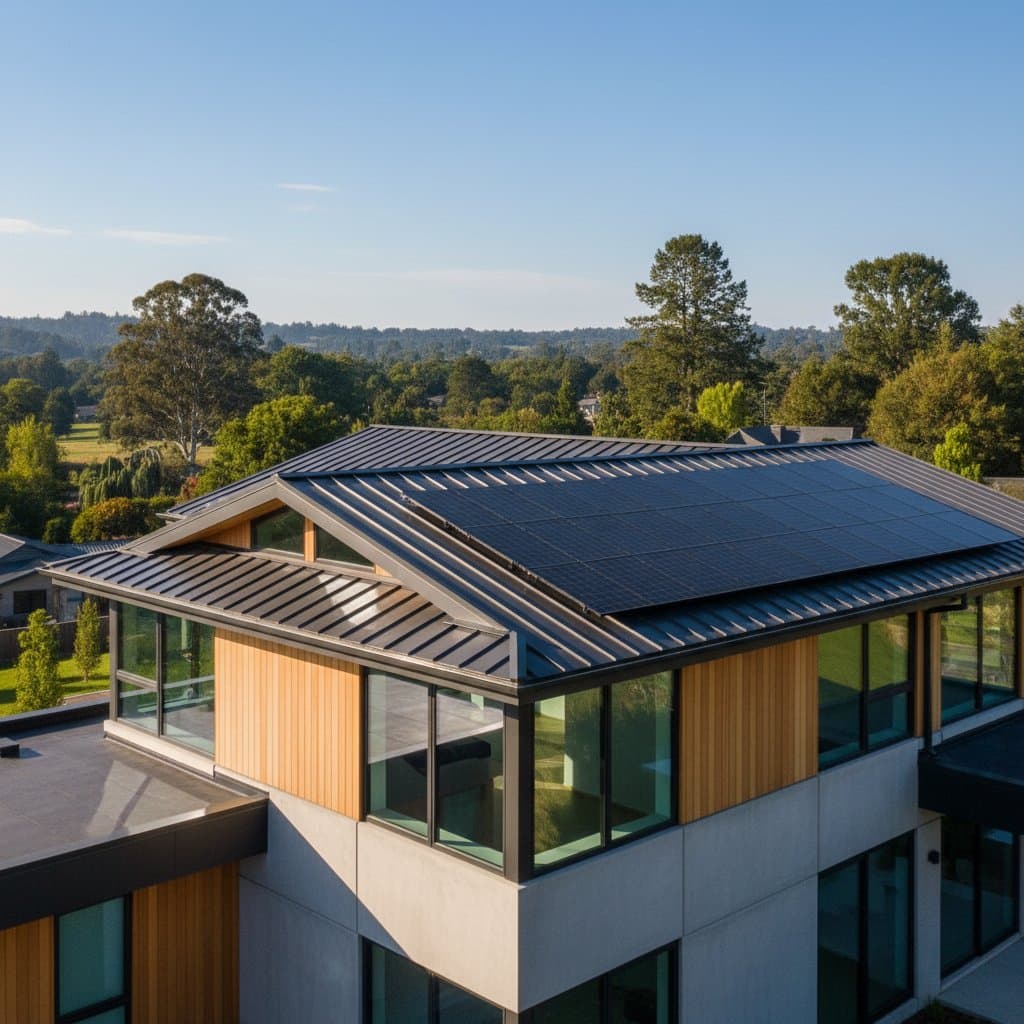
Why Metal Roofs and Solar Panels Form a 50-Year Powerhouse
Standing seam metal roofs combined with solar panels emerge as the most enduring and cost-effective option in the United States roofing and renewable energy sectors. Professionals in installation and development observe that the inherent structural harmony between metal roofing and solar mounting components prolongs the service life of both elements. This synergy often results in a genuine 50-year system suitable for residential and commercial properties.
Structural Design for Enduring Performance
The architecture of standing seam metal roofs facilitates seamless solar integration. Elevated seams enable the use of clamp-based mounts for solar modules, avoiding the need for drilling into the roof. Such an approach maintains the roof's watertight seal and cuts down on ongoing maintenance expenses.
David White, technical director at Solar Roofing Systems in Colorado, states, “A quality standing seam roof with clamp-mounted solar can last half a century with very little intervention. The roof and array expand and contract together, which minimizes stress on both materials.”
In contrast to asphalt shingles, which demand replacement every 20 years, metal roofs paired with solar outlive two or three photovoltaic system cycles. This resilience leads to reduced overall ownership costs and minimal interruptions throughout the structure's lifespan.
Streamlined Installation and Lower Risk
Installation on standing seam roofs streamlines solar mounting processes. Leading solar mounting producers provide seam-specific systems, such as aluminum clamps that secure without roof penetration. These methods accelerate the setup while decreasing labor hazards, as teams avoid sealing holes or addressing leak risks.
“Crews can mount panels faster on a standing seam metal roof than any other surface,” notes Laura Martinez, operations manager at SunPeak Installations, a Wisconsin-based engineering, procurement, and construction contractor. “Fewer penetrations mean fewer variables and fewer callbacks later.”
This advantage drives adoption in commercial and agricultural projects, where expansive roof surfaces and extended asset oversight remain key priorities.
Economic Returns and Ecological Benefits
The prolonged durability of metal roofs and solar panels yields superior lifecycle economics within the construction field. Although initial investments exceed those of shingle roofs, the extended usability and minimal upkeep generate sustained financial returns. Owners bypass at least one complete roof overhaul, eliminating the need to dismantle and reinstall solar arrays during that period.
A study by the Metal Construction Association indicates that properties with integrated metal roofs and solar achieve up to 25 percent greater net savings over the system's duration compared to solar on asphalt shingles. Decreased demands for replacement resources and workforce also diminish the project's carbon emissions from materials.
“Metal and solar are a sustainability match,” observes James Kearns, senior analyst at Renewable Insights Group. “Long service life means fewer materials entering the waste stream, and that directly improves the environmental performance of the building.”
Enhanced Compatibility and Temperature Resilience
Engineers design metal roofs to accommodate thermal expansion and contraction, aligning well with solar array dynamics. The synchronized motion between the roof and mounting framework lowers chances of cracks or loose connections. Common materials like aluminum and galvanized steel in standing seam roofs provide corrosion protection that aligns with solar module longevity.
Inverter and racking providers develop solutions tailored for metal roofs, ensuring uniform load distribution across seams. These designs effectively counter wind forces and snow accumulation. In areas with extreme temperature variations, this alignment proves vital for sustained reliability.
Emerging Preferences and Sustained Worth
With the United States solar sector growing in residential, commercial, and agricultural areas, the metal roof and solar integration attracts engineering, procurement, and construction firms plus developers focused on reliability. Insurers and lenders acknowledge the lower risk, often resulting in reduced insurance rates or advantageous financing options.
“Investors want systems that last,” explains Karen Liu, vice president of strategic development at RoofTech Energy. “The metal roof and solar combination delivers predictable performance and minimal maintenance, which is exactly what institutional funding groups look for.”
Securing Lasting Energy Infrastructure
Property owners aiming for enduring energy commitments find that uniting a standing seam metal roof with solar panels establishes a reliable path to resilience and worth. The setup's robust construction, installation simplicity, and extended functionality form a solid base for ongoing clean energy production. This approach supports informed decisions for future-proofing structures against evolving energy needs.