
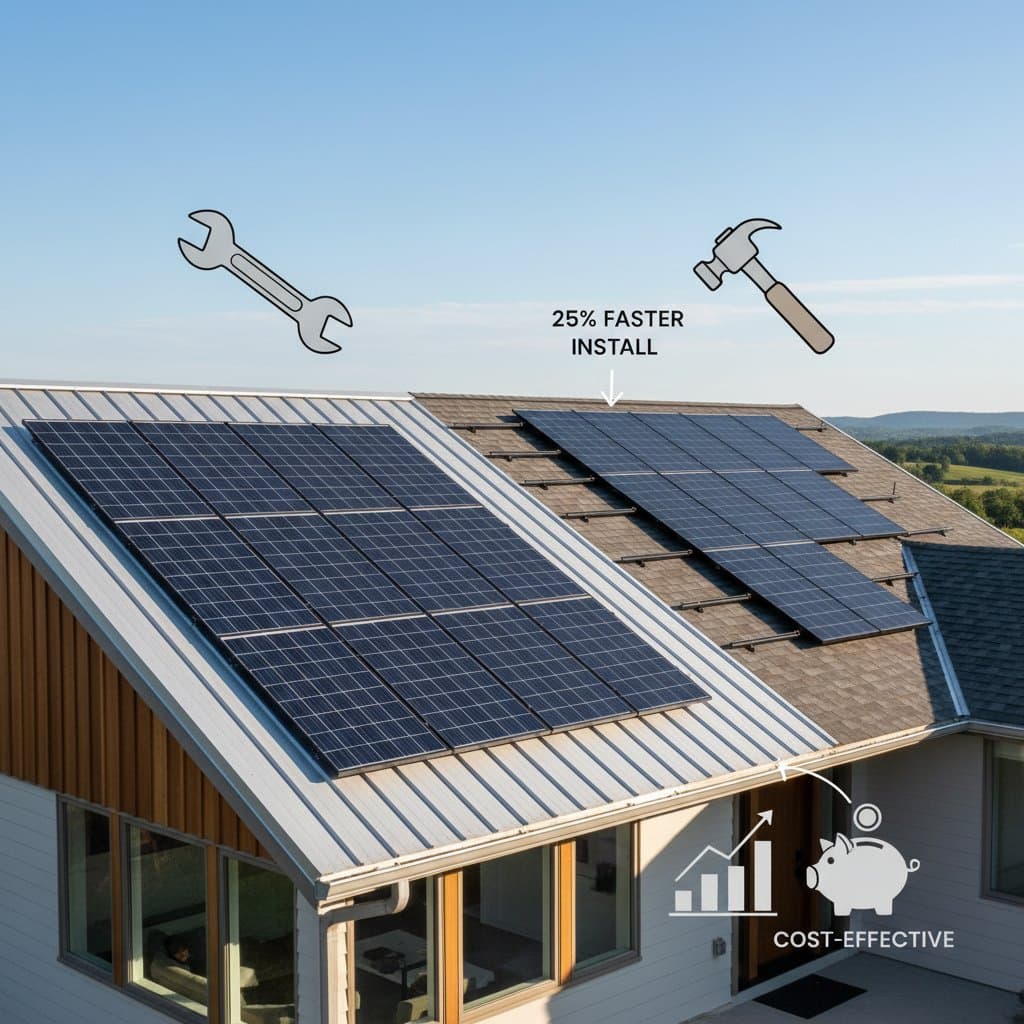
Aluminum vs. Composite Roofs: The Best Base for Solar Panels
Solar professionals across the United States encounter a key decision as residential solar expands to varied home types: does aluminum or composite shingle roofing provide the optimal foundation for panel mounting? These materials differ in strength, setup demands, and overall performance, which directly affect installation expenses and system dependability.
Strength and Attachment Methods
Aluminum roofs, commonly built with standing seam panels, offer a robust, rust-proof platform for securing solar components. Technicians attach rails using clamps on the seams, avoiding any punctures in the metal. This approach preserves the roof's waterproofing and accelerates the process. Mark Henson, senior engineer at SunMount Systems in California, notes, "Standing seam aluminum roofs can cut installation time by up to 25 percent compared with shingled roofs because no drilling is required."
Composite shingles necessitate flashings and lag bolts driven into the underlying rafters for each mount. Workers seal every hole to block moisture entry. Although reliable and budget-friendly, these methods call for exacting work and extended hours. Such variations lead to notable differences in labor expenses per kilowatt installed.
Longevity and Heat Management
Aluminum roofs endure far longer than composite shingles, often by multiple decades, aligning well with the 25-year warranties of solar panels. The reflective metal surface bounces back sunlight, cooling the panels and boosting output during hot weather. Composite materials trap heat, raising temperatures on the roof and marginally lowering energy production.
In areas prone to salt air, such as coastlines, aluminum resists breakdown effectively, while composites wear out more quickly. This reliability minimizes repair visits for installers. Sarah Owens, technical director for the Roofing Solar Alliance, states, "Metal roofs with solar have among the lowest lifetime maintenance costs in the industry. That stability appeals to both homeowners and financiers."
Upfront Expenses and Industry Trends
Composite roofs prevail in most American homes due to their affordable initial price and the ease with which contractors handle them. Solar teams routinely work with shingles, allowing for adaptable timelines. Aluminum roofs gain traction mainly in high-end or bespoke constructions.
Data from the Solar Energy Contractors Association shows that about 70 percent of home solar projects occur on composite shingle roofs. Metal options, including aluminum and steel, cover roughly 20 percent, with the rest on tiles or flat membranes. Experts predict metal's portion will grow as prices drop, especially in zones with severe weather like high winds or heavy snow.
Maximizing Solar System Lifespan
Over the full project duration, aluminum roofs enhance the value of solar setups. Their prolonged durability matches the panels' expected service, avoiding the need to dismantle arrays during roof replacements. Composites, though cheaper at first, may need renewal earlier, incurring extra expenses down the line.
Builders and residents aiming for systems that last decades should prioritize material compatibility with equipment longevity over short-term economies. Solar experts now guide clients toward holistic evaluations of total ownership costs.
Choosing the Ideal Roof for Solar Success
The decision between aluminum and composite hinges on local climate, financial plans, and objectives. Aluminum excels in strength, speed of setup, and minimal upkeep, positioning it as a forward-thinking choice. Composites serve as a practical, economical baseline for broad applications. With solar advancing toward greater efficiency and extended lifespans, aluminum's advantages in integration and reliability position it for increasing prominence.