
Solar Shingles Close Gap to 15% Over Panels in 2025
The convergence between rooftop solar panels and building-integrated photovoltaics draws near. Solar shingles have long served as the stylish yet costly alternative to traditional modules, valued for their appearance but overlooked due to higher prices and lower efficiency. Production scaling, advanced cell technologies, and growing integration in residential builds now position solar shingles to narrow the installed cost gap to within 15 percent of conventional panels by 2025.
Industry observers note this shift marks a pivotal change. Discussions focus less on technical viability and more on the point at which the modest cost difference prompts homeowners and contractors to choose the seamless, integrated design.
The Economics Behind the Narrowing Gap
Traditional solar panels gained advantages from extensive industrial scaling, with large-scale manufacturing in Asia reducing module costs over decades. Solar shingles, as a niche offering, faced higher production expenses from smaller batches and required specialized installation teams, which increased labor demands.
Several factors now enhance the economics:
-
Cell Efficiency Gains: Manufacturers incorporate high-efficiency monocrystalline cells from established production lines into shingles. These achieve over 20 percent cell efficiency, with system-wide improvements from enhanced thermal management and optimized wiring.
-
Simplified Installation: Interlocking designs and built-in wiring harnesses accelerate the process. Certified roofing contractors can handle installations without dedicated electrical support, reducing labor costs by up to 30 percent compared to prior systems.
-
Manufacturing Scale: Leading producers have boosted capacity to hundreds of megawatts per year, supported by domestic production incentives that draw new competitors. Increased volume lowers per-unit costs and stabilizes supply chains.
-
Roof Replacement Economics: Homeowners facing roof replacements often evaluate the total expense of new roofing plus panels against an integrated solar roof. This comparison minimizes the effective gap, as it accounts for savings on materials and labor.
Design and Aesthetic Appeal
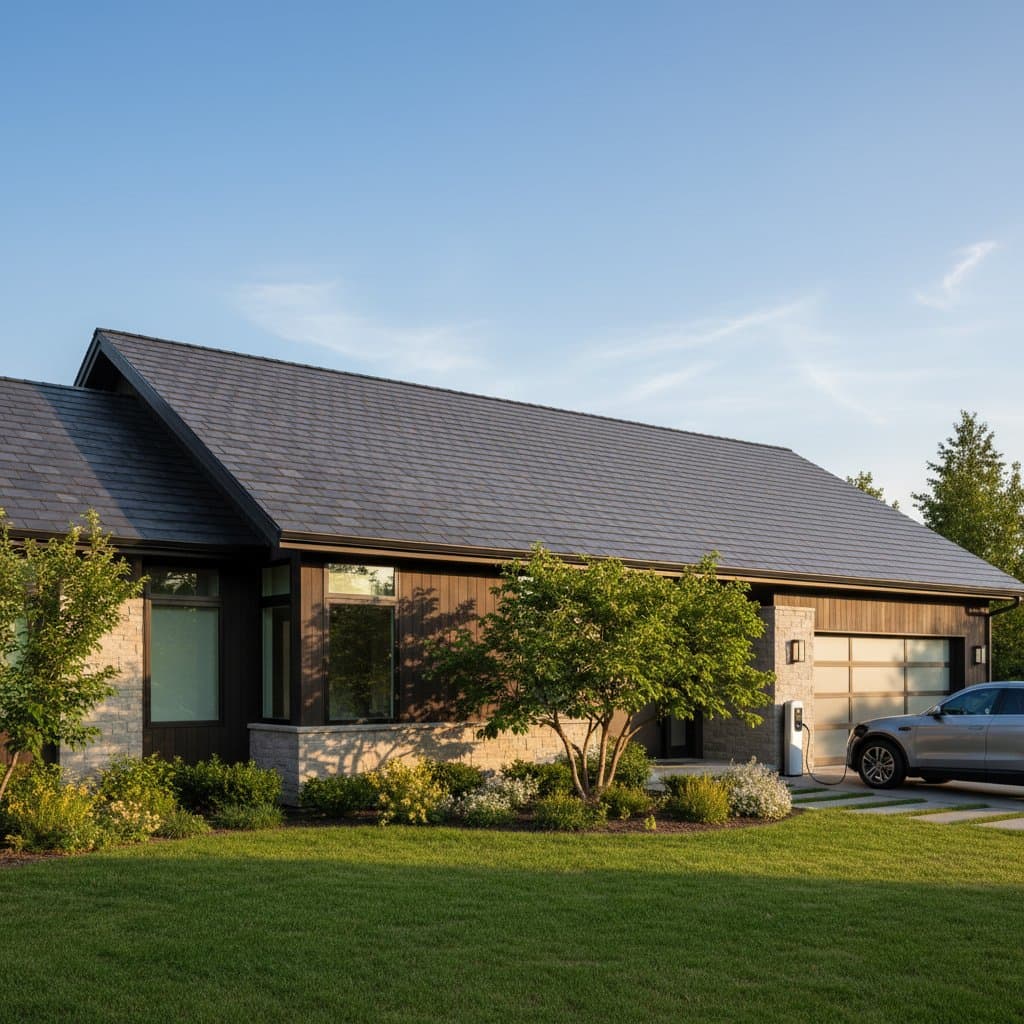
Aesthetics remain the primary draw of solar shingles. These systems replace standard shingles, creating a sleek, uniform roof surface without the bulk of mounted panels. For properties under homeowners association rules or architectural oversight, this subtlety often seals the decision.
Site visits reveal the impact: from ground level, solar shingle roofs mimic premium architectural shingles or slate. Subtle grid patterns and connections evade notice except to experts. Builders indicate this integration sparks interest among clients who once dismissed solar for visual reasons.
Architects increasingly incorporate these elements into minimalist, energy-efficient designs. In new builds, roofs can integrate solar from the outset, fine-tuning angles for optimal sunlight capture, drainage, and conduit placement.
Technical Performance and Reliability
Initial solar shingles faced challenges with water penetration, temperature fluctuations, and electrical durability. Current models address these through encapsulants akin to those in high-end modules, meeting rigorous longevity standards.
Standardized junctions and connectors withstand prolonged exposure, with warranties spanning 25 to 30 years, on par with traditional panels. Heat dissipation presents a minor ongoing concern, as flush-mounted shingles operate warmer than elevated modules, slightly impacting efficiency. Advances in backsheet materials and ventilation features counteract this, including passive airflow channels that promote natural cooling beneath shingles.
Market Momentum and Consumer Awareness
Perceptions evolve as solar shingles enter mainstream channels, appearing in homebuilder catalogs. Major builders secure supply deals, positioning integrated roofs as options or standards in developments.
This integration shifts adoption from retrofits to upfront planning, easing permitting, installation, and financing through mortgages. A unified warranty for roof and energy generation simplifies maintenance, unlike fragmented coverage in conventional setups.
Policy and Incentive Context
Policies quietly bolster affordability. Domestic content bonuses, efficiency credits, and state rebates now encompass building-integrated systems explicitly, granting equal access to financial relief.
Federal manufacturing support fosters local production, cutting transport expenses and exchange rate volatility. These measures yield steadier pricing for installers and buyers.
Competition and Innovation
Producers diversify with varied approaches: glass laminates, polymer builds, and flexible thin-films. This range spurs progress, offers choices in style and function, and avoids reliance on one leader.
Notable developments occur at the roofing-photovoltaic boundary. Collaborations with traditional suppliers yield hybrid layers that unite strength, sealing, and power generation, potentially blurring lines between solar roofs and enhanced standard ones.
Installer Readiness and Training
Adoption hinges on skilled labor. Roofers excel in waterproofing and structure but may lack electrical knowledge, while solar specialists handle wiring yet not shingle work.
Manufacturers counter this with certification programs blending theory and practice, from planning to connections. Streamlined methods reduce costs, accelerating the price convergence as more teams gain dual expertise.
Consumer Decision Dynamics
Choices blend emotion and economics, with aesthetics, property value, and curb appeal rivaling savings. Solar shingles appeal by concealing technology, enhancing photos and online listings per real estate insights.
Payback periods edge closer to those of panels, with the 15 percent threshold tipping scales toward integration, particularly during roof renewals.
Key Factors Shaping Future Adoption
Success depends on scaling production and adapting designs. Leaders in volume and customization will lead, through ties with roofing firms and innovations in cell arrangements, finishes, and sizes for local styles.
Integrated solar aligns with distributed energy trends, supporting electrification needs like vehicle charging. Practical roofs that generate power while blending seamlessly address rising demands.
Integrating Solar into Everyday Homes
The industry refined panels and support systems over decades; now, architectural fusion takes center stage. Solar shingles balance engineering precision with design elegance, uniting trades and appealing to diverse buyers through performance, looks, and value.