
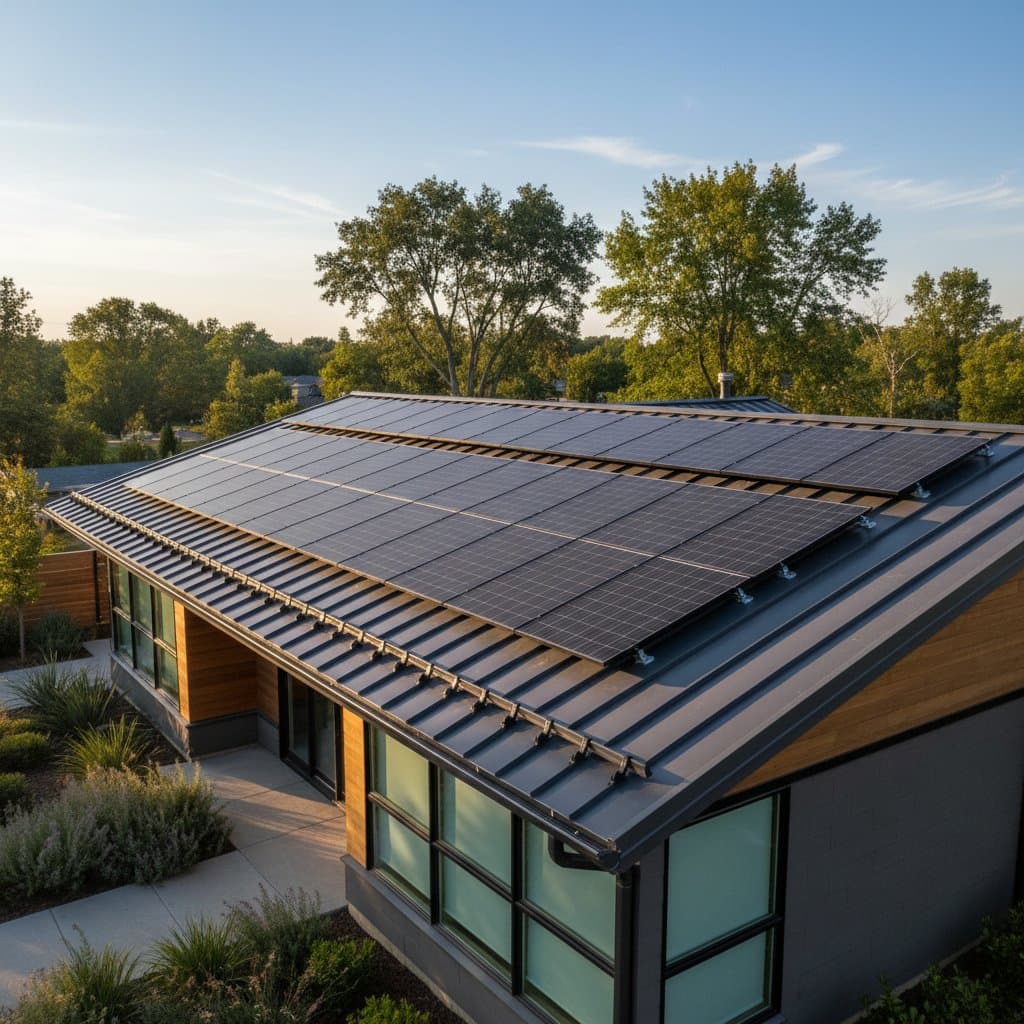
Why Metal Roofs and Solar Panels Form Installers' Preferred Partnership
Solar installation trends evolve with roofing materials. Asphalt shingles held dominance for years, tile roofs gained regional popularity, and flat TPO membranes suit commercial applications. Installers now express strong preference for combining solar panels with metal roofs. This choice provides practical and financial advantages, including long-term stability, efficiency, and seamless integration.
Structural Compatibility for Longevity
The foundation of this pairing lies in structural strength and extended service life. Metal roofs endure fifty years or longer with little upkeep, matching the operational lifespan of solar arrays. This alignment avoids issues common with asphalt shingles, where roof replacement often precedes the solar system's end of life.
Installers value the assurance of securing panels to a stable surface untouched for decades. Such setups minimize callbacks, simplify warranties, and streamline timelines. Property owners receive a complete system unlikely to require disassembly for roof repairs, making metal roofs a reliable base for solar installations.
Streamlined Mounting and Installation Processes
Design and labor efficiencies make metal roofs highly favorable. Standing seam varieties enable direct attachment of mounting systems via specialized clamps along the seams. This method eliminates roof penetrations, lowering leak risks significantly.
Field observations show crews completing full installations in half the time compared to shingle roofs, thanks to the clamp-on approach. The design leverages existing seams for secure attachment, avoiding drilling, sealants, or flashing. Clamps and rails position and secure rapidly, often in minutes per set.
Corrugated and ribbed metal roofs present minor added complexity, yet dedicated brackets streamline the task. Standardized hardware allows smaller installers to tackle these projects confidently, without custom work.
Resilience Matching Solar Durability
Installers consider the full lifecycle, including how mounting hardware and the underlying roof withstand weather, thermal changes, and loads over decades. Metal roofs perform exceptionally in these areas.
Asphalt shingles degrade through drying, cracking, or granule loss, but metal roofs preserve shape and waterproofing for years. They resist snow loads and wind uplift better than alternatives. Paired with engineered racking, the assembly forms a cohesive, robust unit.
In high-snow or windy areas, installers report fewer post-storm service visits. Panels remain secure, roofs hold firm, and owners enjoy reliable output annually. This dependability boosts satisfaction and cuts warranty claims.
Performance Gains from Thermal Properties
An often overlooked benefit involves energy output. Metal roofs reflect sunlight more than darker surfaces, maintaining lower temperatures. Cooler conditions allow solar modules to function closer to peak efficiency, as heat reduces electrical yield.
Mounting rails on standing seams create air gaps that facilitate airflow under panels, enhancing passive cooling. This not only improves system performance but also protects roof coatings. Installers prioritizing output per watt find these advantages compound over long periods.
Environmental Alignment with Solar Goals
The pairing supports broader sustainability objectives. Metal roofs incorporate substantial recycled content and remain fully recyclable at end of life. Combined with solar panels, they create a low-impact solution for energy generation and building protection.
Installers emphasizing green practices value offering this eco-conscious, cost-effective option. Discussions with environmentally aware clients highlight both stewardship and financial prudence. Systems requiring minimal maintenance over decades deliver comprehensive benefits.
Operational Advantages for Installers
Metal roofs ease every project stage for installers. Site evaluations prove straightforward due to infrequent structural concerns. Installations accelerate with ready-made clamps and rails, while leak or damage risks nearly vanish.
These factors yield better margins and reliable schedules. Teams handle more jobs efficiently, with fewer issues. For growing firms, the predictable process supports scaling while upholding quality.
Some installers center operations on this combination, including metal roof retrofits. Their pitch emphasizes a single installation yielding dual efficient systems, free from future roof concerns.
Addressing Persistent Myths
Market misunderstandings persist despite clear benefits. One frequent error assumes metal roofs' reflectivity harms solar output. Solar modules absorb light effectively, rendering roof reflection inconsequential.
Cost concerns also arise, as metal exceeds asphalt upfront. Lifecycle analysis reveals advantages in durability, efficiency, and low maintenance, often outweighing initial expenses.
Embracing the Metal-Solar Standard
The convergence of metal roofing and solar advances distributed energy adoption. Installers, once cautious about mounting, now adopt these as primary choices. Intuitive hardware from manufacturers aids adoption, and owners appreciate enduring value.
This approach reduces long-term risks for contractors, optimizes performance, and provides worry-free solutions. Solar on metal evolves from specialty to essential, enabling installers to achieve reliable, high-quality outcomes.