
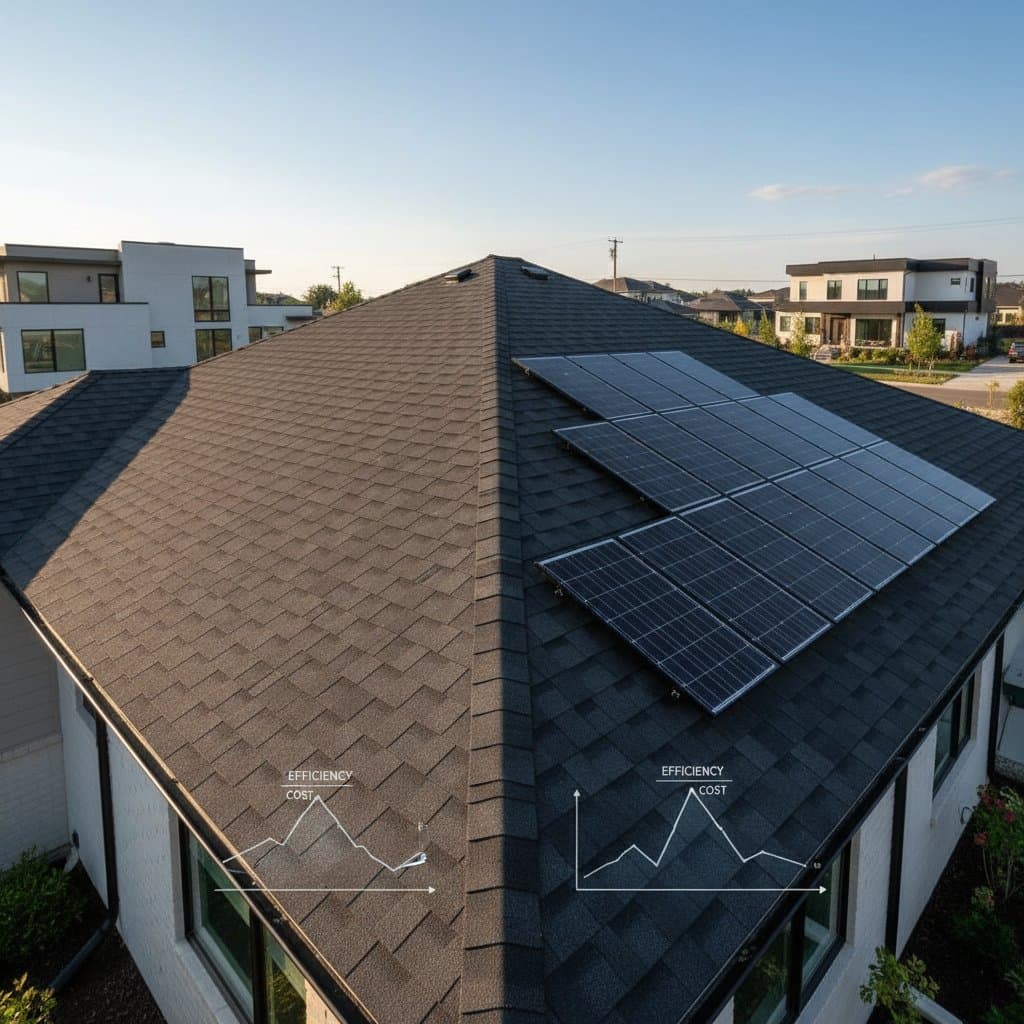
Solar Shingles vs Panels: 2026 Price War Winners
Competition between solar shingles and traditional solar panels intensifies as installation costs decline and integrated roofing systems achieve broader adoption. Manufacturers, installers, and homeowners monitor pricing trends with keen interest as the market approaches a phase where design integration and overall system value rival raw efficiency in importance. This emerging price war promises to transform the sale, financing, and installation of residential solar solutions.
The Core Difference Between Panels and Shingles
Solar panels serve as the primary option for most residential and commercial installations. These systems mount atop existing roofs and deliver high efficiency at a modest cost per watt. In contrast, solar shingles replace conventional roofing materials with photovoltaic components that perform dual roles as protective covering and energy producers.
This integrated approach attracts homeowners who prioritize aesthetics over visible panel arrays. Panels excel in efficiency and affordability, while shingles provide a streamlined appearance at a higher initial expense and with demands for specialized installation. Advances in manufacturing scale and standardized processes narrow this divide progressively.
Pricing Trends Driving Market Competition
Analysts observe consistent reductions in solar panel prices, driven by decreased material expenses and enhanced automation in production. The average installed cost per watt has fallen markedly in recent years, broadening access to solar energy for diverse homeowners. Solar shingles lag in achieving similar affordability, yet innovative market entrants accelerate progress.
Major players like Tesla, CertainTeed, and GAF Energy commit substantial resources to manufacturing enhancements that lower production costs for integrated solar roofing. These initiatives yield tangible outcomes, with installers noting reduced price gaps between shingles and panels, especially when accounting for savings on roof replacements. In scenarios involving new builds or complete reroofs, shingles now vie effectively on total project expenses beyond mere energy generation.
Efficiency and Performance Comparisons
Efficiency stands as a pivotal factor in assessing investment returns. Traditional panels achieve rates of 18 to 22 percent, varying by technological advancements. Solar shingles generally fall below this threshold, although select models advance swiftly toward parity.
The reduced efficiency of shingles finds partial compensation in their capacity to generate power across larger roof surfaces without added bulk. Temperature resilience and durability further influence choices. Panels boast extensive field-tested performance across climates, whereas shingles attain equivalent benchmarks through recent rigorous evaluations. Leading producers extend warranties that align with or surpass those of standard roofing, bolstering homeowner assurance in enduring performance.
Installation and Maintenance Considerations
Installation demands shape both expenses and timelines. Solar panels affix rapidly to various roof configurations, suiting retrofit projects efficiently. Solar shingles necessitate collaboration between roofing and electrical specialists, potentially lengthening schedules while yielding a cohesive final appearance.
Maintenance profiles vary significantly. Individual panel replacements occur straightforwardly upon damage, unlike shingles that may involve partial roof deconstruction for fixes. Such dynamics sway installer recommendations, though evolving modular architectures mitigate repair hurdles. Providers versed in both roofing and solar integration emerge as preferred partners for clients desiring comprehensive services.
Incentives and Financing Shifts
Incentive frameworks mold competitive dynamics. Both panels and shingles access federal and state tax credits, with outcomes hinging on project categorization. During full roof replacements, shingles permit allocation of certain costs to roofing functions, influencing credit computations.
Lenders and energy firms evolve financing options to accommodate this blended category. Leasing and power purchase agreements prevail for panel setups. Homeowners drawn to shingles favor ownership structures linked to property enhancement and roof lifespan. Financial entities respond with customized loans that honor the multifaceted nature of integrated solar roofs.
Market Outlook and Competitive Landscape
The solar roofing arena garners fresh scrutiny from energy giants and established roofing firms alike. Tesla spearheads advancements in design and promotional reach, as CertainTeed and GAF Energy differentiate through robust installer networks and superior warranty offerings. Nimble startups introduce lightweight shingle variants and streamlined wiring, intensifying rivalry.
Installers detect surging demand for integrated options, especially in regions enforcing aesthetic guidelines that restrict panel visibility. Builders and developers explore pre-assembled solar roofing to expedite adherence to energy codes. With expanded production scaling, prices across segments face sustained downward momentum.
Choosing Between Panels and Shingles
Homeowners base selections on project parameters. Intact roofs favor panels for optimal cost efficiency. Planned replacements position shingles advantageously, minimizing material overlaps and elevating aesthetic value.
Professionals employ energy simulation software to juxtapose lifetime expenses and output for each option, empowering informed choices. As cost and performance converge, decisions pivot toward visual appeal, architectural fit, and enduring property objectives over basic economics. Augmented installer proficiency with dual technologies facilitates nuanced guidance on compromises.
Advancing Residential Solar Integration
The intensifying price rivalry between solar shingles and panels signals a pivotal evolution in home energy adoption. Diminishing costs, refined efficiencies, and heightened installer capabilities bridge technological disparities. What once positioned shingles as premium selections now renders them practical counterparts to panels.
Industry stakeholders must track manufacturing evolutions, incentive adjustments, and installation protocols to thrive. Firms agile in embracing integrated solar roofing stand poised to fulfill escalating needs from homeowners balancing energy output with architectural elegance.