
$1,200 Cool Roof Rebate Accelerates Solar Adoption
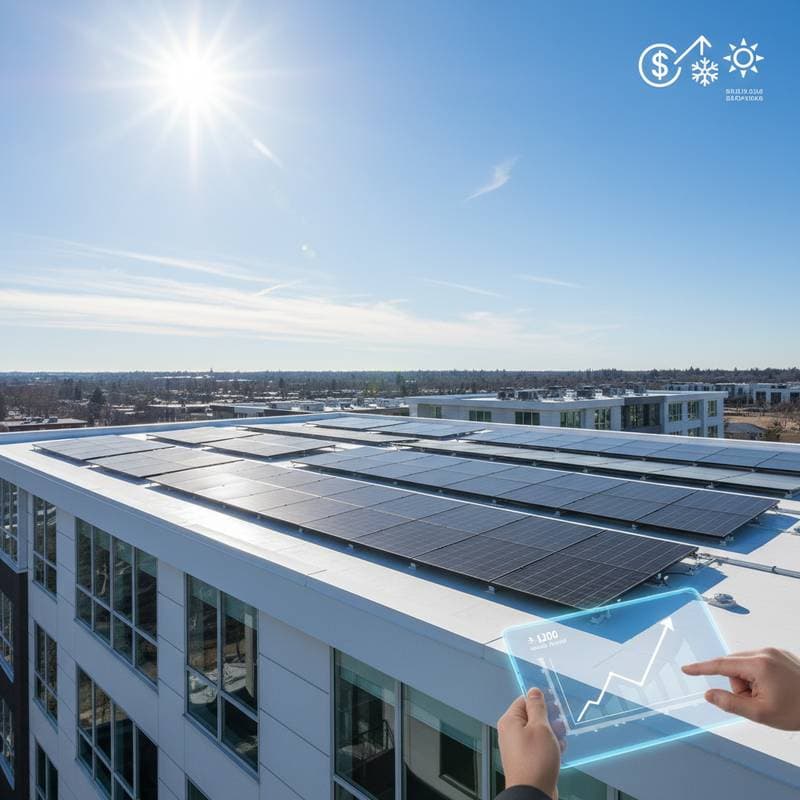
A $1,200 rebate for reflective cool roofing materials provides U.S. homeowners and businesses with a strong incentive to pair roof improvements with solar panel installations. Energy experts note that this rebate, offered across multiple states via utility and local energy initiatives, promotes roofs that limit heat absorption and enhance photovoltaic performance.
"Cool roofs rank among the most economical ways to manage heat in buildings prepared for solar systems," states Laura McNeil, senior analyst at the Solar Energy Contractors Association. "This rebate prompts customers to adopt the effective combination of reflective surfaces and solar panels, yielding clear gains in efficiency and sustained cost reductions."
The rebate applies to residential and commercial properties using roofing that meets ENERGY STAR reflectivity criteria. Eligible options encompass single-ply membranes, metal roofs with reflective finishes, and sunlight-reflecting asphalt shingles.
Mechanisms Behind Cool Roofs and Solar Efficiency
Cool roofs employ light hues or advanced coatings to bounce back sunlight and release trapped heat effectively. Standard dark roofs often exceed 150 degrees Fahrenheit on their surfaces, whereas reflective alternatives drop that figure by as much as 50 degrees. This leads to decreased cooling needs, lighter loads on heating, ventilation, and air conditioning systems, and steadier conditions for mounted solar arrays.
"High temperatures impair the output of photovoltaic modules," explains Robert Vega, technical director at Apex Solar Solutions, a Texas engineering, procurement, and construction company. "Reducing roof temperatures through reflectivity can improve panel efficiency by two to five percent over significant portions of the year. For a 10-kilowatt setup, this translates to several hundred extra kilowatt-hours produced each year."
The process relies on basic physics. Solar panels, akin to other semiconductor devices, experience voltage drops with rising heat. A cool roof eases the heat pressure under the panels, particularly when using mounts that facilitate air circulation. Systems with open racks or rails boost this effect by enabling natural airflow to carry away warmth.
Cost Benefits for Property Owners and Professionals
Homeowners benefit from the rebate as a straightforward reduction in expenses. Reflective roof projects generally range from $7,000 to $12,000, based on materials and roof dimensions. The $1,200 credit lowers this by about 10 to 15 percent, while also curbing air conditioning costs and amplifying solar returns to accelerate financial recovery.
Solar installers and engineering firms identify expanded opportunities. "We package roofing enhancements with solar projects under unified agreements," notes Mike Hanley, president of SunPeak Roofing and Solar in Arizona. "Clients value the convenience of handling everything through one provider. The rebate opens discussions on overall building performance beyond power production."
This bundled strategy holds importance for the sector. With solar module costs stabilizing and profit margins on installations narrowing, firms pursue income from related efficiency options. Cool roofs, combined with attic barriers and surface treatments, integrate seamlessly into comprehensive energy strategies.
Details on Program Requirements and Access
Utilities and state energy agencies administer the rebate, each setting specific guidelines. Common requirements include:
- Verification of ENERGY STAR or Cool Roof Rating Council certification for the product
- Completion by a certified professional installer
- Achievement of defined reflectance and heat emission levels
- Application to no less than 50 percent of the roof's surface area
Certain utilities offer elevated incentives for commercial flat roofs surpassing reflectivity benchmarks, up to $0.20 per square foot. This appeals to operators of warehouses and stores, whose expansive roofs support both thermal control and solar deployment.
Consultants highlight the program's accessibility as a key to its appeal, unlike intricate tax incentives or loans. "A direct cash incentive resonates with participants," McNeil observes. "It delivers quick results, clear terms, and simple administration."
Ensuring Seamless Integration with Solar Hardware
Most contemporary solar mounting methods work well with reflective materials, from weighted ballasts to secured attachments. For thermoplastic polyolefin or polyvinyl chloride membranes, teams apply non-invasive weights or sealed fasteners to uphold warranty protections. Metal surfaces permit clamp-based fixes that sidestep penetration.
Thermal shifts demand attention, as lighter roofs experience sharper daily temperature changes. Secure fittings must flex with these cycles to preserve durability. Racking providers address this through adjustable tracks and adaptable connectors that align with expansion patterns.
"The design of roof connections proves as vital as the surface's reflective properties," Vega emphasizes. "Maintain even panel gaps, effective seals, and compatible expansion materials. When executed properly, a cool roof prolongs the service life of the roofing and solar components alike."
Broader Policy Landscape and Expansion Trends
This rebate aligns with policies merging efficiency upgrades and clean power generation. State officials recognize cool roofs' role in easing grid pressures by curbing peak demand during heat waves. Reduced roof heat means less reliance on cooling, which alleviates afternoon strains on electricity networks.
Data from CleanTech Insights forecasts a nearly 20 percent rise in reflective roof projects nationwide in coming years, fueled by such rebates and evolving energy regulations. The solar-plus-cool-roof niche should claim a larger portion of roof renewals, especially in sun-intense regions like the Southwest and Southeast.
Advancing Comprehensive Energy Upgrades
The $1,200 cool roof rebate illustrates the synergy between efficiency tools and renewable systems, creating compelling advantages for building owners. It delivers concrete reductions in upfront and ongoing energy expenditures. For service providers, it enables service diversification, deeper client ties, and market distinction.
As additional states introduce parallel initiatives, cool roofs will emerge as a core element in rooftop solar projects. Through rebates, tax relief, or utility support, the economic rationale for this pairing grows stronger, fostering durable structures and robust solar expansion.