
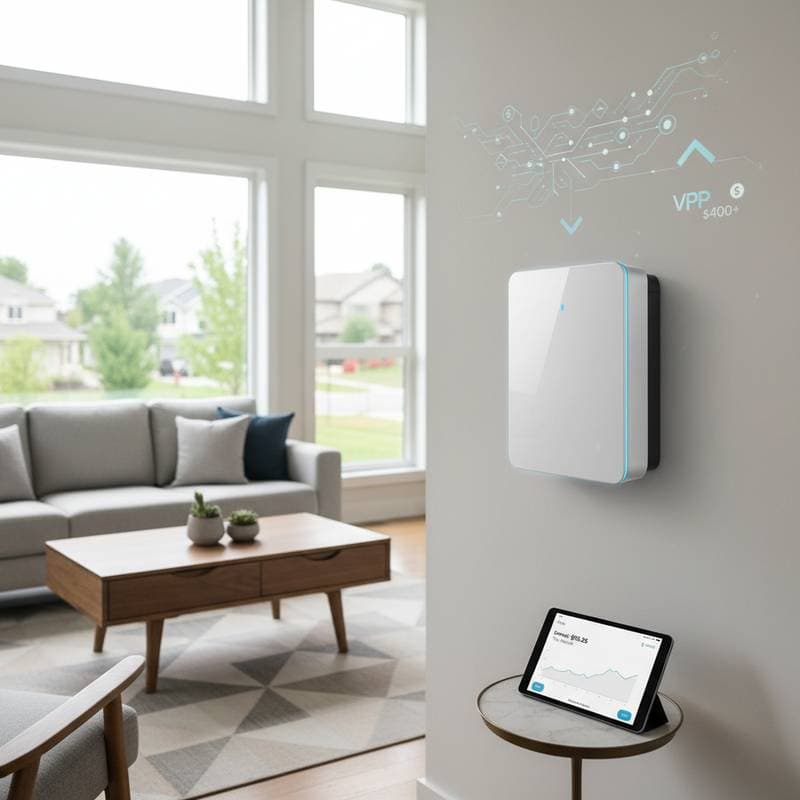
Unlock Over $400 Annually from Your Home Battery Through VPP Programs
Homeowners who install solar panels and battery storage systems now have an opportunity to earn more than $400 per year. Virtual power plant programs aggregate these residential resources into networks that provide essential grid services. This approach transforms individual batteries into contributors to national energy stability, creating new income sources in the expanding distributed energy landscape.
Understanding How VPPs Create Income for Homeowners
A virtual power plant serves as a centralized platform that coordinates distributed energy assets, such as rooftop solar installations, advanced inverters, and home batteries. During periods of high electricity demand, the VPP operator signals participating systems to release stored energy, helping to balance the grid without relying solely on traditional power plants.
Homeowners benefit directly from this process. They receive payments for permitting controlled discharges from their batteries, which typically last only minutes to hours. Regional programs report average annual earnings between $300 and $500, depending on factors like battery size and event frequency. For instance, a standard 10 kWh battery might export 2 to 5 kWh during a dispatch event, translating to compensation based on local energy rates.
Payment models vary by provider. Some offer fixed annual incentives tied to enrollment, while others base rewards on the actual energy contributed. Homeowners should review program terms to understand eligibility, such as minimum battery capacity or geographic restrictions.
Key Technical Requirements for Participation
Enrollment in a VPP demands specific equipment compatibility. Systems must feature inverters that adhere to IEEE 1547 standards for safe grid connection. These devices allow remote communication, enabling the VPP to monitor and control battery operations securely.
Operators use cloud platforms to issue dispatch commands, always prioritizing reserve power for household needs. Participants retain full control over their energy use, with safeguards preventing deep discharges that could affect daily reliability. Reliable internet access remains essential for real-time connectivity.
Warranty concerns often arise, but most manufacturers support VPP integration without invalidating coverage. Consult your installer to confirm details and ensure your setup meets performance benchmarks. In areas with frequent grid events, evaluate how additional cycles might impact battery longevity over time.
Many solar companies streamline the process. They provide software updates and handle agreements with VPP aggregators like Sunrun or Tesla. This turnkey approach reduces barriers, making it easier for homeowners to start earning.
Opportunities for the Solar Industry
Virtual power plants open new revenue channels for solar businesses beyond initial installations. Energy service companies integrate VPP options into service packages, boosting customer loyalty and generating ongoing fees. Projections from industry analysts indicate residential VPP capacity could surpass several gigawatts by the end of the decade.
Financing evolves with these programs. Lenders now incorporate projected VPP earnings into loan calculations, improving affordability for solar-plus-storage projects. Utilities benefit by accessing flexible power reserves at lower costs than building new infrastructure.
Policy Support and Regional Growth
Several states lead the way with policies that bolster VPP adoption. California, Vermont, and Texas offer incentives for demand response and frequency regulation, compensating participants for grid support. Federal measures, including the Inflation Reduction Act, further accelerate deployment through tax credits and streamlined regulations.
Executives in the sector highlight the broader value. One operations director at a major solar firm noted, "VPPs enable customers to contribute to grid resilience while monetizing their existing investments. It shifts batteries from passive backups to dynamic assets."
To get started, contact your solar provider about available programs in your area. Assess your system's compatibility and review payout estimates based on local grid needs. Simple steps like firmware updates can activate participation, unlocking passive income with minimal effort.
Building a Resilient Energy Future
Virtual power plants illustrate the potential of decentralized energy systems. Homeowners secure financial returns from their batteries, utilities enhance grid flexibility, and solar providers expand their offerings. Embracing VPPs today equips households and businesses to thrive in an evolving energy market focused on efficiency and sustainability.